Table of Contents
- What must flooring emissions reports actually identify?
- Define component evidence, finished-product evidence and test scope
- Why is a plywood statement different from a finished-flooring report?
- Check the tested specimen against the ordered construction and coating
- Comparison table: brochure reference, component statement and product report
- How should a buyer review evidence for the actual destination?
- A numbered review of issuer, method, specimen, dates and applicability
- What should buyers request when the scope does not match?
- How should GoLink's published plywood references be interpreted?
- Frequently asked questions
- Send the product specification and destination evidence brief
Flooring emissions reports should identify the tested material, test method and specimen clearly enough to establish whether the evidence applies to the ordered finished board and its destination requirements. For importers, project procurement managers and specifiers, a plywood emissions statement can support component review, but it does not by itself establish finished-flooring compliance.
What must flooring emissions reports actually identify?
A useful report connects an identifiable specimen—the material submitted for testing—to a stated method, result and scope. A document title containing “wood flooring” is insufficient if the specimen description identifies only plywood.
Start with the complete report, including referenced attachments. Look for the issuer, report identifier, applicant, manufacturer where identified, sample description, relevant dates, test method and results with units. Check whether the report records information supplied by the applicant or independently establishes it; those are different levels of evidence.
The practical question is whether the document supports the claim being requested. Formaldehyde evidence does not automatically address a broader request concerning volatile organic compounds, commonly called VOCs, which are chemicals that can be released into indoor air.
Define component evidence, finished-product evidence and test scope
- Component evidence
- Documentation concerning an ingredient or intermediate material, such as plywood before it becomes part of a flooring board.
- Finished-product evidence
- Documentation concerning the manufactured flooring configuration identified in the report, including its described construction and finish.
- Test scope
- The boundaries of the assessment: what was tested, which substances and method were covered, under what conditions, and any stated limitations.
These categories describe applicability, not a ranking of document quality. A genuine component report may be useful for a component requirement while leaving a finished-flooring requirement unresolved.
Why is a plywood statement different from a finished-flooring report?
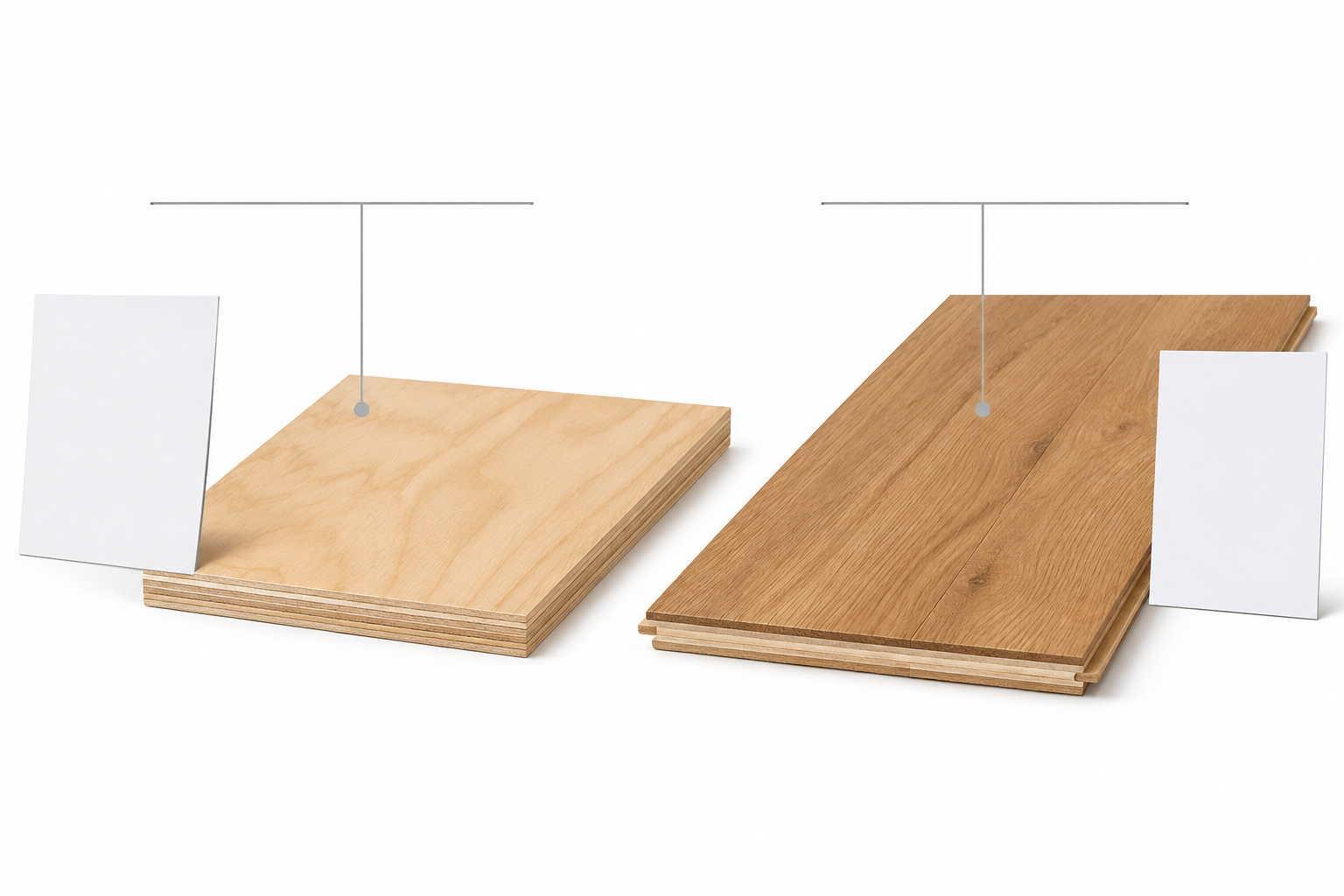
An E0 or F4 plywood description does not by itself establish finished-flooring compliance. First establish the standard, material and supporting record behind that description; do not treat different designations as interchangeable or infer a universal threshold.
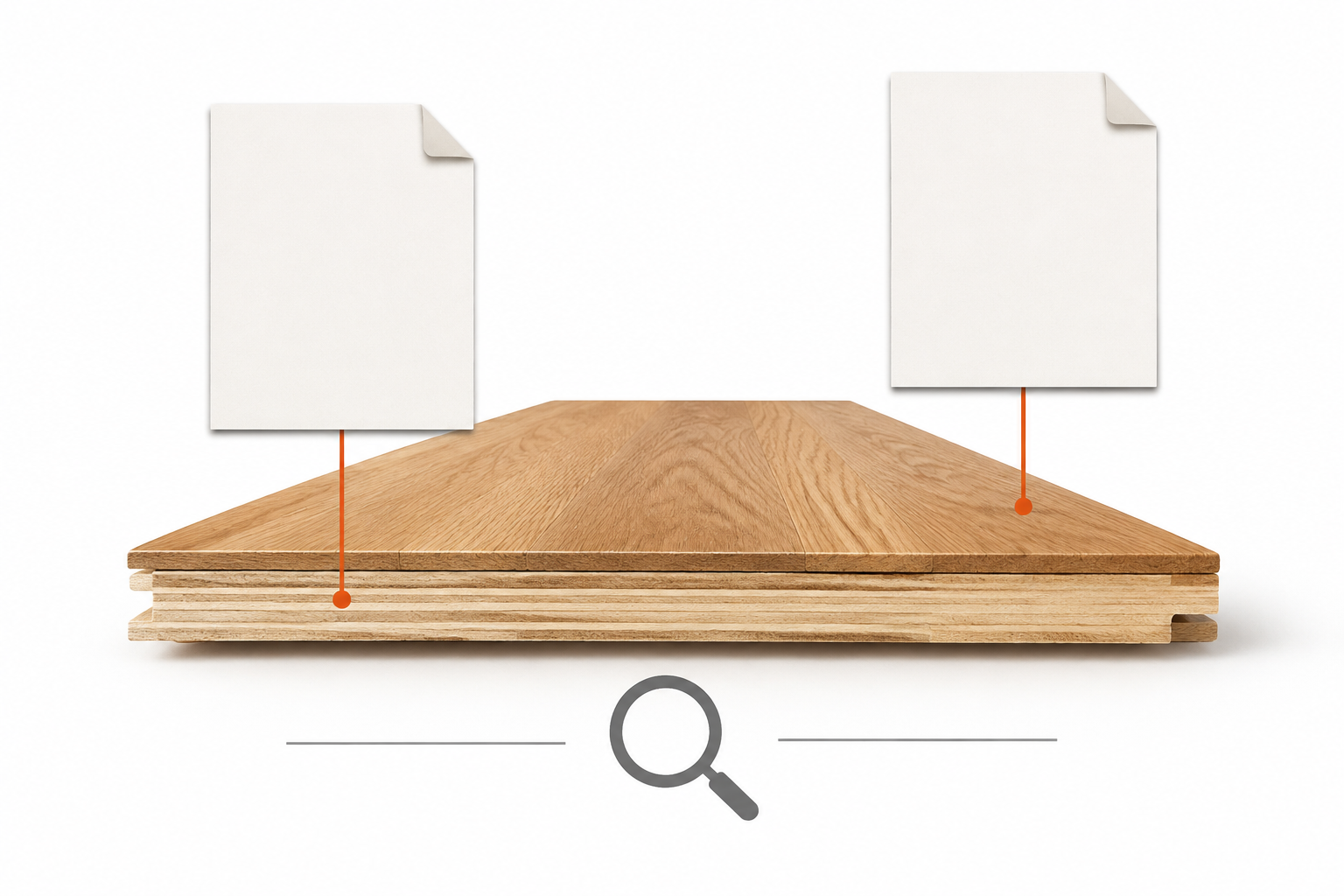
The finished board combines a hardwood face, plywood support, bonding materials and surface treatments. Evidence for the support alone does not describe every subsequent material or manufacturing step. This distinction does not mean the finished board fails: it means the supplied evidence answers a narrower question.
Use the engineered flooring construction guide to organize the specification, then request records for the actual configuration. A general construction description cannot establish the specimen tested for an individual order.
Check the tested specimen against the ordered construction and coating
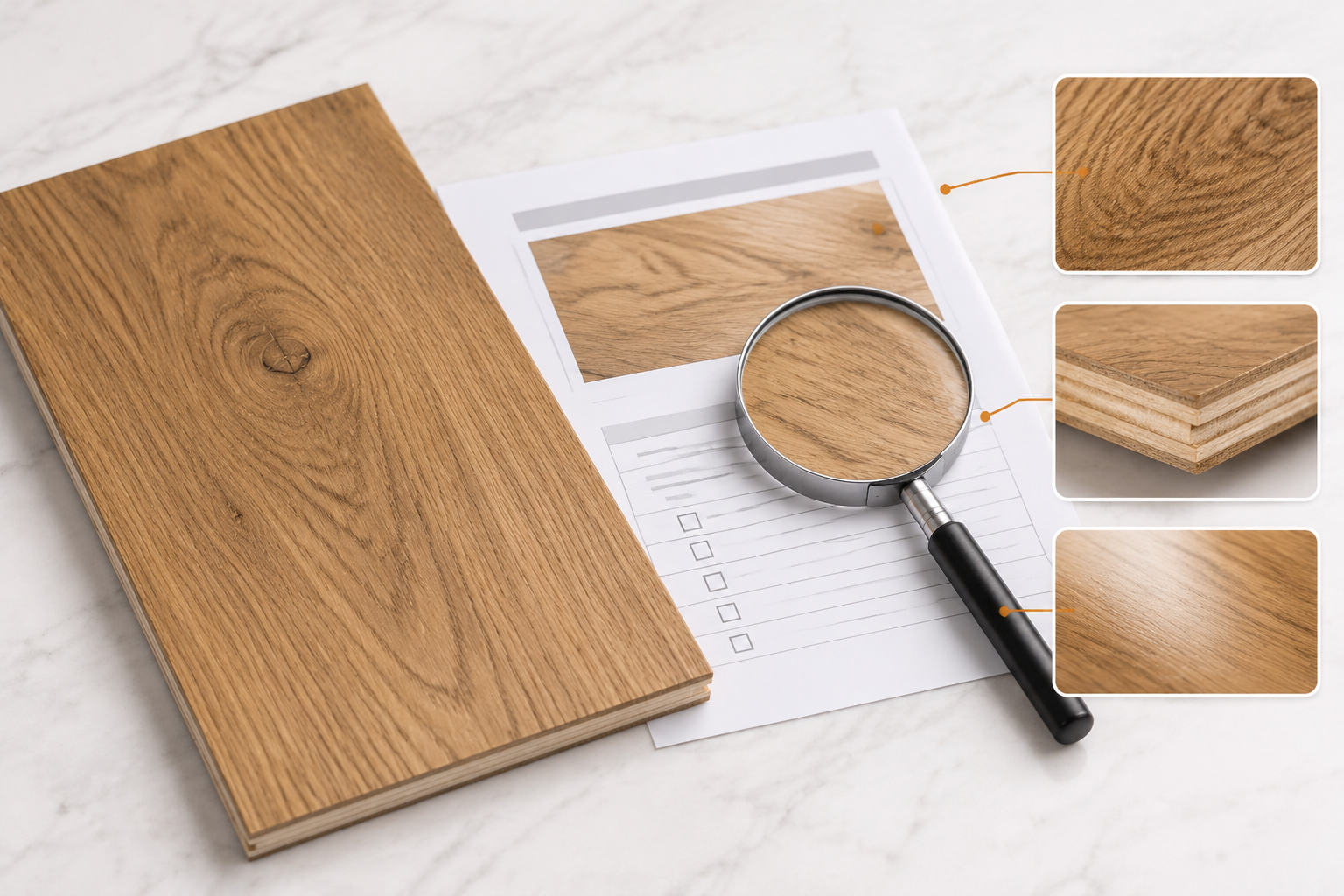
A report for one coating cannot be assumed to cover another. UV lacquer, UV oil and natural oil are different finish descriptions; a shared color name does not demonstrate a shared coating system.
For flooring test specimen identification, compare the report and its supporting sample record with the dated order specification. Record hardwood species, face thickness separately from total board thickness, plywood type, bonding system, dimensions, relevant treatments and coating identification. Request dimensions in millimeters rather than filling gaps from a collection-wide list.
Separate color treatments, such as smoking, from the protective coating. If a difference exists, ask whether documented product-family coverage or a technical assessment supports applicability. A supplier’s statement that two boards are “similar” leaves the relationship unresolved.
Comparison table: brochure reference, component statement and product report
Classify the document before comparing its claim with the purchasing requirement. This table describes potential uses; it does not confirm that any particular document is sufficient.
| Document type | What it identifies | What it may support | What remains to confirm |
|---|---|---|---|
| Brochure reference | A published material description or claim | An initial evidence enquiry | Underlying records, exact material, method and current applicability |
| Plywood emissions statement | Plywood described by its issuer | Review of the stated component claim | Supporting test evidence, connection to the ordered plywood and finished-product requirements |
| Plywood test report | A plywood specimen tested by a stated method | Assessment of that component within the report scope | Traceability to the board’s support and any additional finished-flooring evidence |
| Finished-flooring test report | A finished-board specimen or explicitly defined product family | Review of the identified flooring under the stated method | Order match, destination acceptance, relevant dates and coverage limitations |
Even a finished-flooring report needs a scope check. Its title alone cannot establish that every species, coating or private-label variant is covered.
How should a buyer review evidence for the actual destination?

Confirm the destination country and intended application before deciding which emissions evidence is required. Import obligations, project specifications and voluntary indoor-air requirements may ask different questions.
Have the responsible importer, project specifier or compliance adviser identify the applicable requirement and acceptable evidence route. Ask whether it concerns a wood-based component, the finished flooring, or separately assessed installation materials. A finished-board report does not automatically cover site-applied adhesive or the complete installed assembly.
For project procurement, project flooring support provides a route to coordinate product and installation questions. Keep emissions review separate from fire, slip and other performance reviews, each with its own relevant records.
A numbered review of issuer, method, specimen, dates and applicability
- Identify the issuer. Obtain the complete record, report number and attachments. Verify authenticity and any required laboratory competence or accreditation scope through an appropriate verification route.
- Read the method. Check the standard and edition, measured substances, sample preparation, test conditions and result units. Do not compare values from different methods as though they were equivalent.
- Match the specimen. Connect sample identifiers, photographs or construction descriptions to the ordered board. Record any manufacturer-to-private-label code mapping.
- Check the dates. Distinguish sample receipt, testing and report issue dates. Confirm applicable validity or acceptance rules and whether construction or coating changes have occurred since testing; age alone does not establish applicability.
- Record the decision. Ask the responsible reviewer whether the evidence meets the destination and project requirement. Document coverage, exclusions and outstanding actions before technical acceptance.
This sequence makes engineered flooring emissions evidence reviewable by the next person handling the order.
What should buyers request when the scope does not match?
Request a traceable explanation of coverage and the missing evidence. If the specimen cannot be matched to the order, record applicability as unconfirmed rather than treating the document as a pass or a failure.
A focused request can read: “Please identify whether this record concerns plywood or finished flooring, connect the tested specimen to our specification revision, and provide supporting documentation for any differences in construction or coating. Please confirm the evidence available for our stated destination requirement.”
If existing records cannot resolve the gap, agree whether further assessment or testing is needed, who will define the specimen, and how cost and timing will be handled. Keep appearance sample approval, technical evidence acceptance and commercial order confirmation as separate decisions.
How should GoLink's published plywood references be interpreted?
GoLink Floor’s published E0 / F4 plywood information is a starting point for material-scope enquiries. The certification and report references should be followed by a request for genuine applicable records identifying the material or product, issuer, holder where relevant, specimen, method and validity where applicable.
For example, GL-0225 Pale Wheat Oak identifies a published oak flooring reference with brushed texture and UV lacquer. That page does not establish emissions certification. The accepted construction must also be identified before assessing whether any report covers the proposed order.
Use the GL product code alongside the dated specification and sample reference. A brochure color code is a separate identifier and cannot establish finished flooring test scope.
Frequently asked questions
These answers address document handover and interpretation questions that often remain after the initial scope review.
Send the product specification and destination evidence brief
Close the review with a clear record: which requirement applies, which document supports it, how the specimen matches the ordered construction, and what remains unresolved. Keep that record with the accepted specification. A complete evidence brief gives the manufacturer and responsible reviewer a practical basis for deciding the next step.
FAQ
Can an emissions report replace fire or slip evidence?
No. Emissions, fire behavior and slip resistance concern different properties. Request separate applicable records for each required performance claim and check the specimen and method independently.
Does a private-label name need to appear on the original report?
A different trade name does not automatically invalidate a report, but the relationship must be traceable. Request a documented mapping between the report’s manufacturer or specimen reference and the private-label product, then confirm acceptance under the applicable requirement.
Is a report excerpt or translated summary enough?
Use a summary for initial screening and obtain the complete original record with attachments for review. If a translation is needed, retain both versions and resolve differences against the original; a summary may omit specimen details or limitations.
Does an emissions test report automatically expire?
There is no universal expiry period that can be applied to every report. Check the relevant scheme, destination and project rules, along with product changes since testing. Distinguish a historical test result from a certificate with stated validity or surveillance conditions.
Discuss Your Engineered Flooring Requirements
Share your species or GoLink product reference, plank or pattern format, estimated quantity per color and destination country. Include the proposed construction, coating, intended use and emissions-document requirement, with any report already received, so GoLink Floor can discuss product-specific evidence and outstanding scope questions.