Engineered Flooring over Underfloor Heating: An Importer’s Approval Checklist
Build a product-specific heating approval record that connects the engineered board, substrate, installation system and operating instructions before a bulk order.
Home|Blog|Engineered Flooring over Underfloor Heating: An Importer’s Approval Checklist
An engineered floor is a layered wood product, but that description alone does not establish suitability for a heated installation. For an importer, the useful question is whether the exact board and complete floor build-up have been reviewed for the intended heating system. A colour sample cannot settle that question. Approval needs a product identity, a proposed installation method and a clear allocation of responsibility between the supplier, heating designer and installer. This article sets out a purchasing workflow; it is not an installation instruction or approval for every GoLink product.
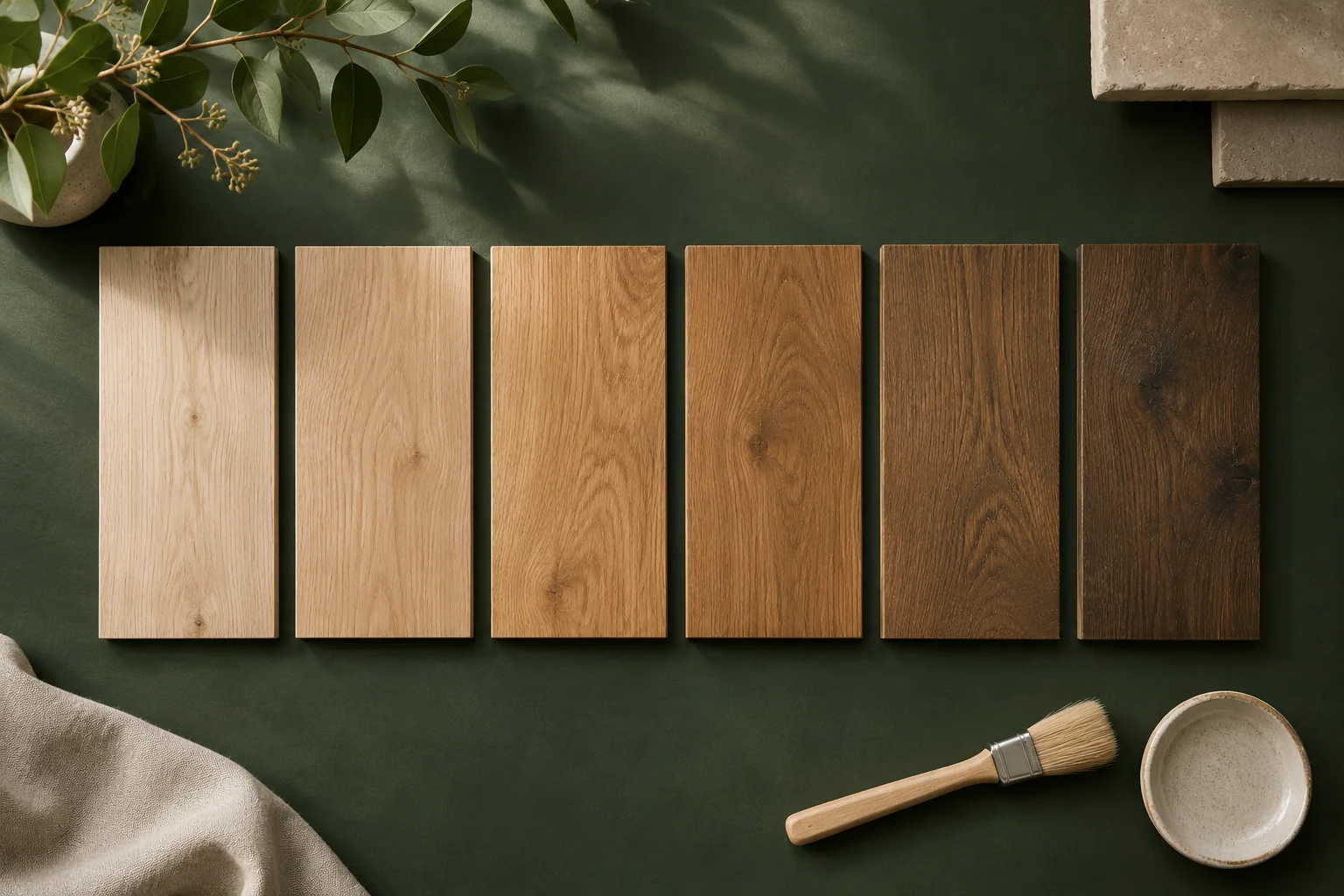
Compare tone, grain and sheen beside the other materials in your scheme.
Begin with the complete floor build-up
Ask the project team for a simple section through the floor. It should identify the heating system, substrate, adhesive or underlay, engineered board and any surface coverings. Record whether the heating is embedded or installed by another method, who designed it and who will commission it. A short email saying “suitable for underfloor heating” leaves too many variables open. The purchasing record should name the particular installation to which the statement applies.
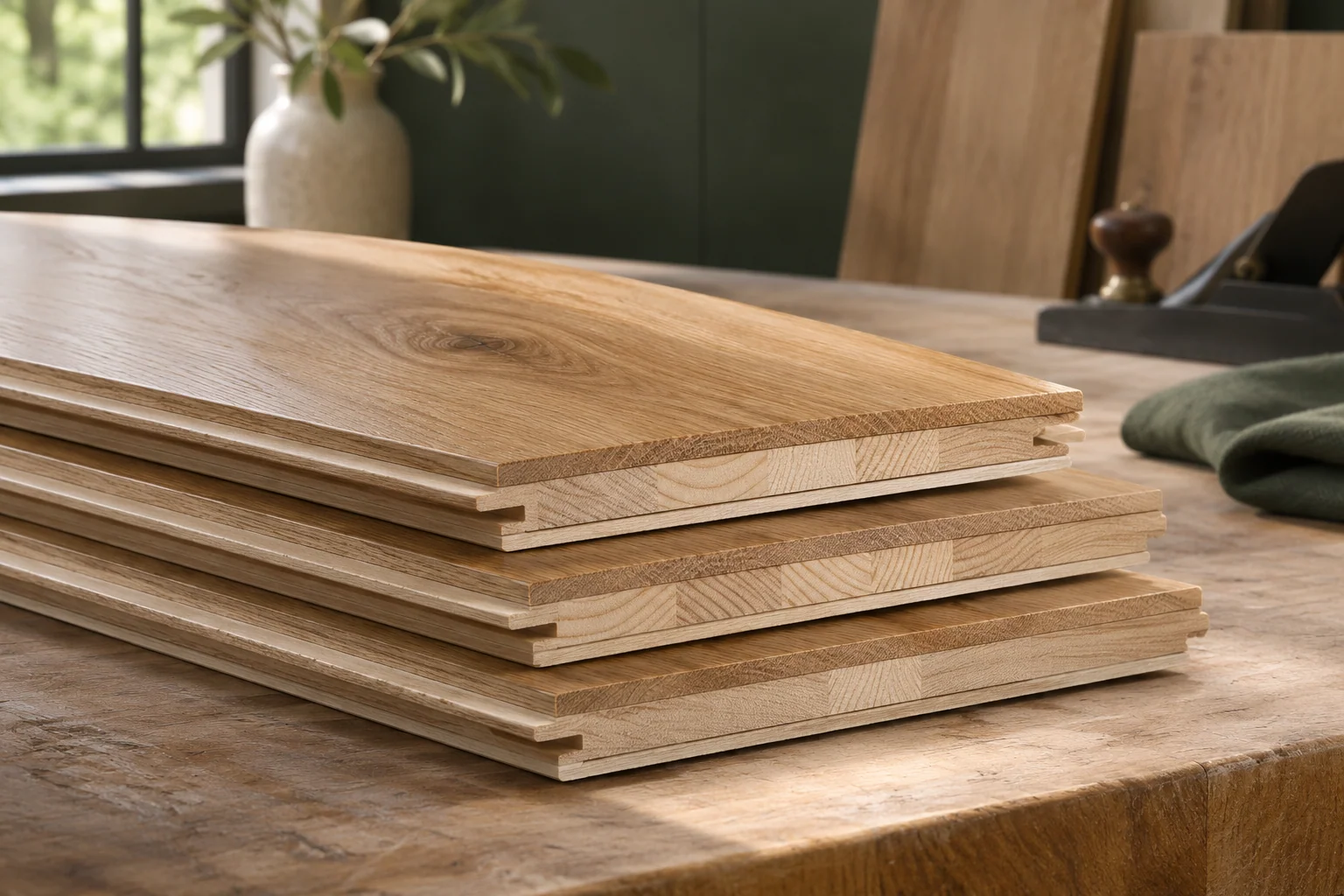
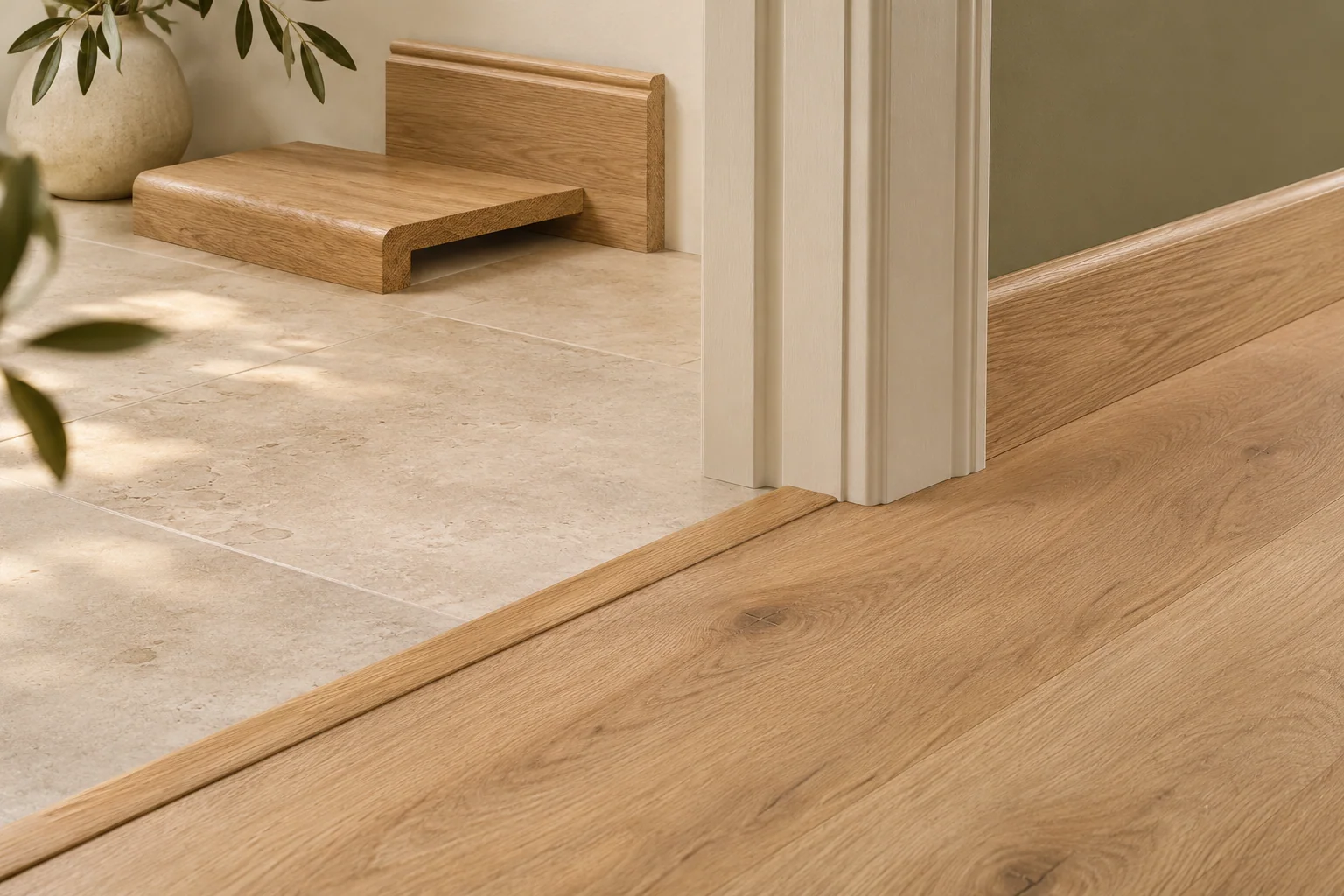
For the board itself, record the product code, species, total thickness, hardwood face, supporting layers, dimensions and joint. GoLink’s range includes hardwood veneers over multi-layer eucalyptus or birch plywood, with the final construction agreed for the selected order. Do not transfer an approval between products solely because their colour or collection name is similar. If the width, construction or coating changes during development, ask whether the earlier review still applies.
Review the hardwood veneer, multi-layer plywood support and joint profile together.
Separate moisture readiness from the delivery date
Manufacturer guidance such as Shaw’s engineered installation instructions treats substrate condition, moisture assessment and site readiness as checks before installation. These principles explain why arrival of the goods is not permission to fit them. The installer must use the applicable flooring and installation-system instructions, with the relevant testing method and acceptance criteria. Requirements from another manufacturer should not be copied into a GoLink purchase specification.
An importer can make this practical without becoming the installer. Name the person responsible for reporting site readiness, identify the documents that person will retain, and establish what happens if the building is not ready when the goods arrive. Keep manufacturing completion, warehouse receipt, site delivery and installation release as separate milestones. This prevents a commercial shipping target from being mistaken for a technical readiness decision.
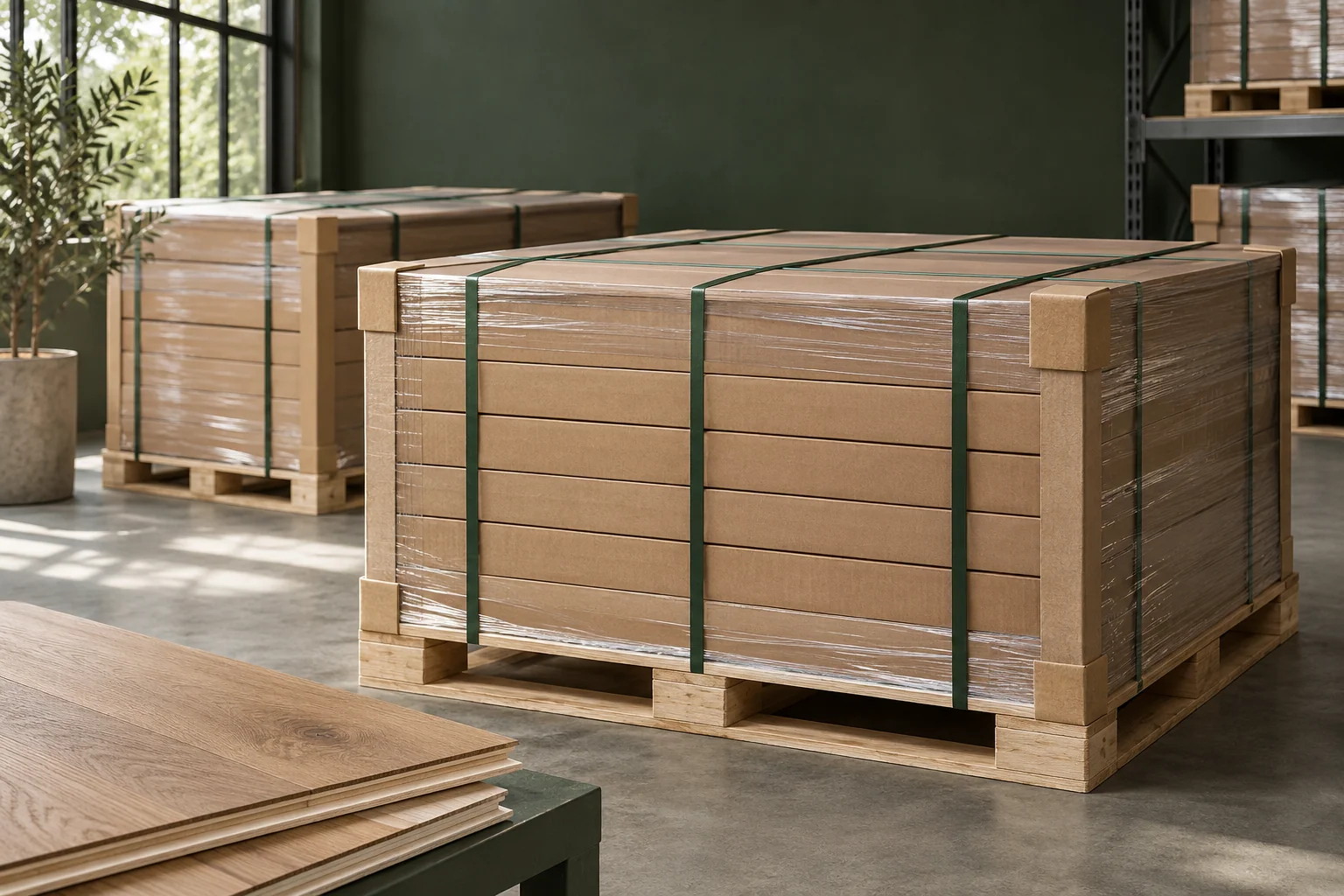
Paper cartons, protective film and pallets connect the floor to its shipment records.
Ask for operating conditions in writing
The project’s approval pack should include the instructions that govern commissioning, start-up, ongoing operation and any seasonal changes. Ask the responsible technical parties to identify the limits and controls relevant to the actual system. Do not insert a universal temperature, humidity range or acclimatisation period into a brochure because it appears in an unrelated guide. NWFA provides installation and moisture resources, but the selected product and system still need their own instructions.
Record who will hand this information to the owner or facilities team. A procurement file stored only by the importer will not help someone operating the heating several months later. Where apartments or hotel rooms will be handed over in stages, include a document reference against each phase. Instructions should remain identifiable after cartons and temporary site labels have been removed.
Use the room, lighting and intended use to shape the flooring brief.
Use samples to answer appearance questions
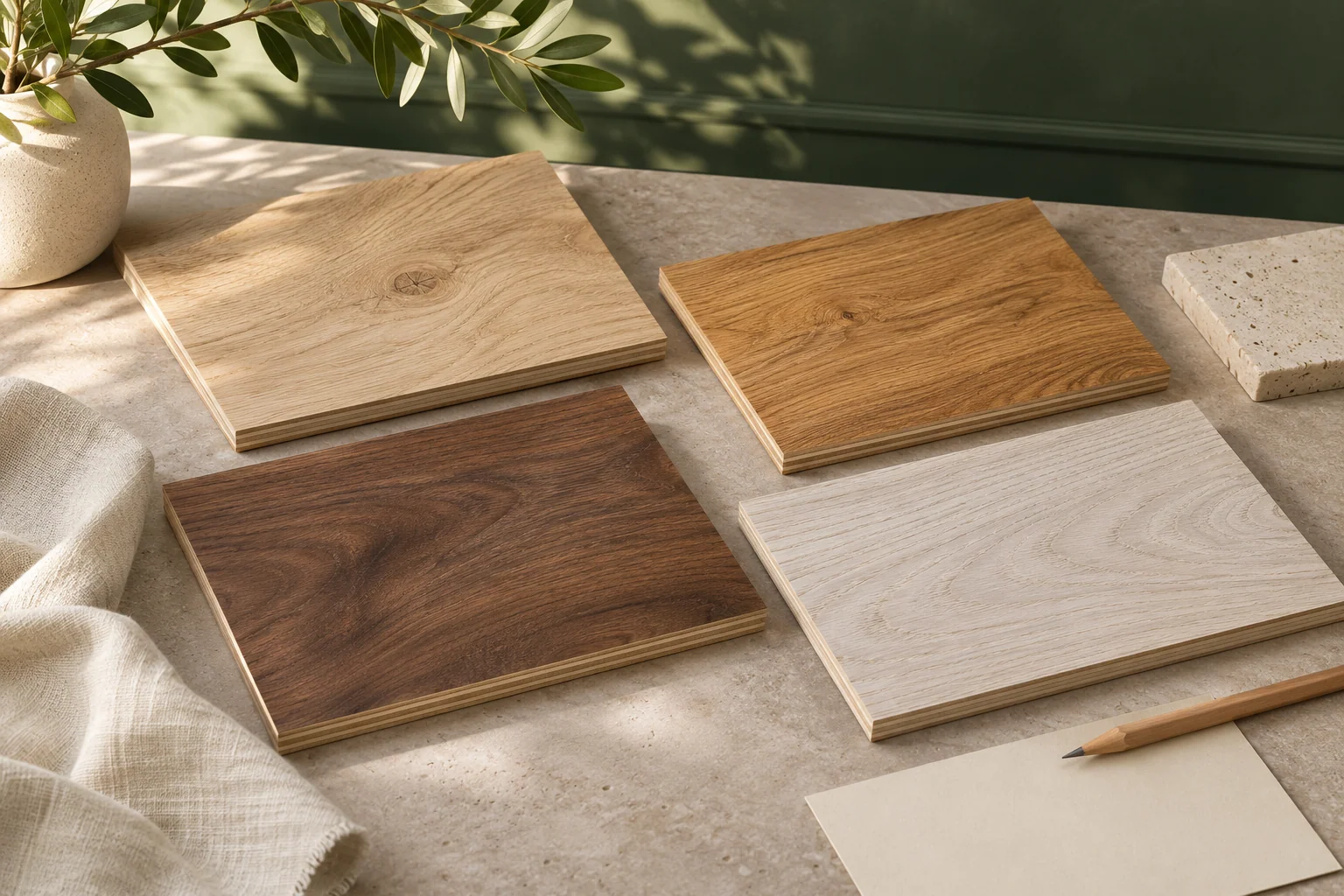
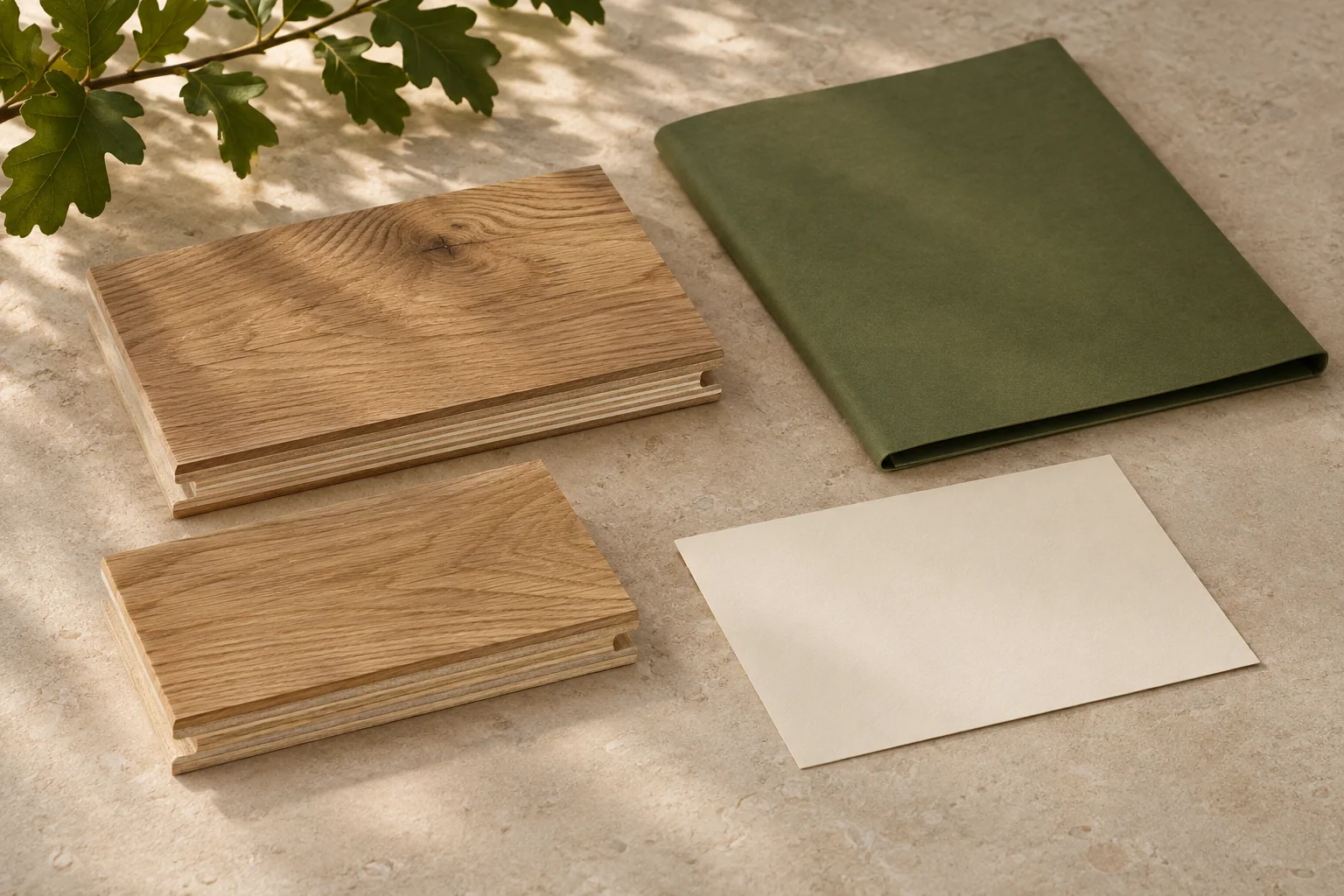
Heating compatibility and visual approval are different decisions. Use physical samples to review colour, grain, grade, texture and sheen, then connect that appearance reference to the technical product record. A proposed finish change should not disappear into an informal sample conversation. Record the coating direction and any requested revision so that the manufacturer, buyer and installer are working from the same version.
For patterned floors, ask the installer to review layout and joint requirements before the order is released. A herringbone or chevron reference introduces geometry as well as appearance. Accessories and adjoining finishes also belong in the brief. The purpose is to identify interfaces early, rather than to assume that one installation detail works for every board format.
Record colour, surface texture and the protective coating as separate choices.
Create an approval register with clear owners
Product: code, species, construction, dimensions, joint and coating version.
System: heating design, substrate and proposed adhesive or underlay.
Readiness: required checks, responsible installer and retained records.
Operation: applicable commissioning, use and care instructions.
Release: open questions, approving parties and the date of the accepted revision.
For example, a buyer may approve a pale oak colour while the project team is still evaluating the installation system. Mark the colour as accepted and the heating application as open. Do not label the whole product “approved” until the outstanding technical decision is resolved. A simple status register is more useful than a folder containing several unconnected approvals.
Paper cartons, protective film and pallets connect the floor to its shipment records.
What to send GoLink before requesting an order
Send your product or GL reference, estimated area, destination and proposed construction together with the project’s heating and installation information. Identify any technical documents your team needs to review. We can then discuss the manufacturing configuration and the information available for that enquiry. Keep unconfirmed points visible in the quotation and order review; a generic engineered-flooring description should never silently replace a product-specific decision.
Compare tone, grain and sheen beside the other materials in your scheme.
Sources and scope
The external references below inform the general discussion of site readiness and technical documentation. They do not certify GoLink products or replace the instructions for the product supplied.