Flooring Reorders: Control Private-Label Product Changes
Distinguish an unchanged reorder from an appearance question or product revision, then connect the accepted specification, sample identity and artwork version to the next order.
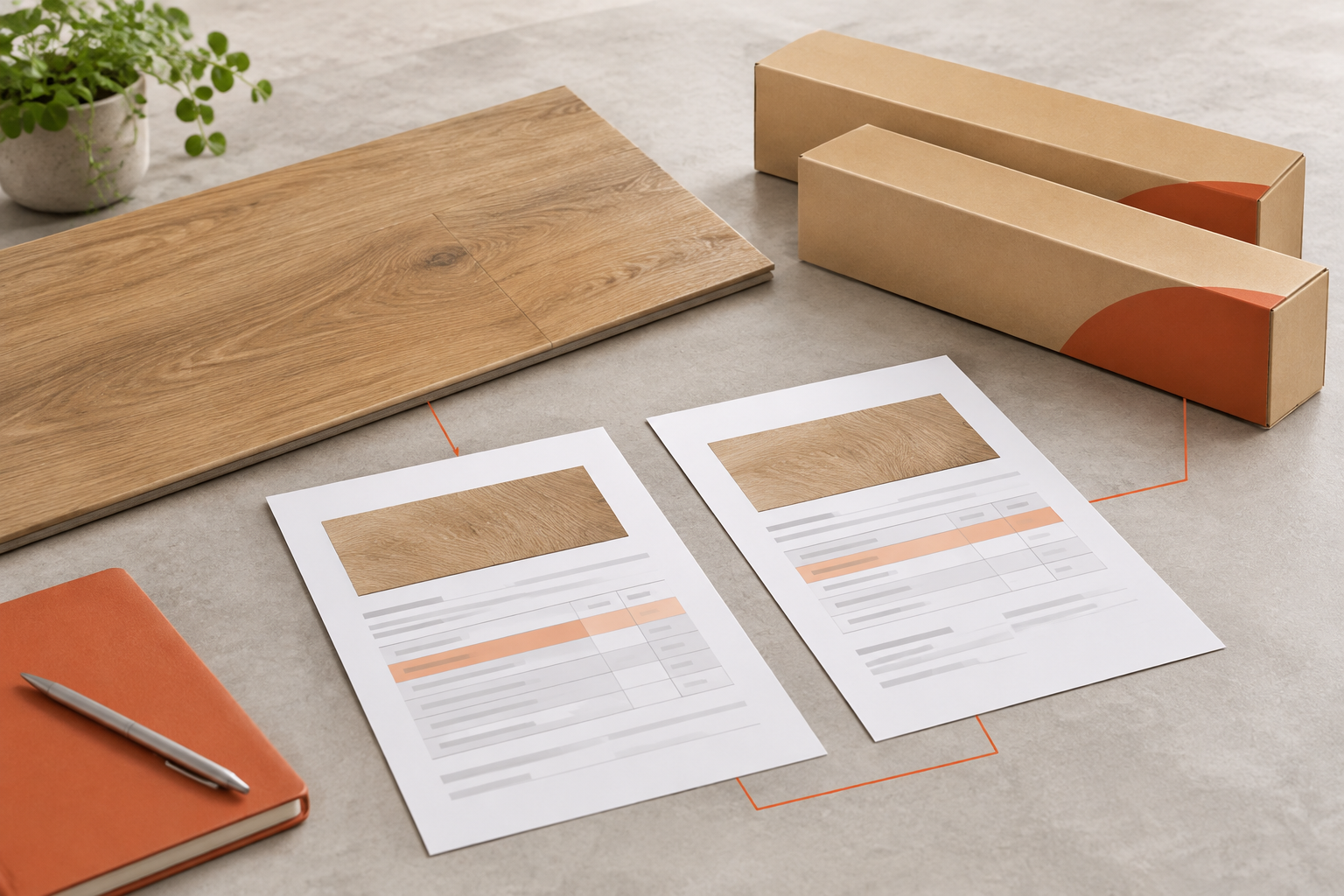
Table of Contents
- When do flooring reorders become revised products?
- Why is the buyer's product name insufficient?
- Which changes require an explicit review?
- Construction, joint, appearance and coating changes
- Carton artwork, labels and product-code changes
- Repeat order, appearance review or specification revision?
- How should buyers approve a change?
- A numbered revision-approval process
- How should old and revised records remain distinguishable?
- How can GoLink review a private-label reorder brief?
- Frequently asked questions
- Send the previous order reference and proposed changes
Flooring reorders remain unchanged repeats only when the agreed product specification, appearance reference and packaging requirements remain applicable to the new order. For private-label brands, importers and distributors, even a small change should be recorded and reviewed before acceptance; a familiar product name does not establish identical timber appearance, joint compatibility or approval of revised artwork.
When do flooring reorders become revised products?
A product revision is a deliberate change to an accepted manufacturing requirement. A repeat order requests that accepted configuration again. Packaging can have its own revision without changing the floor, but the new order must identify both records.
Ask what differs from the last accepted order, not simply whether the range name is unchanged. A request for less sheen, fewer knots or a different joint is not just an administrative repeat.
An unchanged reorder does not guarantee an exact visual match to an earlier batch. Natural grain and tone vary, and an installed floor may have changed in appearance. Keep the agreed appearance range as the reference rather than promising board-for-board identity. The workflow below is general buyer guidance, not a statement of automatic GoLink order acceptance.
Why is the buyer's product name insufficient as a manufacturing reference?
A sales name identifies a range, not every manufacturing detail. Yes, an unchanged product code can conceal a coating or joint change if the underlying record is not controlled.
Connect the buyer’s code to a dated specification, approved sample identity, artwork version and previous accepted order. The name can remain familiar while those references show what actually changed. Treat an incomplete historical record as a clarification task, not permission to reconstruct missing details from photographs.
Which changes require an explicit review?
Review every requested departure from the accepted product or packaging record. Record the previous requirement, proposed requirement, reason, affected documents and approval status.
Separate product approval from installation or system review and commercial confirmation. A visually acceptable sample does not establish joint interchangeability, heating suitability or acceptance of new quantities and delivery requirements.
Construction, joint, appearance and coating changes
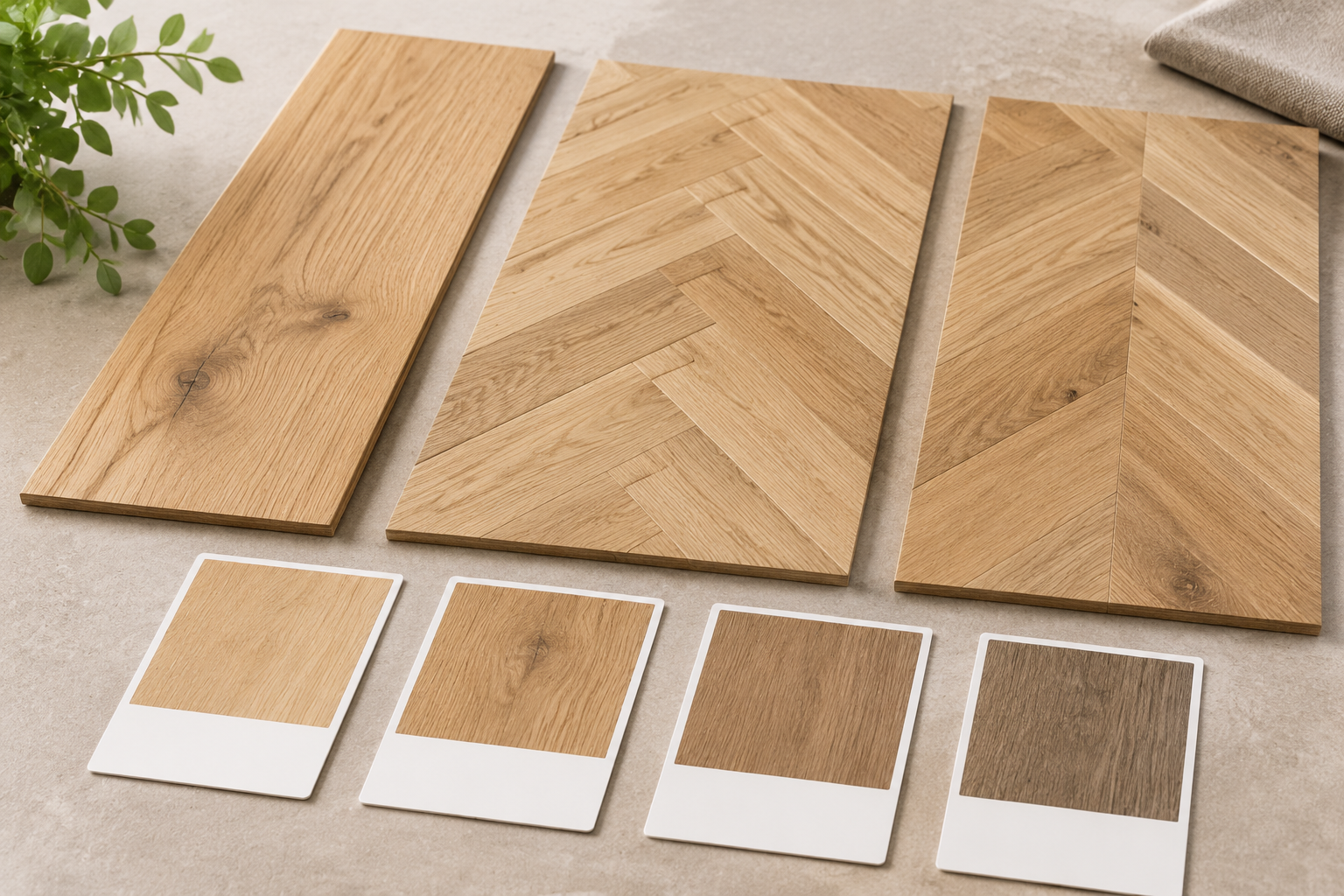
Compare changed fields against the complete board, not in isolation:
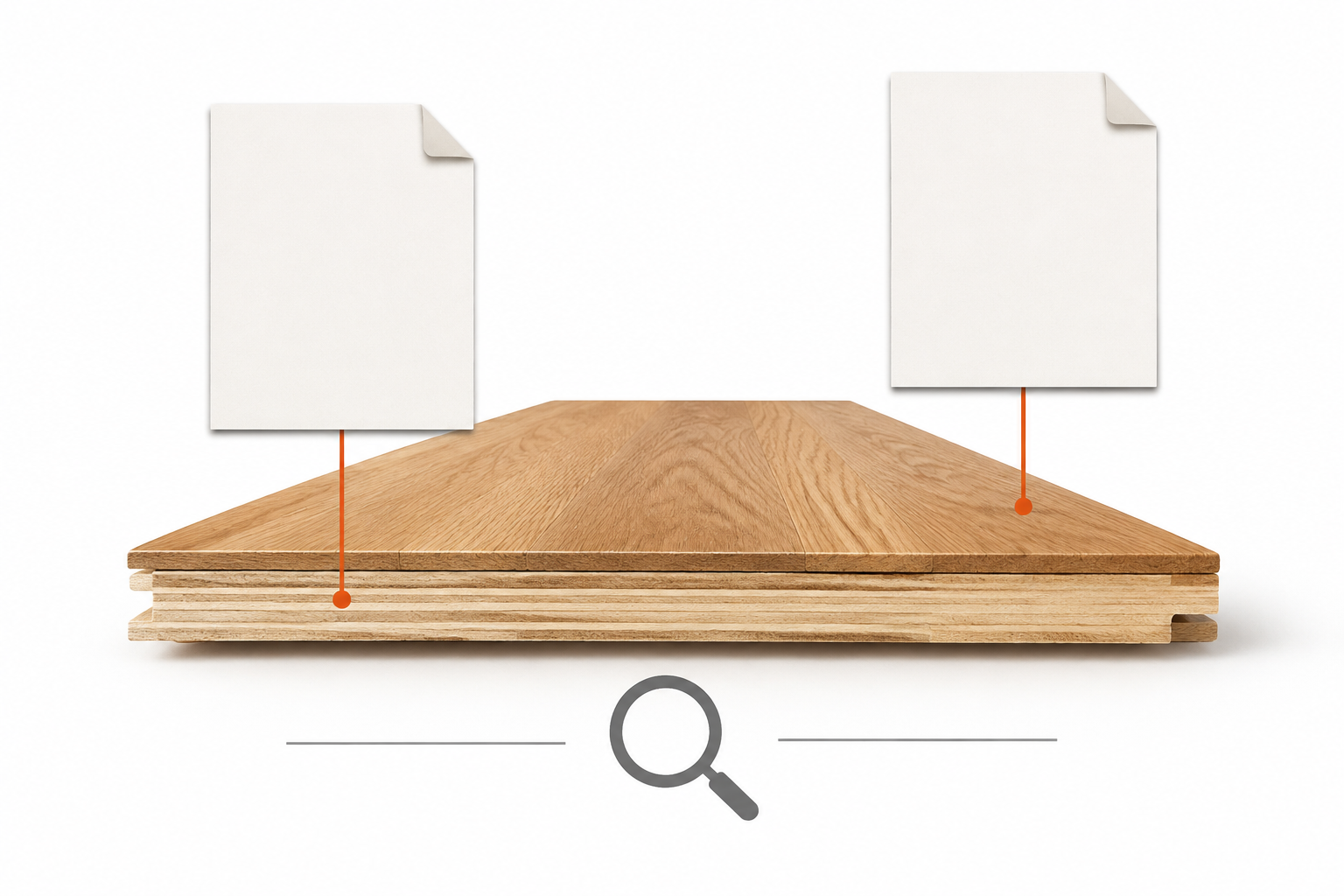
- Construction: species, hardwood face thickness, plywood support and total board thickness. Record dimensions in millimeters; face thickness is not total thickness.
- Geometry: length, width, pattern, edge and joint profile. Similar-looking joints are not proof of interchangeability.
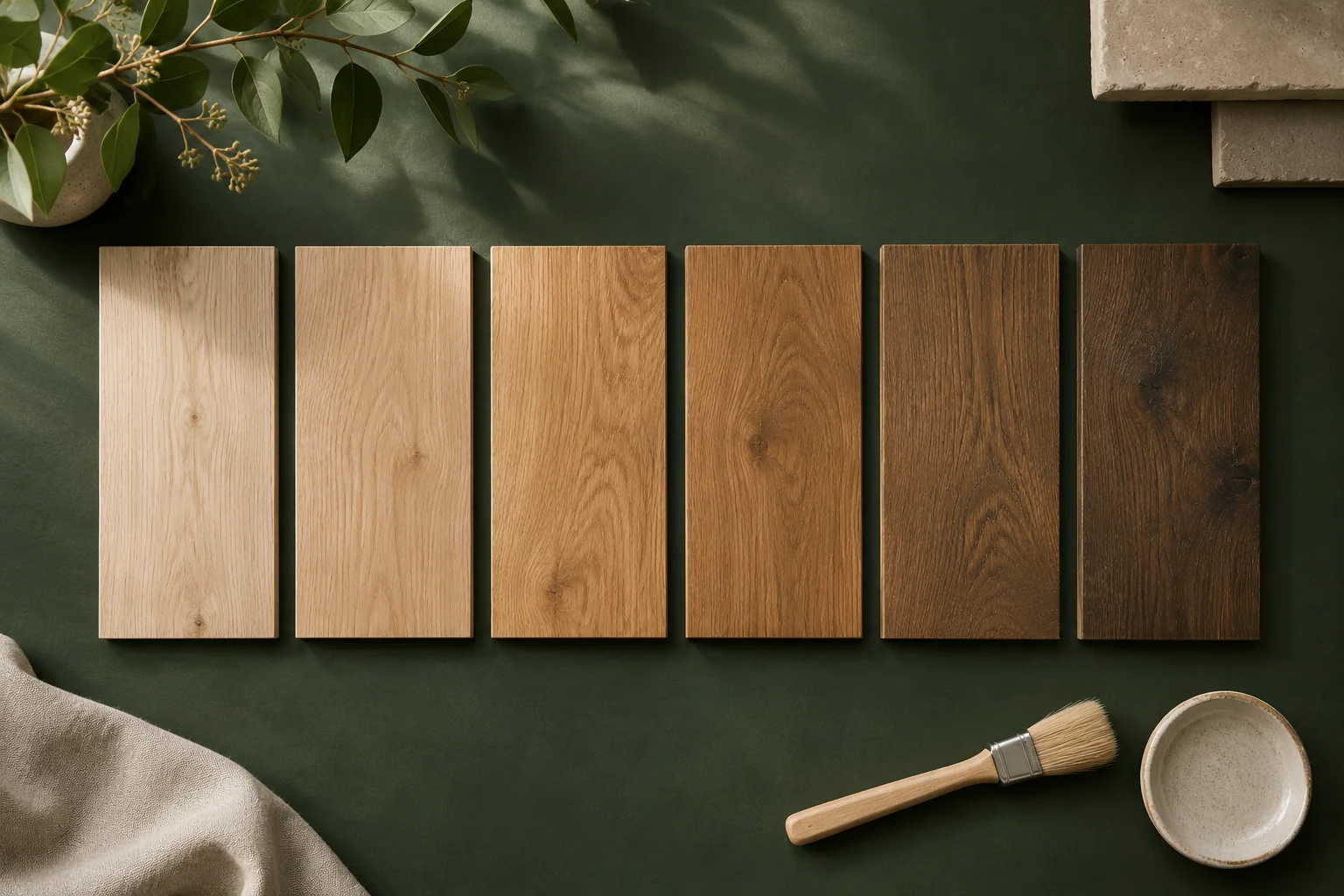
- Appearance: grade, knots, sapwood, filling, tone, texture and sheen.
- Finish: color treatment, protective coating and associated care instructions.
Smoking is a color treatment, not a protective coating. UV lacquer, UV oil and natural oil are not interchangeable descriptions. Ask whether a proposed change also affects instructions, technical evidence or project interfaces; do not carry earlier conclusions forward without review.
Carton artwork, labels and product-code changes
Yes, record an artwork-only change against the new order. Identify the approved print file and affected panels, labels or inserts, even when the flooring specification stays unchanged.
Check that species, dimensions, carton coverage, product code and care wording agree with the accepted product. Confirm the destination country and order-specific labeling requirements with the responsible parties. Earlier certification references or marks are not blanket authorization for a new label.
Use packing and label planning to frame the review, then agree how unused older packaging will be handled. A revised file should not silently replace the record of what was previously printed.
Comparison table: repeat order, appearance review and specification revision
Classify the request by what changes, not by how small the buyer considers it.
| Request | Records needed | Decision before acceptance |
|---|---|---|
| Unchanged repeat | Previous order, specification, sample identity and artwork version | Confirm those references remain applicable; agree new commercial terms. |
| Appearance question | Retained range samples, photographs and the specific concern | Clarify whether the request is within the accepted range or changes it. |
| Specification revision | Old/new field comparison, revised specification and relevant samples or drawings | Approve affected technical and appearance requirements; review supporting evidence. |
| Artwork-only revision | Unchanged product reference, revised artwork and destination requirements | Approve print content and the packaging changeover for the new order. |
“Slightly lighter” belongs in appearance review first. If it changes the accepted tone range, record it as a revision.
How should buyers approve a change before placing the next order?
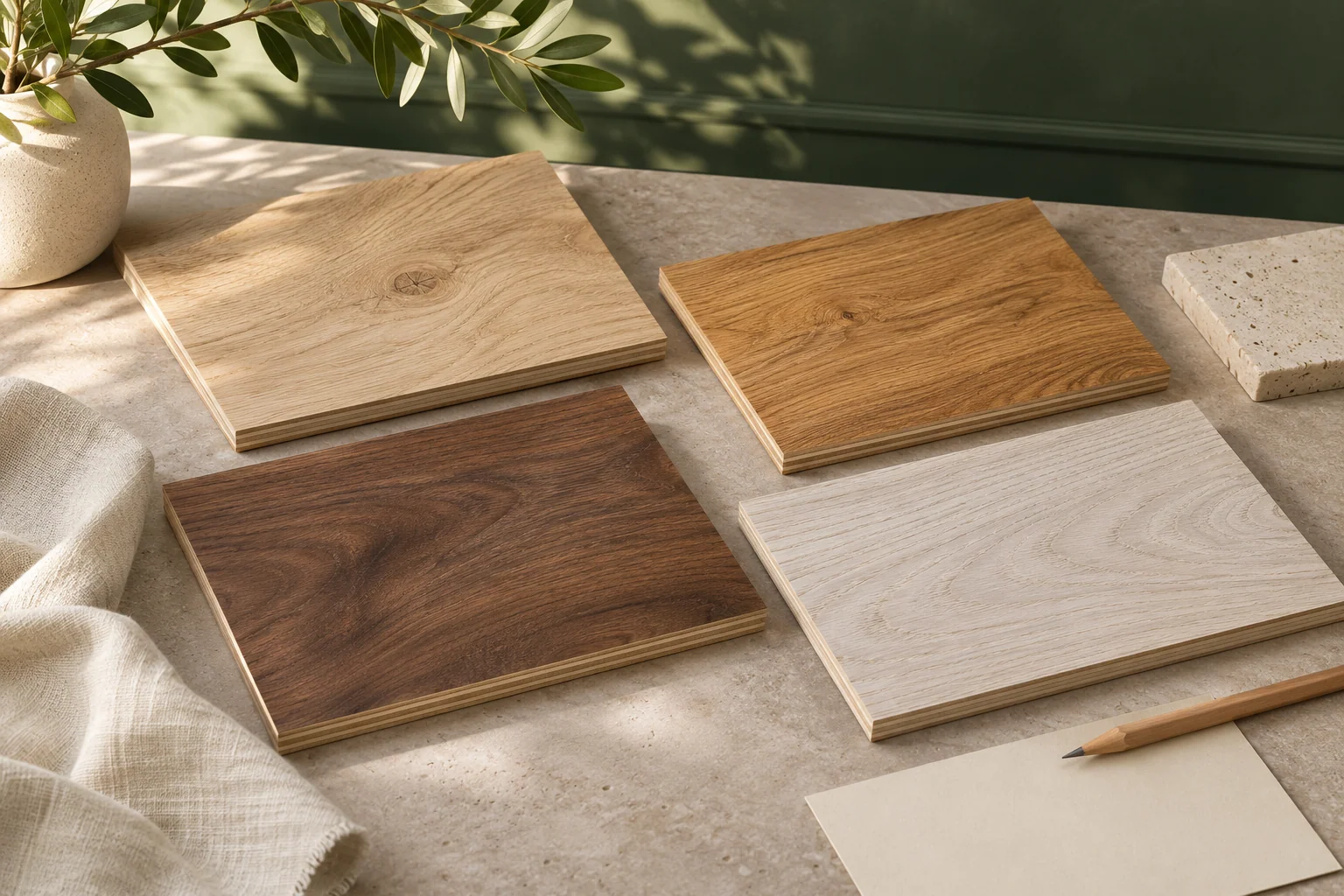
Approve the difference explicitly, then connect it to the complete revised record. A message saying “sample approved” is ambiguous unless it identifies the sample and what the approval covers.
For example, approval of tone should not be treated as approval of a changed plywood support. Record unresolved items separately so purchasing does not mistake a partial decision for production authorization.
A numbered process for comparing revisions and confirming accepted records
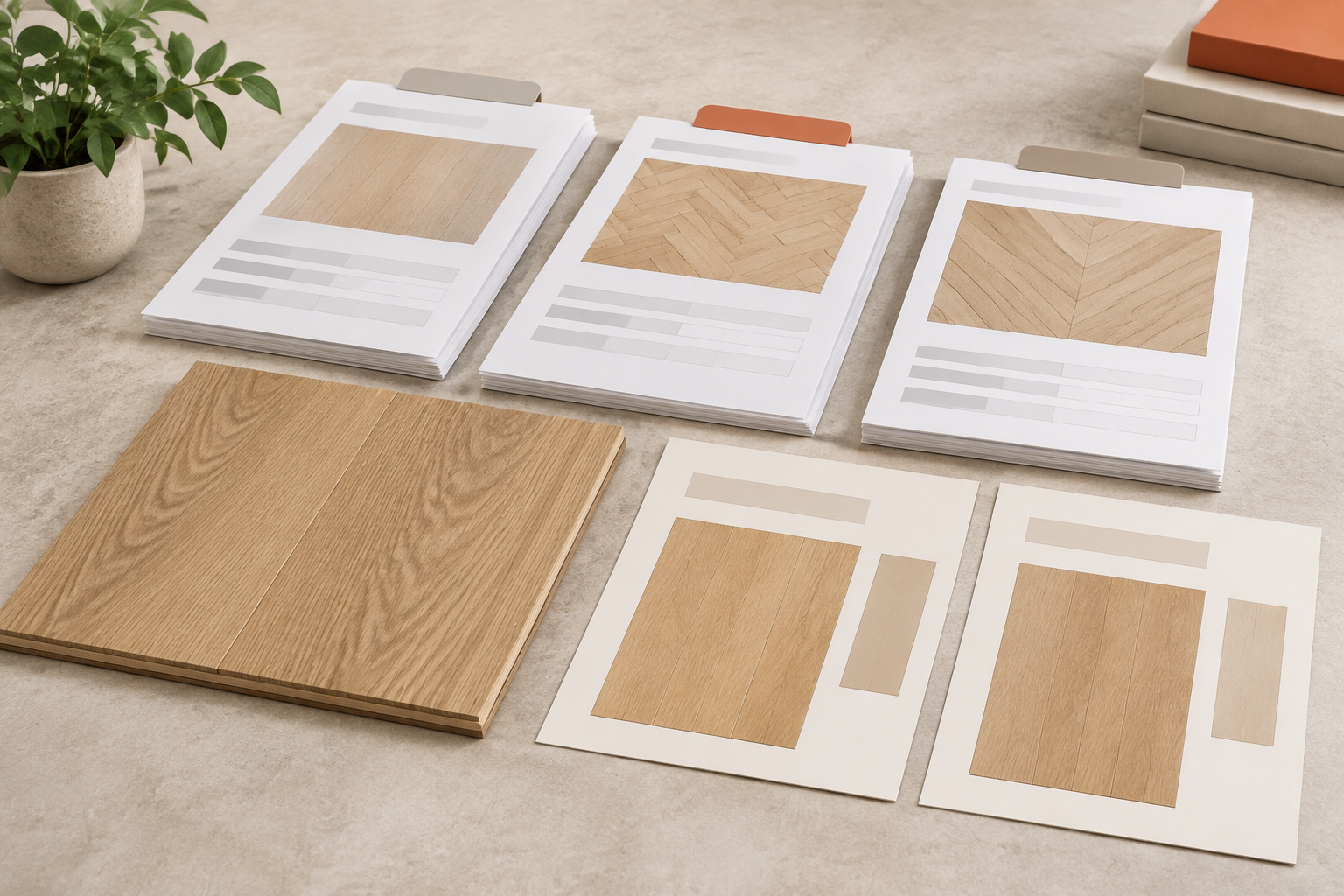
- Recover the baseline. Gather the previous accepted order, specification, sample identity and artwork files.
- List the differences. Compare old and proposed requirements field by field. Mark unchanged fields rather than leaving their status uncertain.
- Review consequences. Identify sample, drawing, installation, care, evidence and packaging questions created by each change.
- Approve identified references. Record the reviewer, date, document revision and scope of each decision. Resolve conflicts between samples and written requirements.
- Confirm the new order. Link the accepted specification, sample and artwork versions to the commercial order. Confirm quantity, destination, packing and separately agreed milestones.
Keep proposed, approved and superseded files distinguishable. An inquiry, sample discussion or purchase request is not an accepted production order.
How should old and revised product records remain distinguishable?
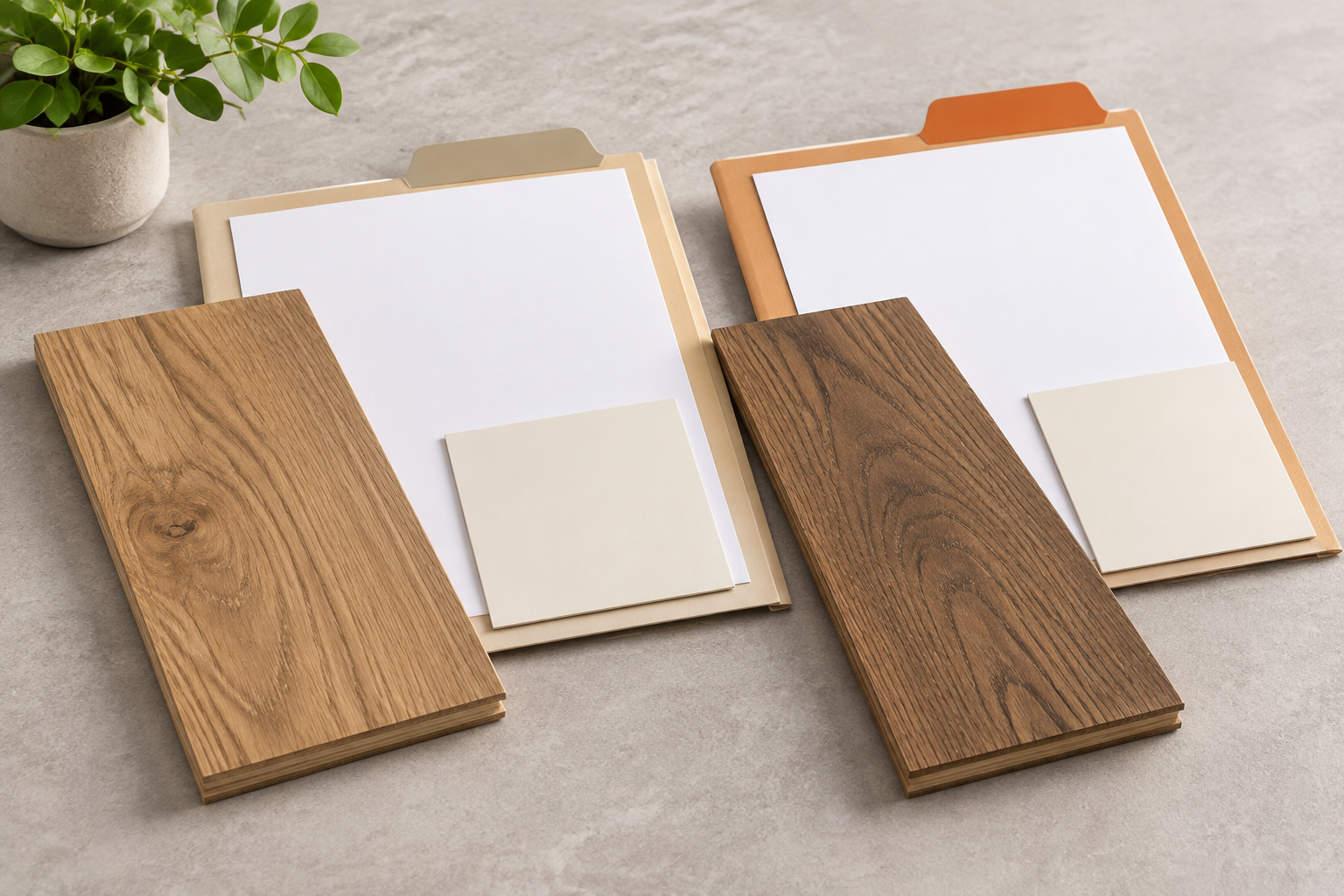
Preserve the historical record and issue a clearly identified successor. Flooring specification version control means being able to establish which requirements applied to each accepted order, not merely finding the newest file.
Keep a compact record containing the buyer code, manufacturer reference, specification revision, sample identity, artwork revision, approval status and applicable order. Retain a short change description alongside it.
For repeat flooring order identification, decide whether existing and revised inventory need separate stock codes or another visible distinction. Do not describe them as interchangeable without review. Align dealer samples and product information through wholesale and distribution support so an older display does not unintentionally represent a revised floor.
How can GoLink review a private-label reorder brief?
GoLink Floor is an engineered wood flooring manufacturer in Deqing, China. Its OEM and private-label flooring support connects product development, samples, specifications and branded packing.
The Signature Oak Private Label design reference is an illustrative development starting point, not a fixed stocked configuration. For a buyer’s developed range, the accepted specification, identified physical sample and artwork version would define the reorder rather than that design name alone.
Present private-label flooring revisions as a comparison with the previous accepted record. Manufacturing feasibility, required evidence, pricing and timing remain matters for the actual proposed order.
Frequently asked questions
These answers address reference gaps that can remain after the initial change review.
Send the previous order reference and proposed changes
The practical rule is simple: preserve what was accepted, identify what is changing and make the new order point to the correct records. That keeps a small request from becoming an undocumented product change.
FAQ
Can a website GL code be treated as the matching brochure color code?
No. Four-digit website GL product codes and five-digit brochure color references are separate identifier sets. Request an explicit mapping for the proposed product; do not infer a match from similar names, photographs or digits.
What if the original approved sample is missing?
Recover the accepted specification and available sample records, then agree how to re-establish the appearance reference. Label any retained boards by their source and condition. Do not silently substitute a website image or an aged installed board for the missing approval reference.
Can older and revised stock be sold under the same buyer code?
That requires an explicit stock-identification decision. Review whether customers, dealers and installers can distinguish the versions and whether their specifications differ. A shared sales code should not erase the order-level revision history or imply physical interchangeability.
Does an earlier test report automatically cover the revised floor?
No automatic carryover should be assumed. Request review of the report’s specimen, construction, coating, method and applicable scope against the proposed revision and destination. A brochure certification reference is not current order-specific evidence.
Discuss Your Engineered Flooring Requirements
Send your previous order reference and proposed changes, with the species or product reference, plank or pattern format, estimated quantity per color and destination country. Include the relevant specification, sample identity and flooring carton artwork version, noting any sample, branding, packing or document review needed. GoLink can review a focused specification and quotation brief; an inquiry is not an accepted production order.