Engineered Flooring Emissions Reports: Check the Scope
Review the boundary between plywood component evidence and finished-flooring reports, then connect the tested specimen, ordered configuration and destination requirement in a documented approval process.
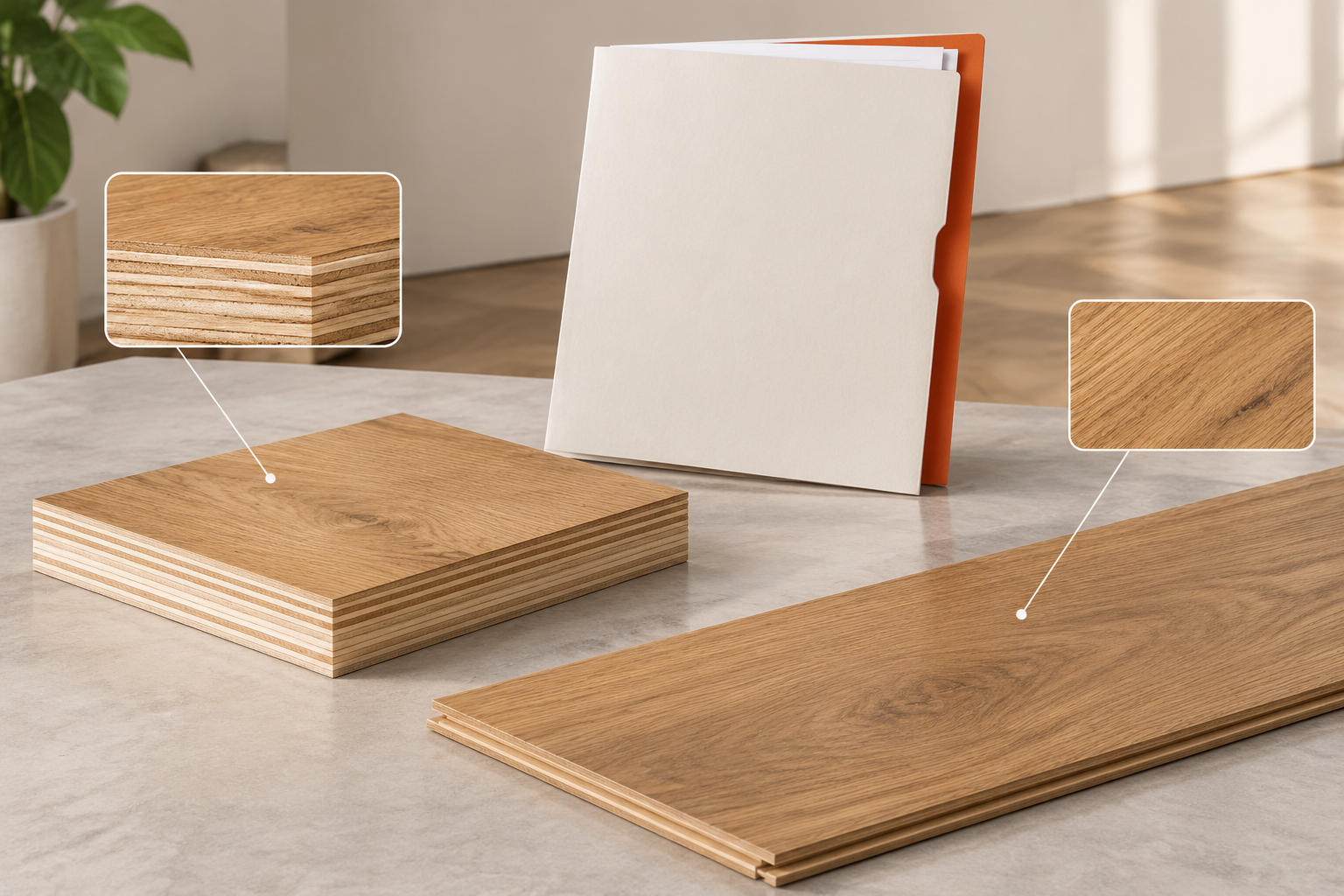
Table of Contents
- What must engineered flooring emissions reports actually cover?
- Distinguish component information from finished-product evidence
- Separate formaldehyde results from other emissions requirements
- Comparison table: plywood statements and finished-flooring reports
- Which report fields determine whether evidence applies?
- Check the report holder, issuing laboratory, specimen and method
- Connect the tested construction and coating to the ordered product
- How should destination and project requirements be confirmed?
- How do buyers request and review missing evidence?
- How should GoLink's brochure plywood information be interpreted?
- FAQs about emissions evidence and product changes
- Practical conclusion: approve applicable evidence, not a label alone
Engineered flooring emissions reports should identify what was tested, how it was tested, and how that specimen connects to the flooring being ordered. A plywood emissions statement alone does not establish finished-flooring compliance; buyers must check the complete configuration and the destination requirement before deciding whether the evidence is sufficient.
What must engineered flooring emissions reports actually cover?
The evidence must address the material or product covered by the applicable requirement. Some requirements concern a wood-based component; others concern emissions from the finished flooring. These are different approval questions, even when the documents arrive in the same supplier folder.
This guide is for importers, flooring brands, procurement managers and specifiers reviewing a defined purchase. The review principles are general guidance; the GoLink-specific example below illustrates product identification, not a compliance claim.
- Specimen
- The physical sample submitted for testing.
- Report scope
- The materials, configuration, substances and test conditions addressed by the report.
- Applicability
- The documented connection between that evidence, the ordered product and the requirement being assessed.
Distinguish component information from finished-product evidence
No: an E0 or F4 plywood statement does not, by itself, establish compliance for the finished floor. Ask which classification system and underlying records the statement refers to. Do not treat the labels as interchangeable or assign an unsupported numerical limit.
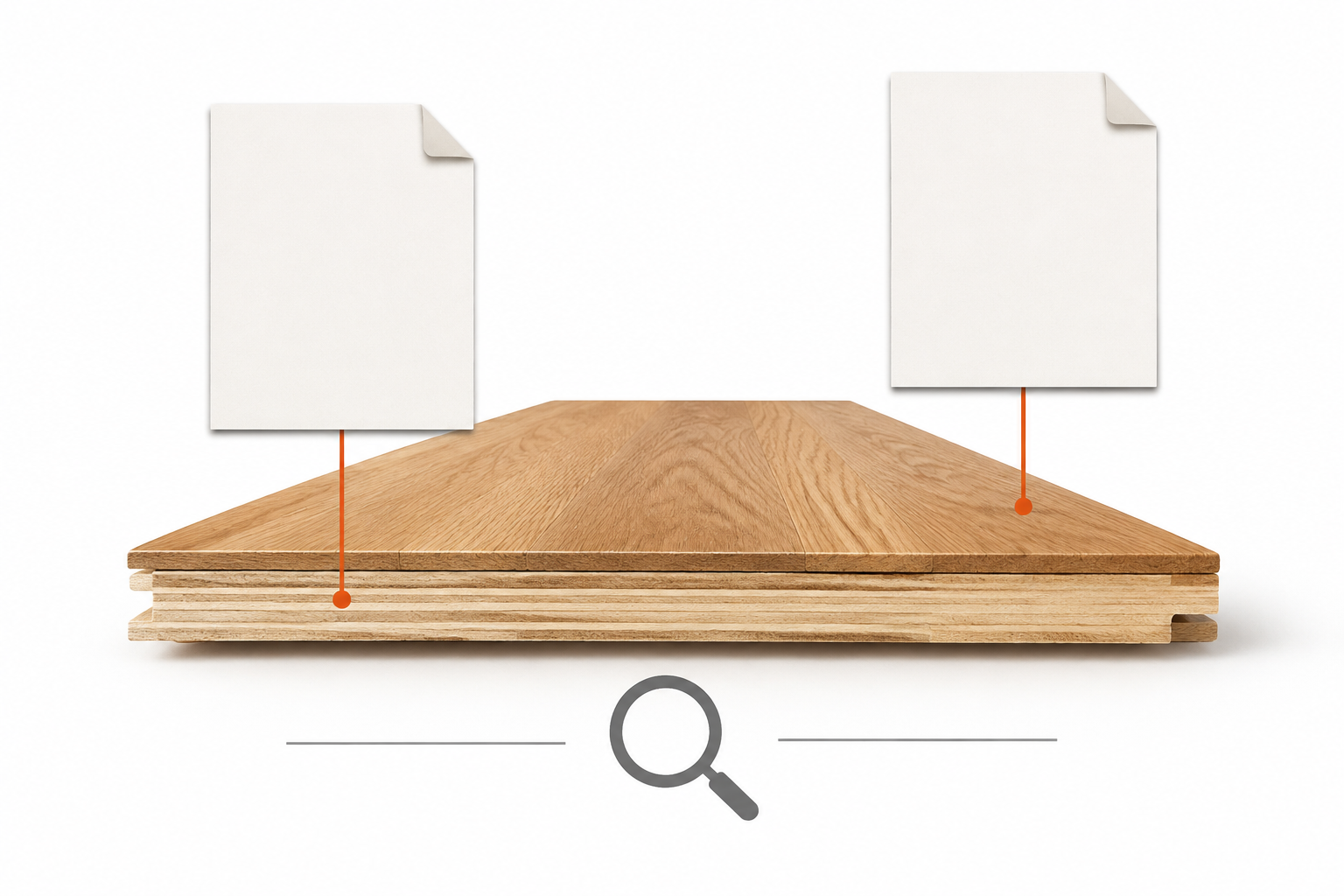
Plywood emissions evidence can support review of the backing material. Finished flooring also includes the hardwood face, bonding adhesive, surface treatments and coating. A component result does not describe the completed assembly unless the applicable evidence framework explicitly establishes that connection.
Keep relevant component records, but mark their boundary. A genuine plywood report may be useful and still insufficient for a finished-product requirement.
Separate formaldehyde results from other emissions requirements
A result for formaldehyde emissions answers a question about formaldehyde under the stated method. It does not automatically answer requirements for other volatile organic compounds, commonly called VOCs: substances that can be released into indoor air.
Request the required substance list or emissions scheme before comparing reports. Where a report includes total VOCs, check the method’s definition and reporting conditions rather than assuming it covers every individually restricted substance.
Also distinguish emissions testing from chemical-content testing. Measuring what a material contains and measuring what it releases under specified conditions are not the same assessment.
Comparison table: plywood statements and finished-flooring reports
Use the document’s actual scope, not its filename, to assign its role in the approval file.
| Evidence supplied | Useful for | Boundary to check |
|---|---|---|
| Brochure plywood classification statement | Identifying the supplier’s published material claim | Not a substitute for underlying records or finished-product evidence |
| Plywood laboratory report | Reviewing the identified plywood specimen under the stated method | Link to the backing used; does not automatically cover the finished floor |
| Finished-flooring laboratory report | Reviewing emissions from an identified finished specimen | Match construction, coating, method and destination acceptance |
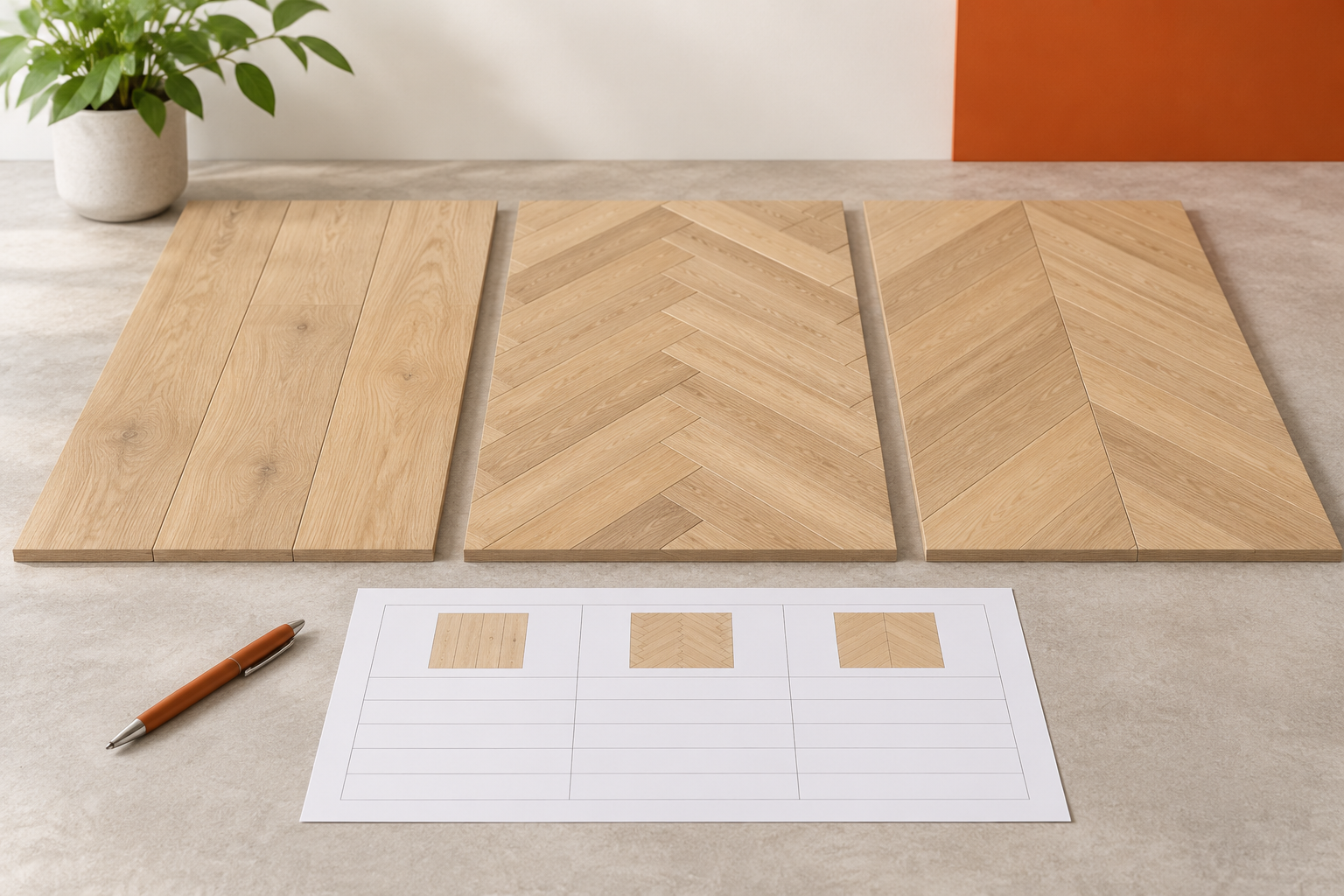
| Product-family coverage document | Explaining which variants an evidence scheme covers | Confirm authorized coverage rules and explicit inclusion of the ordered variant |
A finished-flooring report is more directly relevant to a finished-product question, but its title alone is not proof that it applies.
Which report fields determine whether evidence applies?
Review identity, technical scope and acceptance together. A favorable result cannot compensate for an unidentified specimen or an unsuitable test method.
- Identity: report holder, manufacturer where identified, laboratory, report reference and specimen description.
- Technical scope: construction, coating, sample preparation, method, test conditions, substances, results and units.
- Acceptance: applicable criteria, dates, scheme status where relevant, limitations and destination requirements.
Request the complete issued report, including referenced annexes. A cropped result page can omit the specimen description or qualifications needed for review.
Check the report holder, issuing laboratory, specimen and method
The report holder may be a component supplier, manufacturer or other applicant. Establish that party’s relationship to the flooring rather than assuming every supplier-held report covers its entire range.
Check the issuing laboratory and, where required, whether its recognized testing scope includes the method used. Confirm authenticity through an appropriate verification route if the document is incomplete or inconsistent.
Read the specimen description alongside receipt and testing dates, preparation conditions, method edition and reporting units. Compare results only on a compatible basis. Different methods or units should not be treated as equivalent without a technically justified assessment.
Connect the tested construction and coating to the ordered product
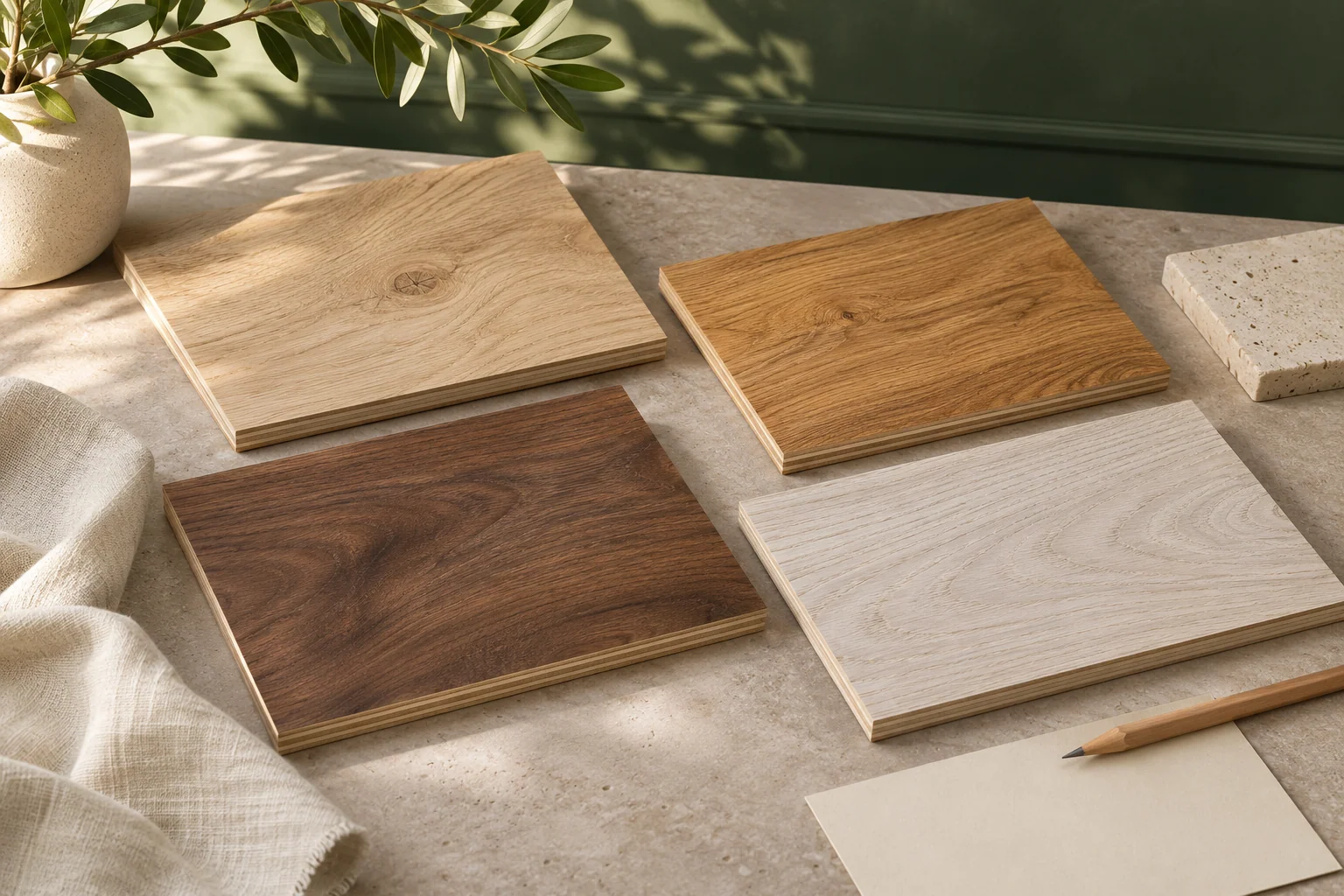
A report for one coating should not automatically be transferred to a differently coated floor. Coverage requires explicit supporting documentation under the applicable testing or certification framework.
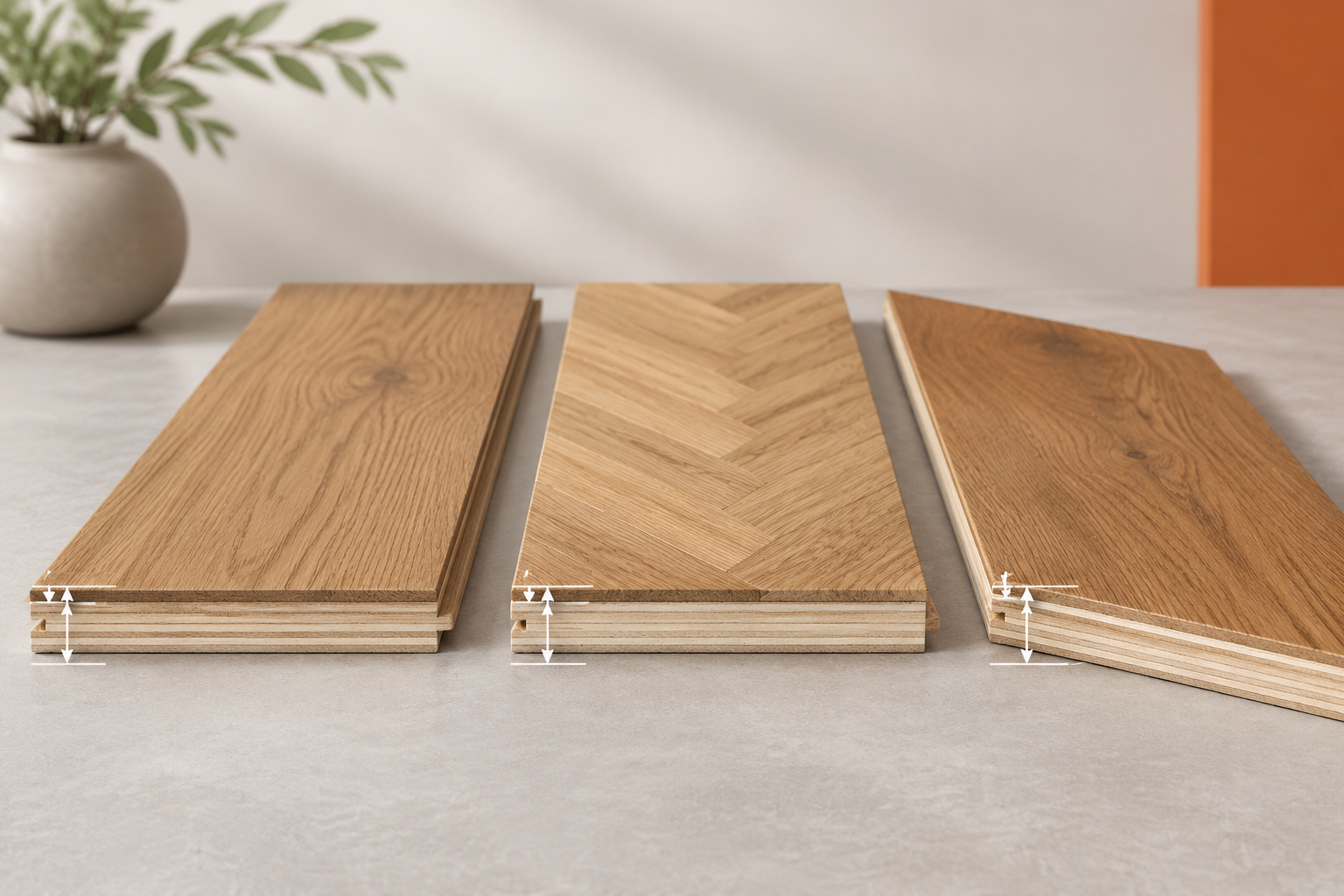
Match the hardwood species, face thickness, plywood type, total thickness, bonding system, colour treatment and coating. Record face and total thickness separately in millimeters (mm). GoLink’s engineered flooring materials and construction guide helps define these fields, but does not establish a tested configuration for every product.
For example, GL-0225 Pale Wheat Oak is published as oak plank flooring with brushed texture and UV lacquer. That description provides an identification starting point, not an emissions classification. Request the agreed construction and coating specification, then connect them to the report. A similar colour or another lacquered oak board is not enough.
How should destination and project requirements be confirmed?
An emissions classification is not automatically accepted in every destination country. Confirm the actual country of sale or installation and any project-specific criteria before requesting a particular label.
The importer and responsible project reviewer should identify the applicable product category, accepted methods, limits, required supporting documents and any additional certification or declaration obligations. A laboratory report is not necessarily the complete compliance package.
Separate legal market requirements from a client’s voluntary indoor-air specification. Also clarify whether installation adhesive, underlay or other site-applied materials need separate evidence. GoLink’s project-specific flooring support provides a route for coordinating product and installation questions; acceptance remains dependent on the actual evidence and responsible review.
How do buyers request and review missing evidence?
If the specimen cannot be linked to the order, leave emissions approval unresolved. Request the missing connection rather than interpreting an unclear description in the supplier’s favor.
- Define the requirement. Record destination, intended use, substances, methods and acceptance criteria.
- Identify the proposed floor. Include product reference, format and dated construction and finish specification.
- Request scoped records. Ask for complete relevant reports, component identities and any authorized product-family coverage.
- List the gaps. Separate missing identity information, technical mismatches and destination acceptance questions.
- Resolve and record. Obtain substantiated clarification or determine whether additional testing is needed with the responsible reviewer.
Keep product-specific compliance documents with the approved specification. Record the review decision, unresolved conditions and changes that require reassessment; appearance approval and commercial order confirmation remain separate decisions.
How should GoLink's brochure plywood information be interpreted?
GoLink Floor’s published E0 / F4 plywood information should be read as brochure-level material information, not blanket certification of every finished floor or order.
The published certification and report information is a starting point for identifying relevant records. Request genuine current documents with the actual holder, specimen, method and product or material scope. Check validity or current status where the applicable scheme requires it.
FSC sourcing references, fire classifications and slip results answer different questions. None substitutes for applicable emissions evidence, and a general manufacturing process description does not prove a finished-flooring result.
FAQs about emissions evidence and product changes
Does every colour need a separate emissions report?
Not necessarily. Some evidence frameworks allow defined product-family coverage. Request the coverage rules and documentation showing that the actual colour treatment and coating variant are included; visual similarity is insufficient.
Can a private-label name differ from the report’s product name?
Yes, but retain a documented cross-reference connecting the private-label item to the manufacturer’s tested configuration. A carton name or marketing description alone does not establish that connection.
Does an older report automatically become invalid?
No universal expiry period should be assumed. Check scheme rules, destination requirements, product changes and any validity conditions. A historical test result does not by itself establish continuing production coverage.
Does a passing flooring report establish indoor air quality after installation?
No. Finished flooring test reports describe specified test conditions, not every occupied room. Installation products, other materials, ventilation and site conditions also need consideration where the project requires an indoor-air assessment.
Practical conclusion: approve applicable evidence, not a label alone
Approve emissions evidence only when the document scope, tested specimen, ordered configuration and destination requirement form a clear, reviewable chain. Treat component claims as component information unless broader coverage is substantiated. File the approval against the dated specification, and reopen the review when a relevant material, coating or requirement changes.
FAQ
Does every colour need a separate emissions report?
Not necessarily. Some evidence frameworks allow defined product-family coverage. Request the coverage rules and documentation showing that the actual colour treatment and coating variant are included; visual similarity is insufficient.
Can a private-label name differ from the report's product name?
Yes, but retain a documented cross-reference connecting the private-label item to the manufacturer’s tested configuration. A carton name or marketing description alone does not establish that connection.
Does an older report automatically become invalid?
No universal expiry period should be assumed. Check scheme rules, destination requirements, product changes and any validity conditions. A historical test result does not by itself establish continuing production coverage.
Does a passing flooring report establish indoor air quality after installation?
No. Finished flooring test reports describe specified test conditions, not every occupied room. Installation products, other materials, ventilation and site conditions also need consideration where the project requires an indoor-air assessment.