Engineered Wood Wear Layer: Compare Complete Board Specs
Use a complete-construction worksheet to reconcile engineered flooring quotations, distinguish brochure face-layer options from confirmed specifications, and avoid unsupported sanding-life claims.
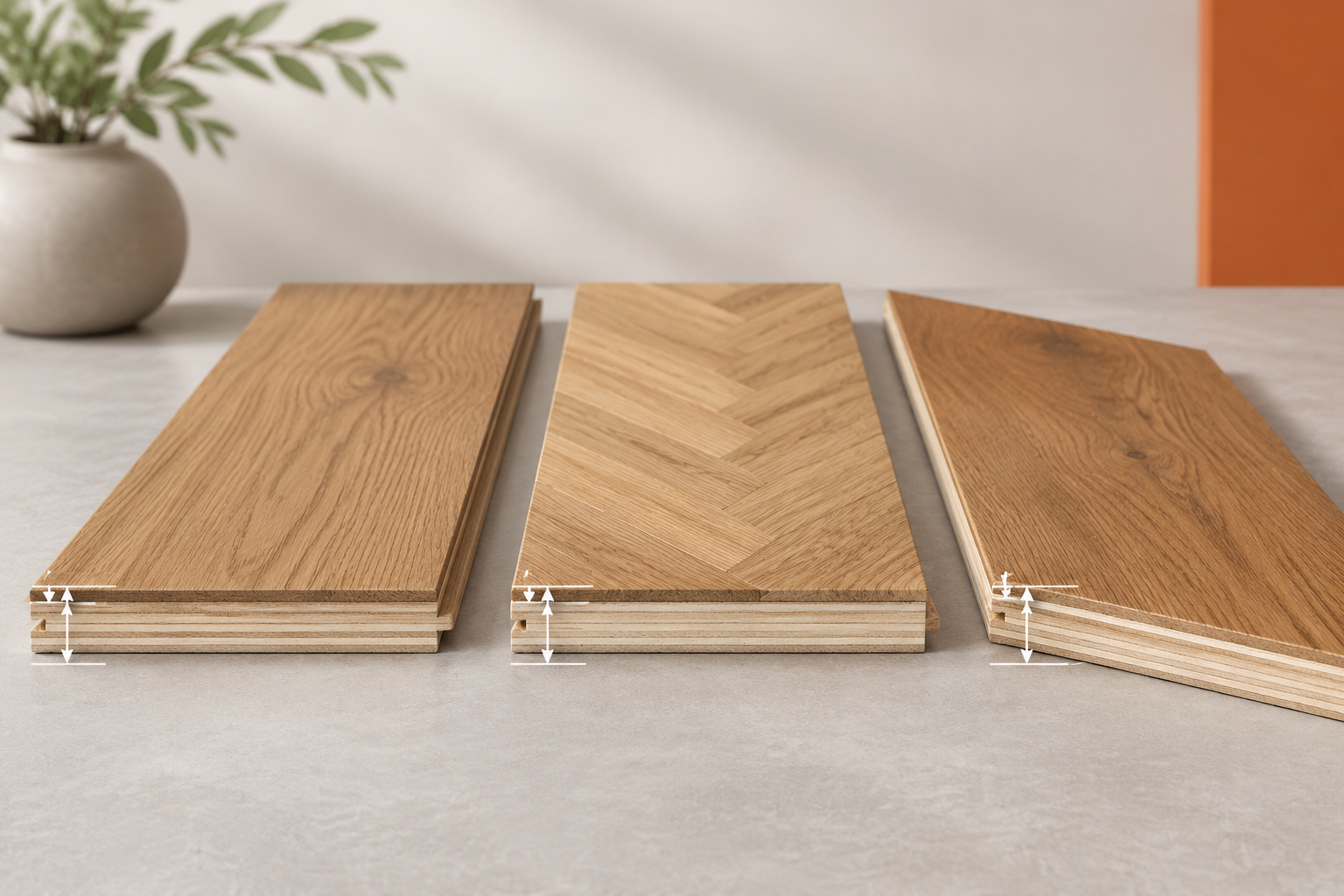
Table of Contents
- What does an engineered wood wear layer tell a trade buyer?
- How does hardwood face thickness differ from total board thickness?
- Which construction details belong beside the face-layer measurement?
- Record plywood support, joint geometry and the complete board build-up
- Comparison table: how should buyers review the published face-layer options?
- Why does face thickness not establish a sanding-life guarantee?
- How do you reconcile two quotations with different constructions?
- Follow a numbered sequence to request missing fields and compare equivalent offers
- Where do GoLink's construction options fit into the comparison?
- Frequently asked questions about wear-layer specifications
- Next step: request a quotation against a complete board specification
An engineered wood wear layer is the real hardwood face above the supporting construction; its thickness alone cannot establish board suitability or refinishing potential. For importers, wholesalers and flooring brands comparing quotations, the useful decision is whether the face, plywood support, total thickness, joint and intended application form a documented construction that meets the buying brief.
What does an engineered wood wear layer tell a trade buyer?
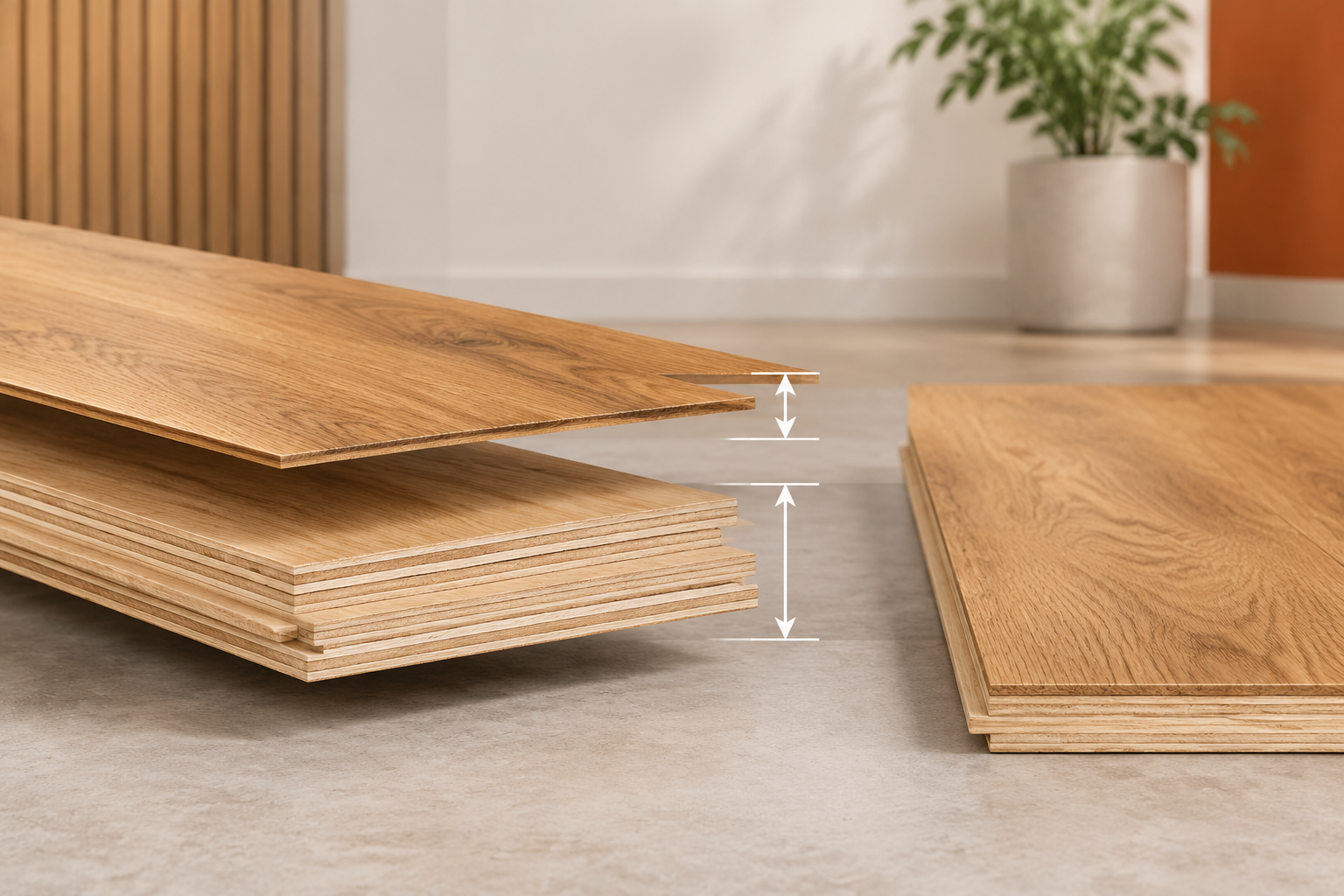
Definition: The wear layer is the hardwood face veneer bonded above the supporting layers. In a quotation, its thickness describes one component of the board, rather than the protective coating or the thickness of the whole product.
It tells buyers how much hardwood is specified at the surface. It does not establish coating durability, bonding quality, installation suitability or permitted future sanding. Those questions require separate information.
The comparison method below is general procurement guidance. GoLink Floor’s published brochure options are identified separately so that a general construction choice cannot be mistaken for a confirmed product specification.
How does hardwood face thickness differ from total board thickness?
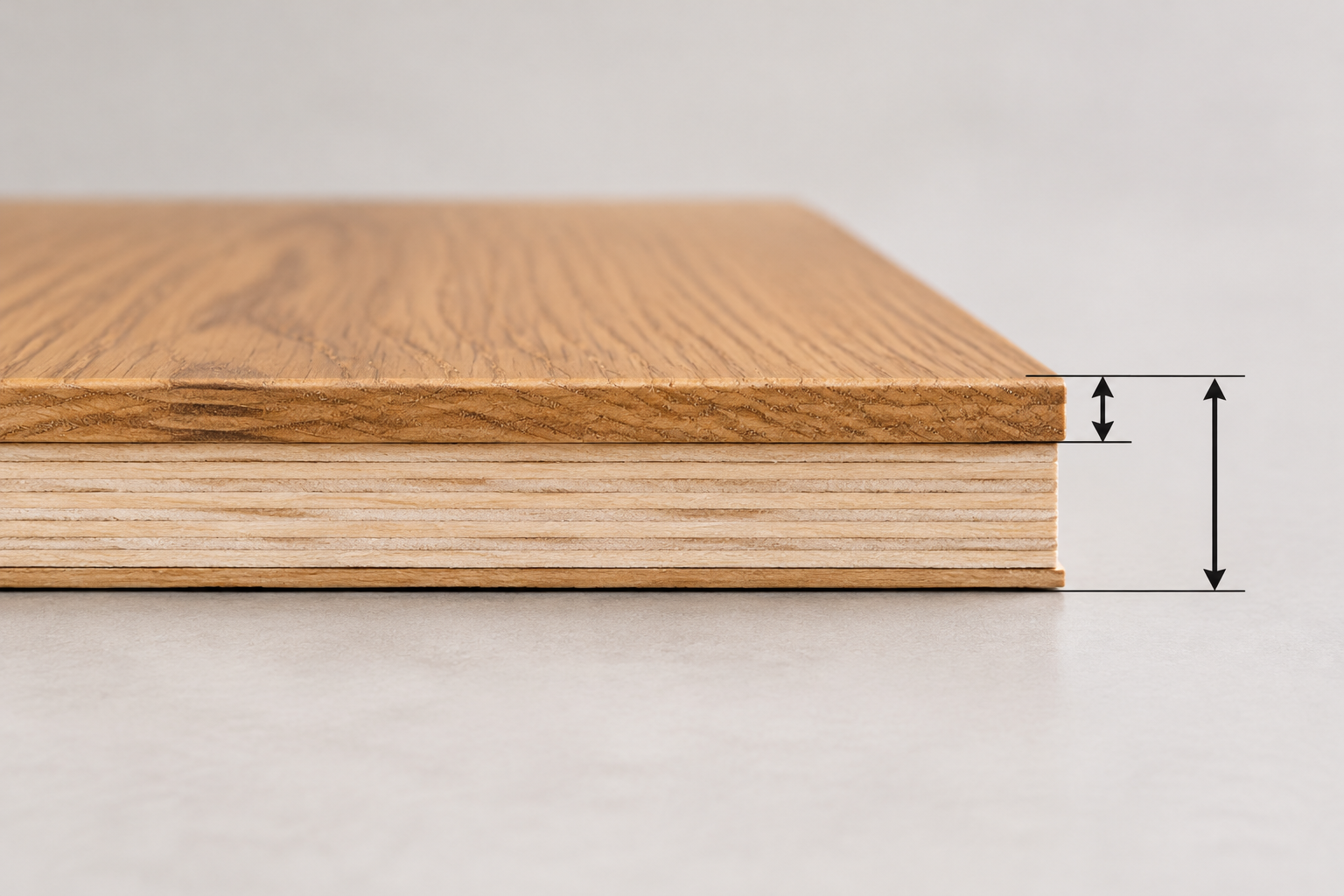
Hardwood face thickness measures the top wood layer. Engineered flooring total thickness measures the complete board from its underside to its finished surface, under the supplier’s stated measurement convention.
Yes, boards with the same total thickness can have different hardwood face layers. Their supporting constructions can differ accordingly. Conversely, specifying the same face thickness does not establish equal total thickness or equivalent plywood support.
Ask whether the quoted face measurement describes the veneer before processing or the finished hardwood layer, and request the applicable tolerance. Use the same measurement basis across offers; do not resolve an unclear build-up by subtracting nominal figures yourself.
Which construction details belong beside the face-layer measurement?
Record the hardwood species, face thickness, plywood construction, total thickness, board dimensions and joint together. Keep appearance grade, texture, color treatment and coating as distinct fields.
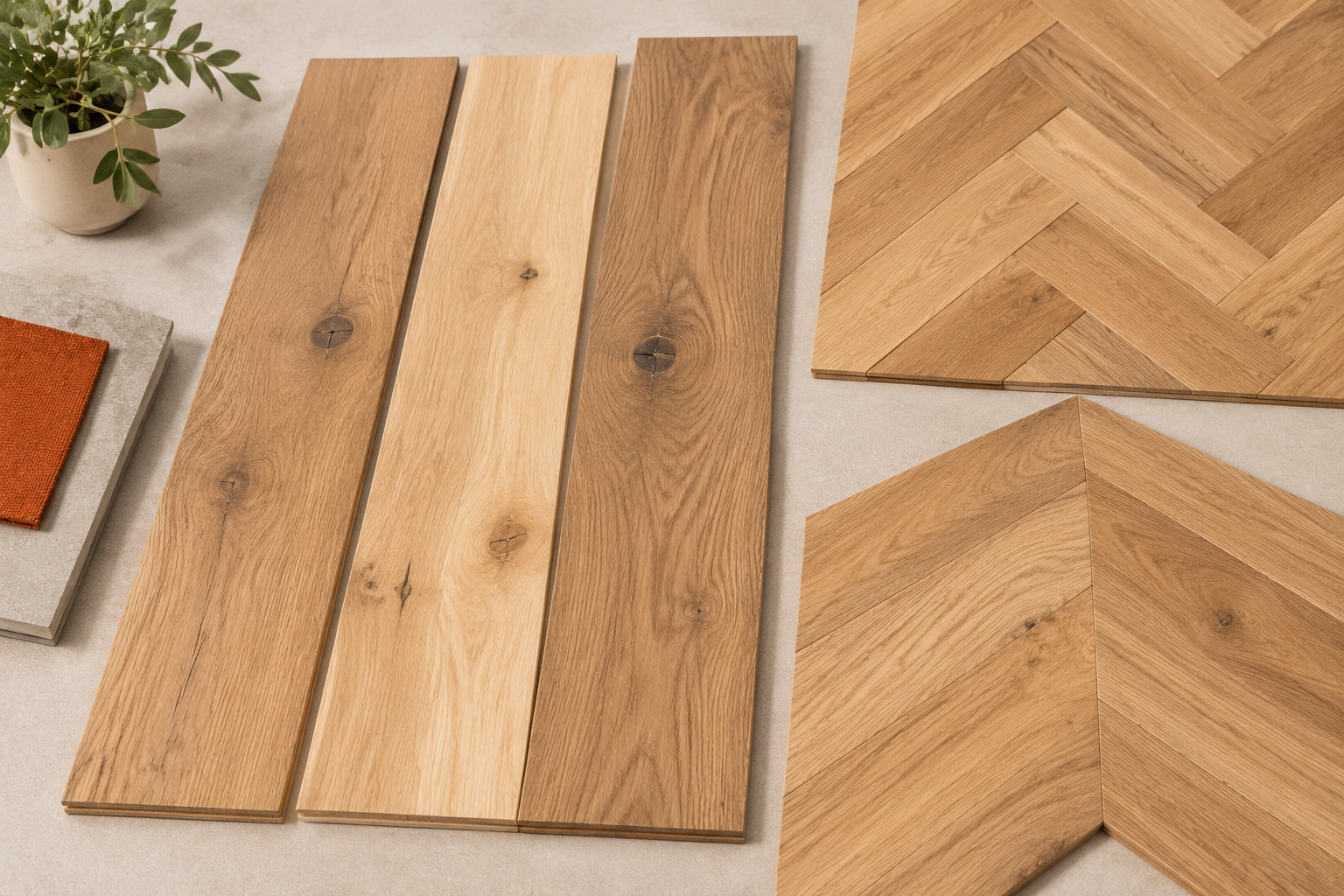
Two offers described as oak with an identical face thickness may still differ in knots, filling, brushing, protective coating or board width. Those differences can affect the purchasing decision without changing the headline veneer figure.
GoLink’s guide to engineered flooring construction introduces hardwood faces, plywood support and joint options. Use it to frame questions, then obtain the complete configuration for the selected reference.
Record plywood support, joint geometry and the complete board build-up
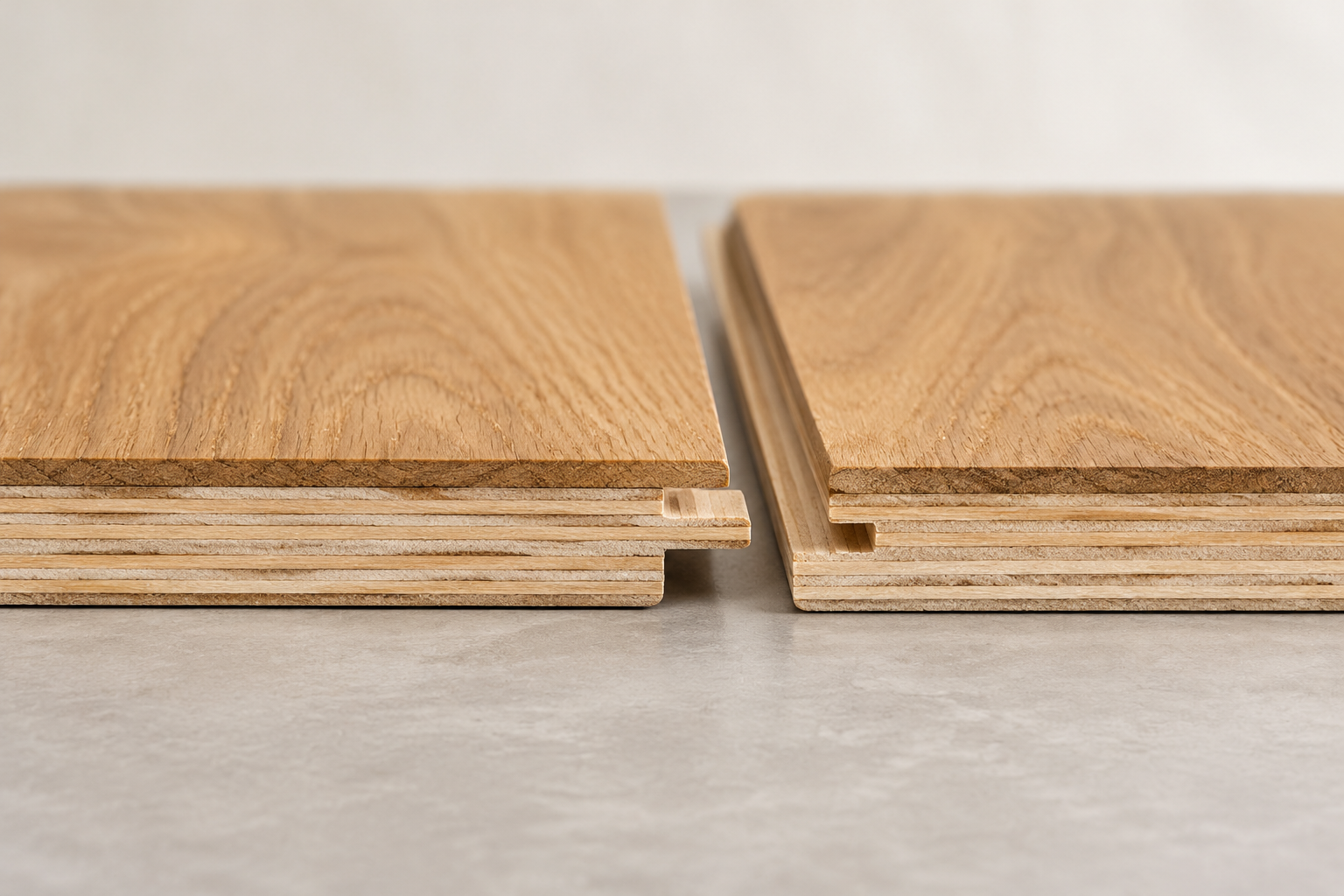
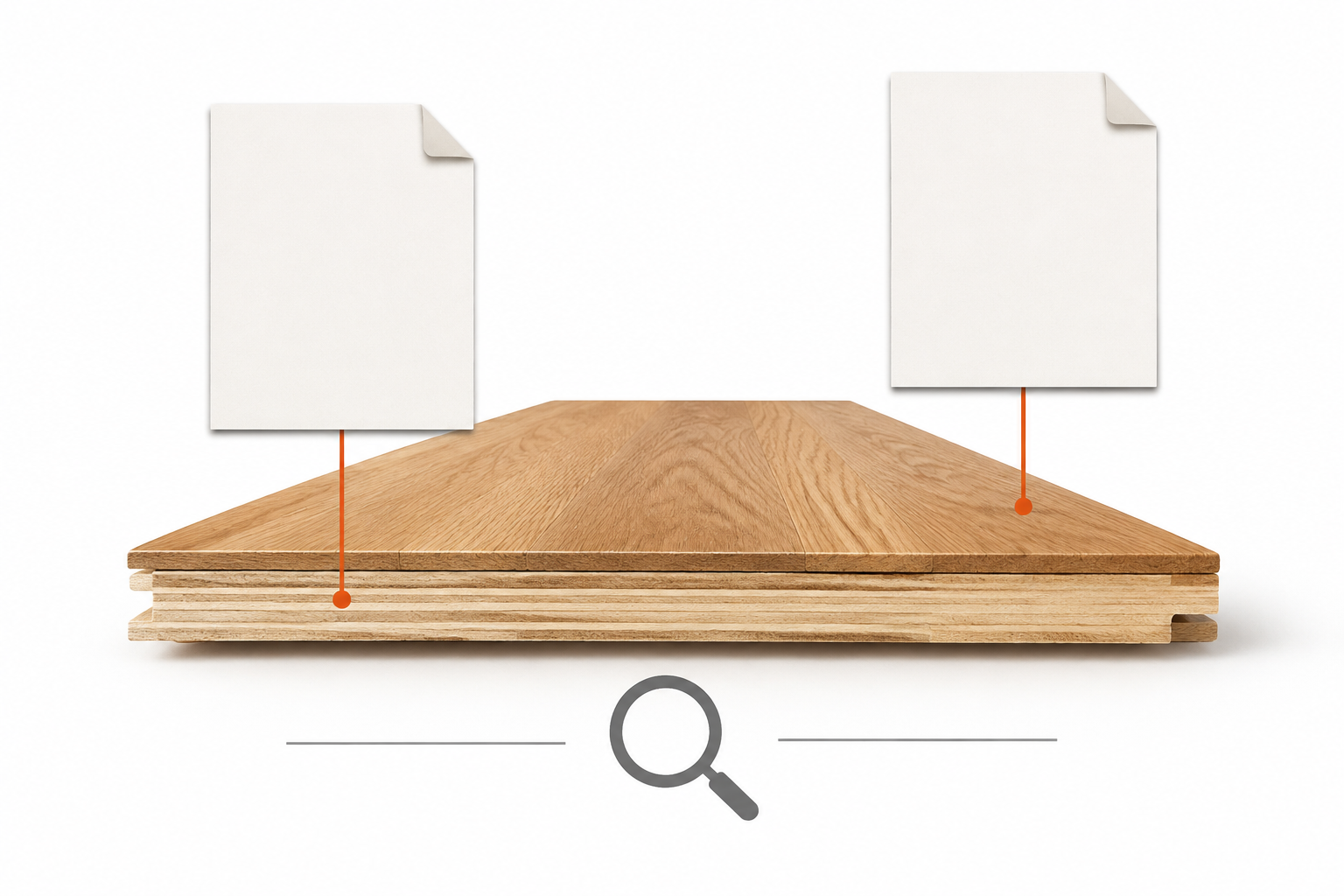
Request a construction description or section drawing identifying the plywood material, layer arrangement, support thickness and bonding specification. A plywood species name alone is insufficient to establish equivalent support or finished-board performance.
Joint geometry means the shape and position of the tongue, groove or locking profile within the board. Confirm the actual profile, edge treatment and end-joint arrangement. These details matter when reviewing installation instructions and the relationship between the surface and joint.
Keep substrate, adhesive or underlay, and any heating system in a separate installation review. A construction comparison can identify differences; application suitability still requires evidence for the actual flooring and proposed system.
Comparison table: how should buyers review the published face-layer options?
GoLink’s brochure describes face-layer options of 2, 3, 4, 5 and 6 mm. These are a scoped set of brochure options, not confirmed combinations for every online reference.
| Brochure face option | What the figure establishes | What to confirm alongside it |
|---|---|---|
| 2 mm | The stated hardwood-face option | Finished measurement basis, support and total thickness |
| 3 mm | More nominal face thickness than 2 mm | Whether the support or overall build changes |
| 4 mm | More nominal face thickness than 3 mm | Complete section, joint position and approved dimensions |
| 5 mm | More nominal face thickness than 4 mm | Product-specific construction and maintenance guidance |
| 6 mm | The thickest face option in this brochure set | Availability for the reference and the complete specification |
No row establishes a sanding-cycle count, a quality ranking or application approval. Ask the same construction questions for every option, including any option a supplier presents as an upgrade.
Why does face thickness not establish a sanding-life guarantee?
A thicker hardwood face does not guarantee more sanding cycles. Refinishing feasibility depends on the remaining wood, joint geometry, surface condition, previous work and the proposed restoration process.
Sanding can also change brushed texture, bevels and the selected color appearance. A nominal face measurement does not describe how much material a particular repair would remove or whether the desired appearance can be recreated.
Separate routine care, coating renewal and sanding into distinct questions. Use coating-specific flooring care as a starting point, and obtain written guidance for the actual coating and construction before publishing refinishing claims. Do not turn brochure thickness into a lifetime promise in dealer literature.
How do you reconcile two quotations with different constructions?
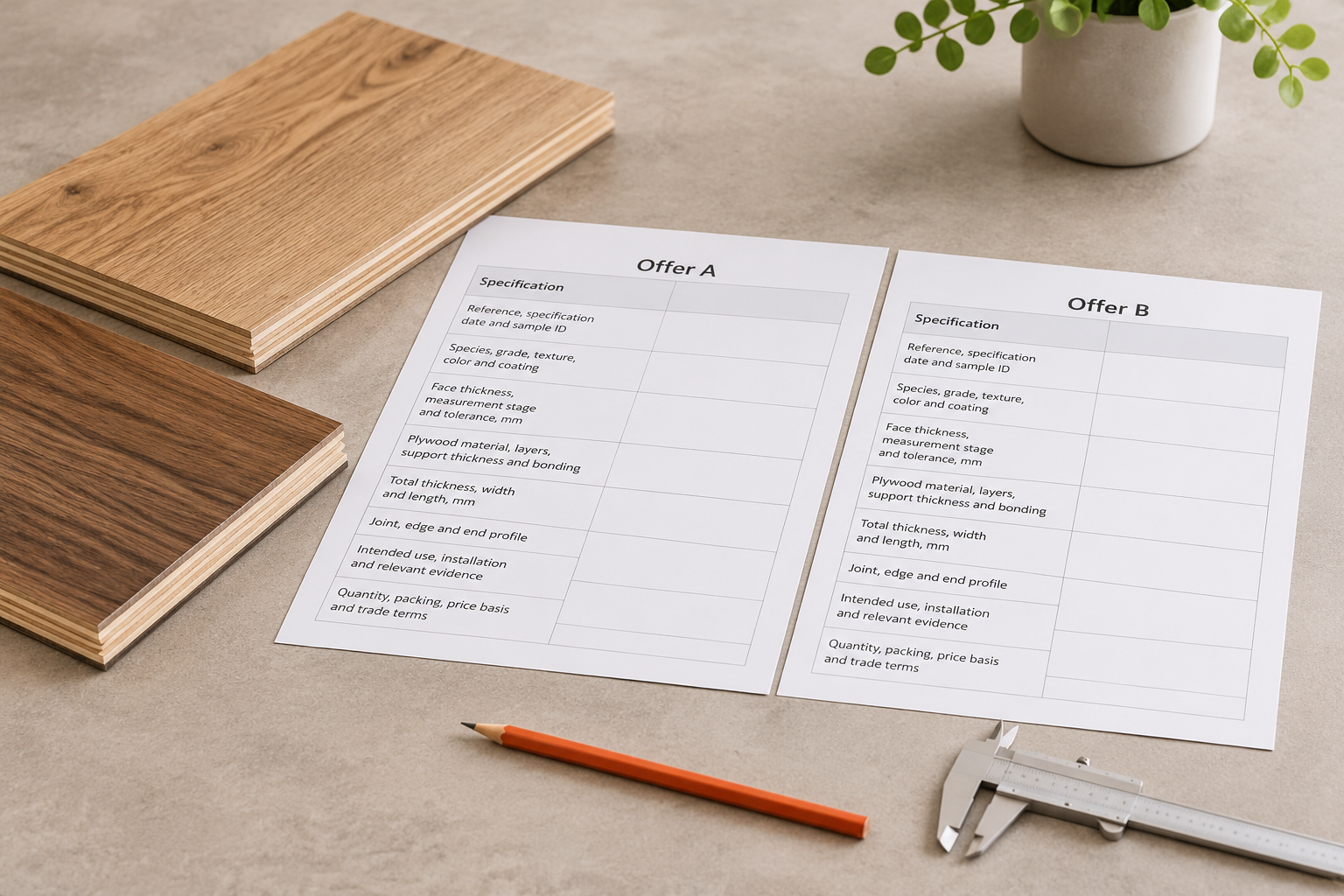
Put both offers into the same worksheet before comparing price. Enter each supplier’s exact wording and mark missing information as unconfirmed.
| Field to record | Offer A | Offer B |
|---|---|---|
| Reference, specification date and sample ID | Enter reference | Enter reference |
| Species, grade, texture, color and coating | Enter specification | Enter specification |
| Face thickness, measurement stage and tolerance, mm | Request confirmation | Request confirmation |
| Plywood material, layers, support thickness and bonding | Request build-up | Request build-up |
| Total thickness, width and length, mm | Enter dimensions | Enter dimensions |
| Joint, edge and end profile | Attach drawing | Attach drawing |
| Intended use, installation and relevant evidence | Record scope | Record scope |
| Quantity, packing, price basis and trade terms | Record quotation basis | Record quotation basis |
A price difference cannot be attributed to face thickness while other fields remain different or unknown. If the offers serve different briefs, retain them as alternatives with explicit differences rather than presenting them as equivalent.
Follow a numbered sequence to request missing fields and compare equivalent offers
- Set the buying brief. Identify the intended use, format, destination country and applicable product-document requirements.
- Resolve missing construction fields. Request the face measurement basis, plywood build-up, total dimensions and joint drawing.
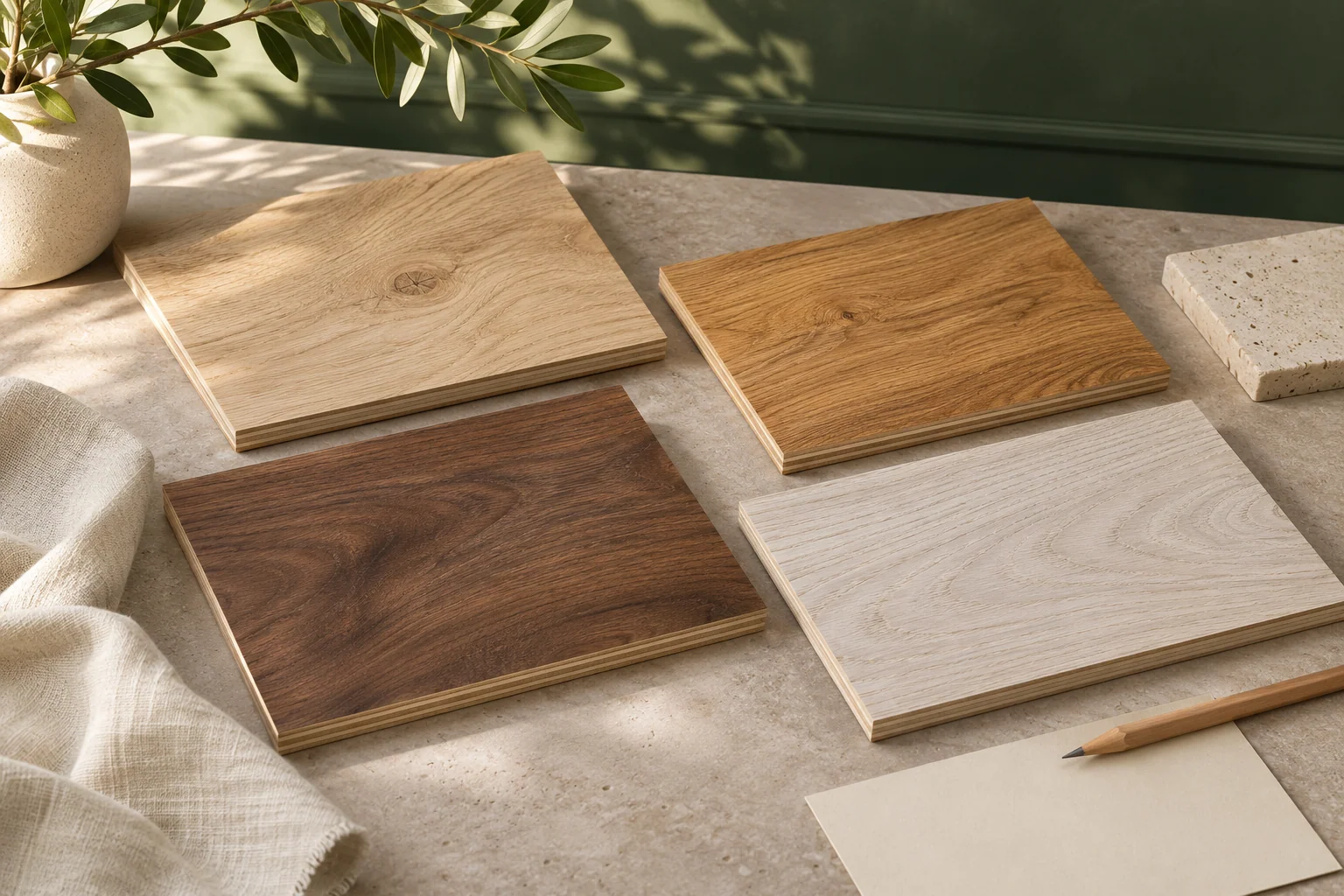
- Check appearance separately. Connect species, grade, texture, color treatment and coating to identified physical samples.
- Request comparable revisions. Ask suppliers to quote the same agreed specification where feasible, or list every proposed deviation.
- Confirm the commercial basis. Compare quantity per color, packing, trade terms and document scope before accepting an offer.
Attach the dated construction specification, section drawing, approved sample references and accepted deviations to the order record. Keep them available for reorders so the original face-layer figure never becomes the only surviving specification.
Where do GoLink's construction options fit into the comparison?
GoLink Floor’s published manufacturing offer combines real hardwood faces with multi-layer eucalyptus or birch plywood. Its brochure face options provide a starting point for development; a selected face, support, total thickness and joint require confirmation together.
The European oak engineered flooring family can help buyers identify an appearance direction. It does not establish one construction across all references.
No brochure face-layer option can automatically be assigned to an online GL reference. Keep the website product code separate from brochure color identifiers, and connect the chosen appearance to the final sample and accepted manufacturing specification.
Frequently asked questions about wear-layer specifications
These additional questions address how buyers should document measurements, samples and claims when completing the comparison worksheet.
Next step: request a quotation against a complete board specification
Choose the construction that meets the documented brief, with every difference visible before commercial approval. A useful revised quotation connects the hardwood face to its support, dimensions, joint, sample and evidence requirements. That record gives purchasing and sales teams a defensible basis for describing the floor and ordering it again.
FAQ
Should the quotation state nominal or finished face thickness?
It should identify the measurement stage and applicable tolerance explicitly. If the figure describes veneer before processing, request confirmation of the finished hardwood layer rather than assuming the figures are interchangeable. Record thickness in millimeters.
Can a small sample confirm the complete board construction?
A section sample can help show the visible layers and profile, but it cannot establish every material, bonding or performance detail. Match it to a dated specification and request the relevant product records. A display sample may serve appearance approval only.
Does a thicker hardwood face make the coating more scratch resistant?
Face thickness does not establish coating scratch resistance. Compare the actual coating system and any relevant product-specific evidence separately. Keep surface protection claims distinct from the amount of hardwood in the board.
Can evidence for one construction support a revised face-layer option?
Do not assume it does. Ask whether the report or other evidence covers the revised finished product, including its construction and coating. Confirm the applicable scope and destination requirements before using that evidence in purchasing or sales materials.
Discuss Your Engineered Flooring Requirements
Share your species or GoLink product reference, format, estimated quantity per color and destination country. Include the proposed face and total thickness, intended use, and any missing construction fields. Tell GoLink Floor which samples, private-label details or product documents you need so the team can review a complete specification and quotation brief.