Engineered Flooring Wear Layer: Compare Complete Builds
Use a construction comparison worksheet to identify missing quotation fields, distinguish genuine alternatives and approve a complete board specification before ordering.
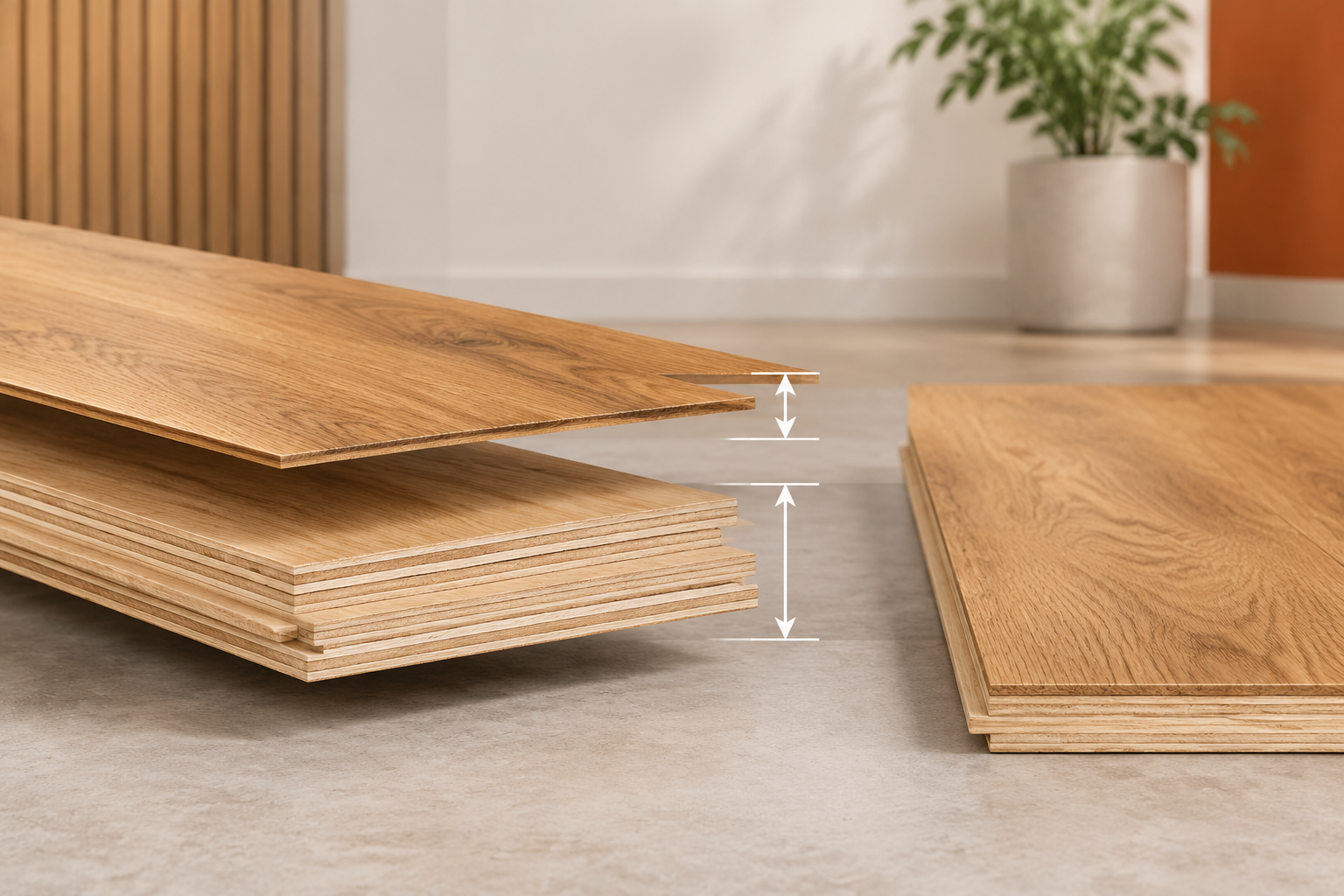
Table of Contents
- What does an engineered flooring wear layer tell a buyer?
- How does hardwood face thickness differ from total board thickness?
- Which construction fields make quotations comparable?
- Compare the face, plywood support, dimensions and joint together
- Comparison table: disclosed construction versus information still required
- Why does face thickness not guarantee a sanding life?
- How should buyers resolve a construction mismatch before ordering?
- A numbered process for requesting and approving a revised specification
- What can GoLink's published face-layer options establish?
- Frequently asked questions
- Request a quotation against one complete board specification
An engineered flooring wear layer is the real hardwood face above the supporting construction; its thickness alone cannot establish whether two quotations describe equivalent boards. For importers, wholesalers and flooring brands, a useful comparison must also identify plywood support, total board thickness, dimensions, joint and finish before price differences can be assessed.
What does an engineered flooring wear layer tell a buyer?
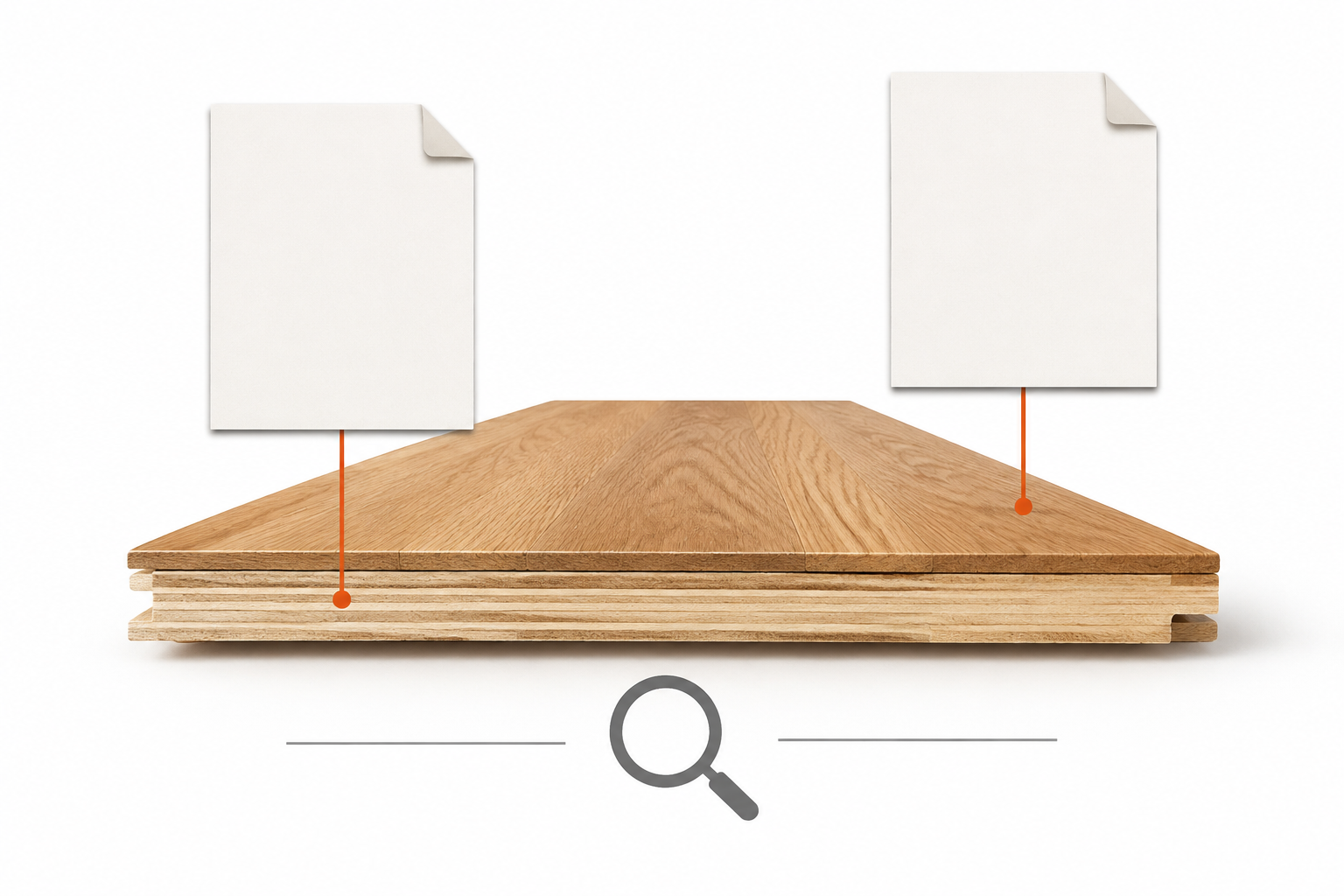
Definition: The wear layer is the real hardwood face, also called the face veneer, bonded above the supporting construction. The protective coating is a separate specification.
Hardwood face thickness identifies one part of the board. It does not identify the plywood beneath it, the finished board height, the joint geometry or the coating. Consequently, matching face thickness is a starting point for comparison, rather than confirmation that products are interchangeable.
This guide provides general quotation-review guidance for professional buyers. The GoLink-specific options discussed later are published development choices requiring confirmation for the actual product.
How does hardwood face thickness differ from total board thickness?
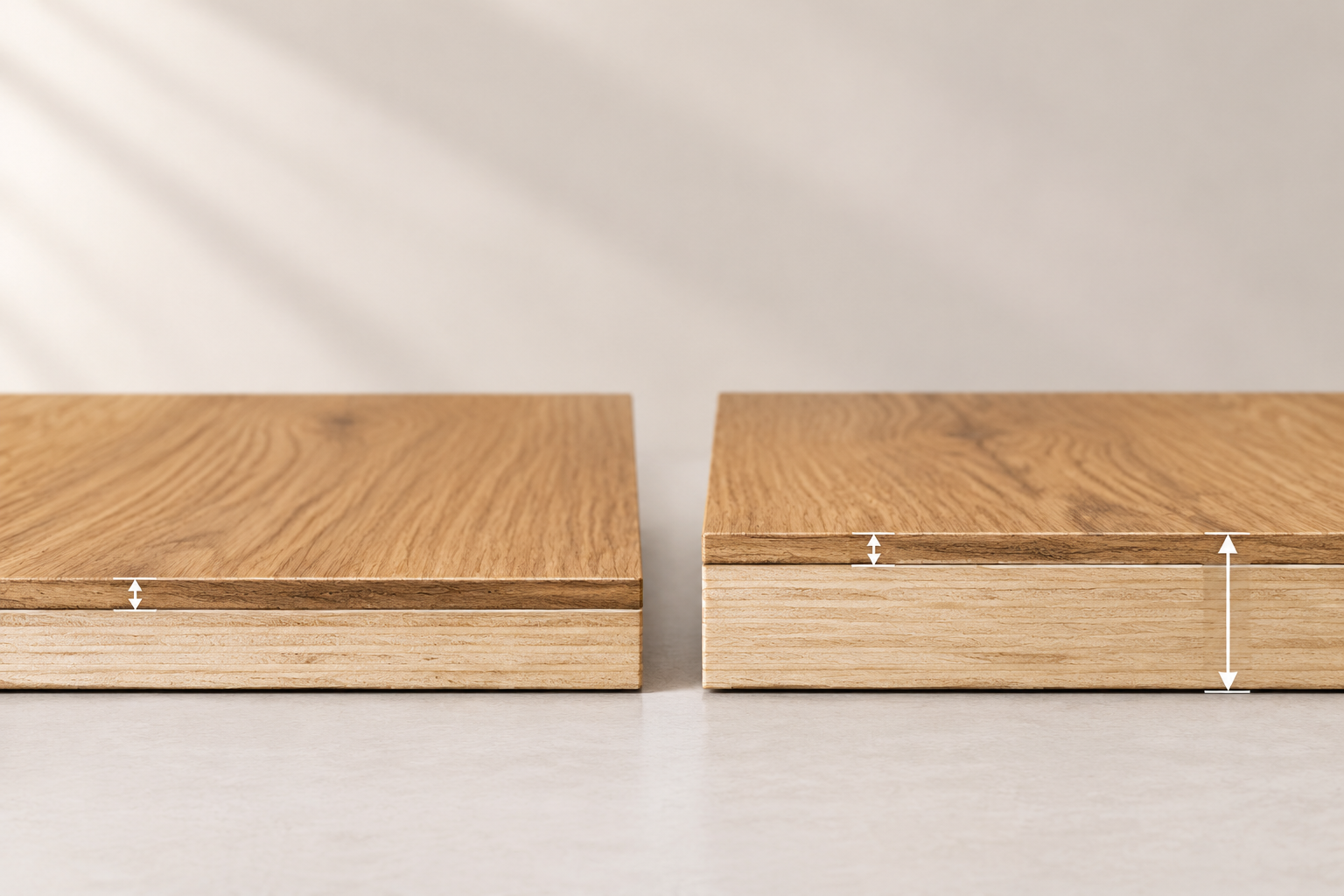
Yes, two boards with the same hardwood face thickness can have different total thicknesses because their supporting constructions differ. Total board thickness describes the complete board height; face thickness describes only its hardwood surface layer.
Request both measurements in millimeters (mm), with confirmation of whether the quoted face thickness describes the finished face or material before surface processing. Ask for the supplier’s measurement basis and applicable tolerances rather than assuming nominal values are directly equivalent.
Total thickness matters when coordinating adjacent floors, thresholds and stair details. A quotation showing only a face value leaves those interfaces unresolved. A quotation showing only total thickness leaves the hardwood face unresolved.
Which construction fields make quotations comparable?
Comparable quotations describe the same intended configuration, or clearly disclose each alternative. Start with species, face thickness, plywood support, total thickness, length, width, format and joint. Then align appearance grade, edge treatment, texture and protective coating.
Keep missing information visible. If one offer names the plywood material and another says only “multilayer core,” the second offer remains incomplete for that field. Neither wording alone establishes equivalent performance.
For an engineered flooring quote comparison, give every supplier the same worksheet and request a dated response. This prevents a purchasing spreadsheet from silently treating an unanswered field as a match.
Compare the face, plywood support, dimensions and joint together
If a quotation does not identify the plywood support, request its material composition, thickness and layer arrangement, together with a cross-section drawing or identified sample. Ask which technical records apply to that complete construction and the destination requirements.
Plywood species alone is not a quality ranking. Review the support as part of the proposed board, including its relationship to the face, overall dimensions and joint. A change in one field should prompt confirmation of the remaining fields.
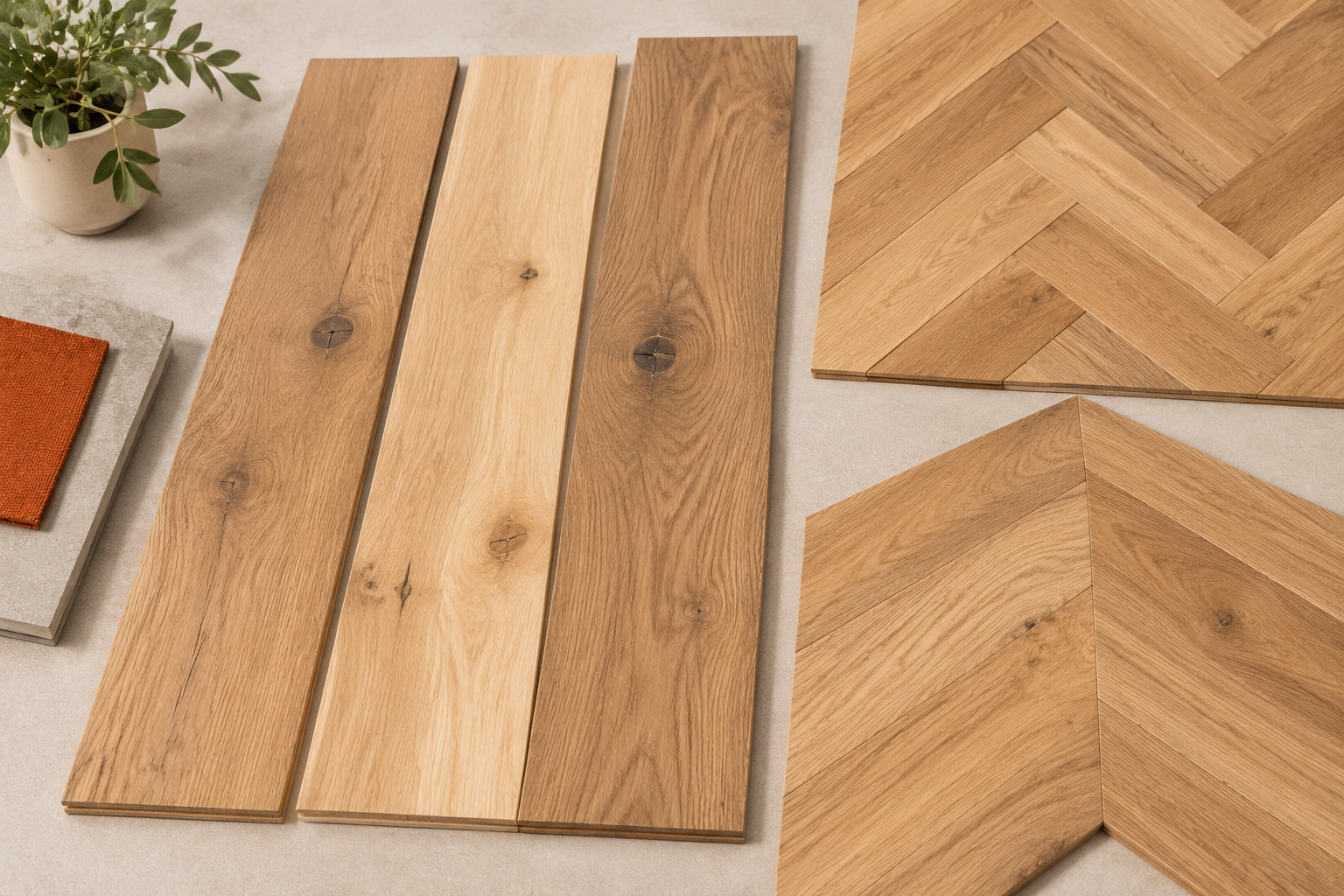
Dimensions also need a clear supply basis: fixed or mixed lengths, width, pattern format and any length distribution. Specify the joint on both long and end edges. GoLink’s engineered flooring plank references can help identify an appearance direction, but the accepted specification must establish the build.
Comparison table: disclosed construction versus information still required

Copy this worksheet into the quotation review. The entries describe disclosure situations, not actual supplier offers. Add separate columns for each quotation’s stated value, supporting document and unresolved question.
| Field | What a disclosure establishes | Information still required |
|---|---|---|
| Hardwood face | Stated species and face thickness | Finished measurement basis, tolerance and grade |
| Total thickness | Stated overall board height | Measurement basis, tolerance and matching cross-section |
| Plywood support | Named support material | Composition, thickness, layer arrangement and applicable evidence |
| Board dimensions | Stated length and width | Fixed or mixed lengths, distribution and format |
| Joint and edge | Named connection and edge treatment | Long-edge and end-edge details; drawing where needed |
| Surface and coating | Stated texture, color treatment and coating | Identified sample, sheen and care requirements |
| Approval status | Document or sample reference | Current revision, accepted deviations and order linkage |
Mark each field “matched,” “different” or “not disclosed.” Only a confirmed match should be treated as equivalent; a disclosed difference may remain a valid alternative for separate evaluation.
Why does face thickness not guarantee a sanding life?
A thicker hardwood face does not guarantee a fixed number of sanding cycles. Refinishing feasibility depends on the actual remaining hardwood, joint position, surface texture, previous sanding, damage and the proposed work.
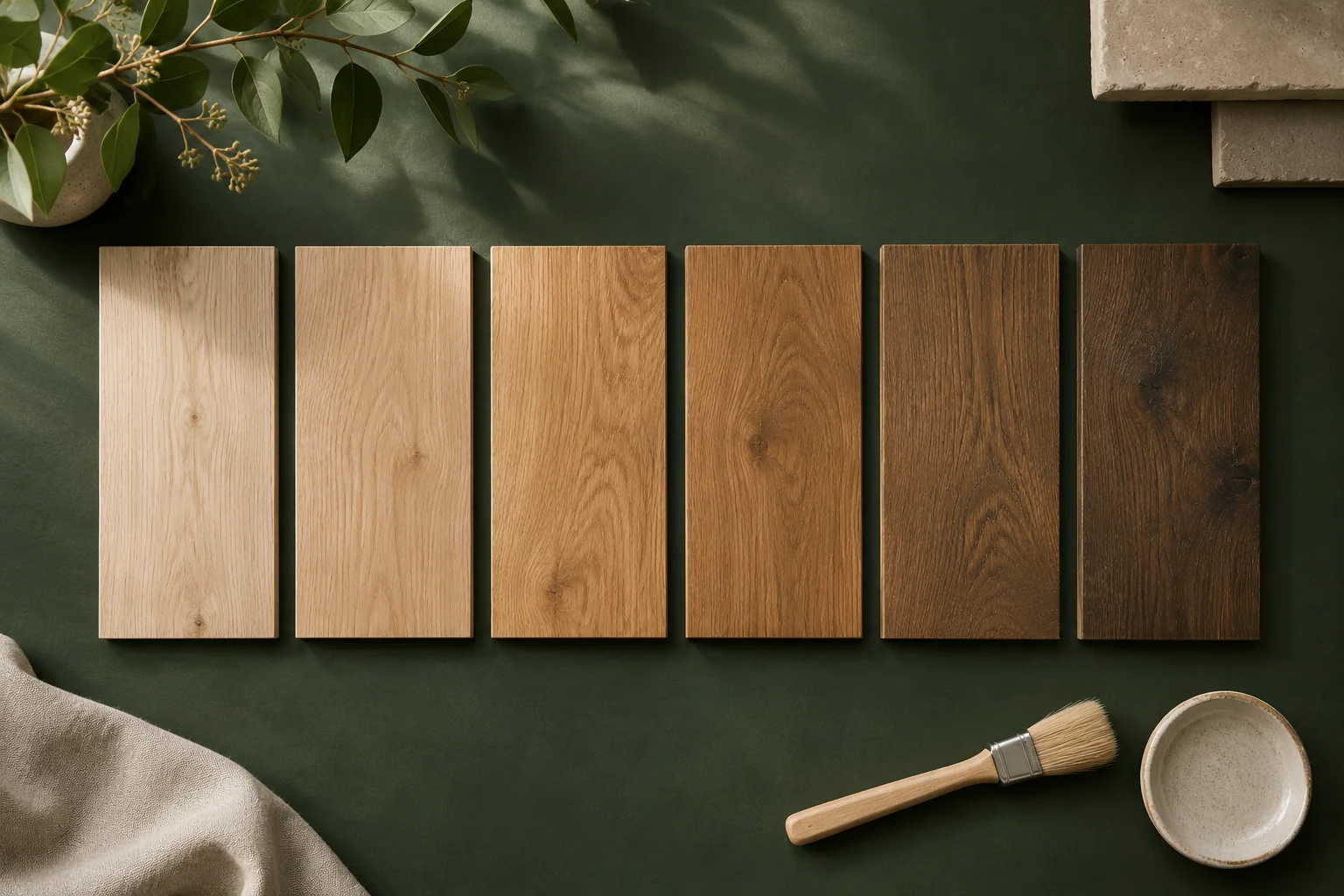
The face thickness stated when a board is supplied is not a promise that all that material can later be removed. Sanding can also change brushing, bevels and color effects, so restoring a surface does not necessarily reproduce its original appearance.
Ask for product-specific refinishing guidance and distinguish coating maintenance from sanding away wood. If lifecycle expectations are part of the purchasing brief, record them as questions for technical review rather than converting brochure thickness into an unsupported service-life claim.
How should buyers resolve a construction mismatch before ordering?
Request a revised quotation against the intended build, or retain the offer as an explicitly different alternative. Avoid averaging conflicting dimensions or filling gaps from another brochure entry.
Separate appearance approval from construction approval. A color sample may settle tone and texture while leaving support, thickness and joint undecided. Likewise, an agreed board build does not establish installation or heating suitability.
Confirm the destination country and intended use, then identify the relevant product evidence and installation review. Commercial confirmation follows those decisions; it should identify the accepted configuration and any agreed exceptions.
A numbered process for requesting and approving a revised specification
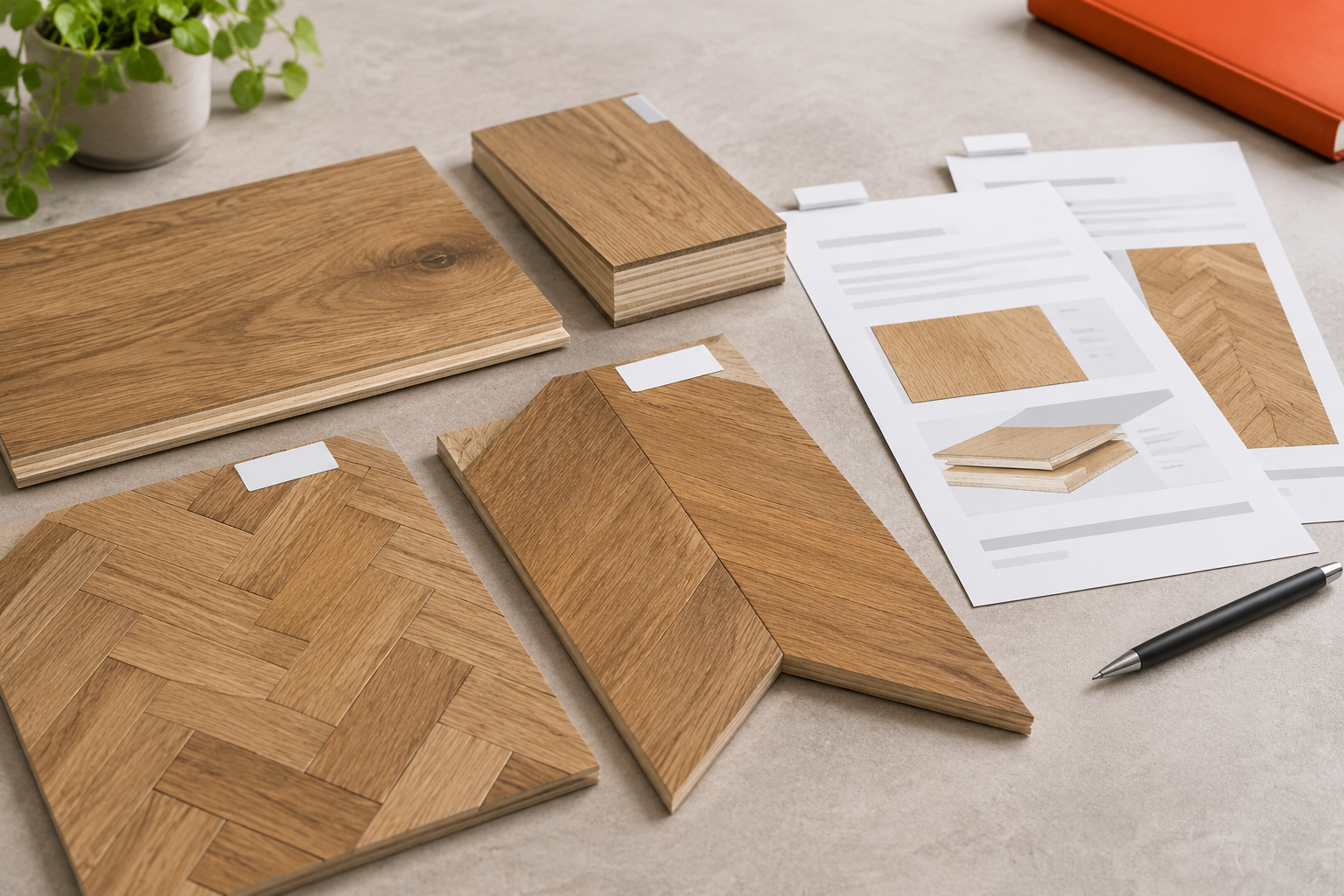
- Issue one baseline. State the intended species, format, face, support, total thickness, dimensions, joint and finish. Mark undecided fields openly.
- Request explicit deviations. Ask each supplier to identify differences, missing details and proposed alternatives against that baseline.
- Resolve technical questions. Obtain the cross-section, measurement basis and applicable records. Confirm whether proposed changes affect other fields.
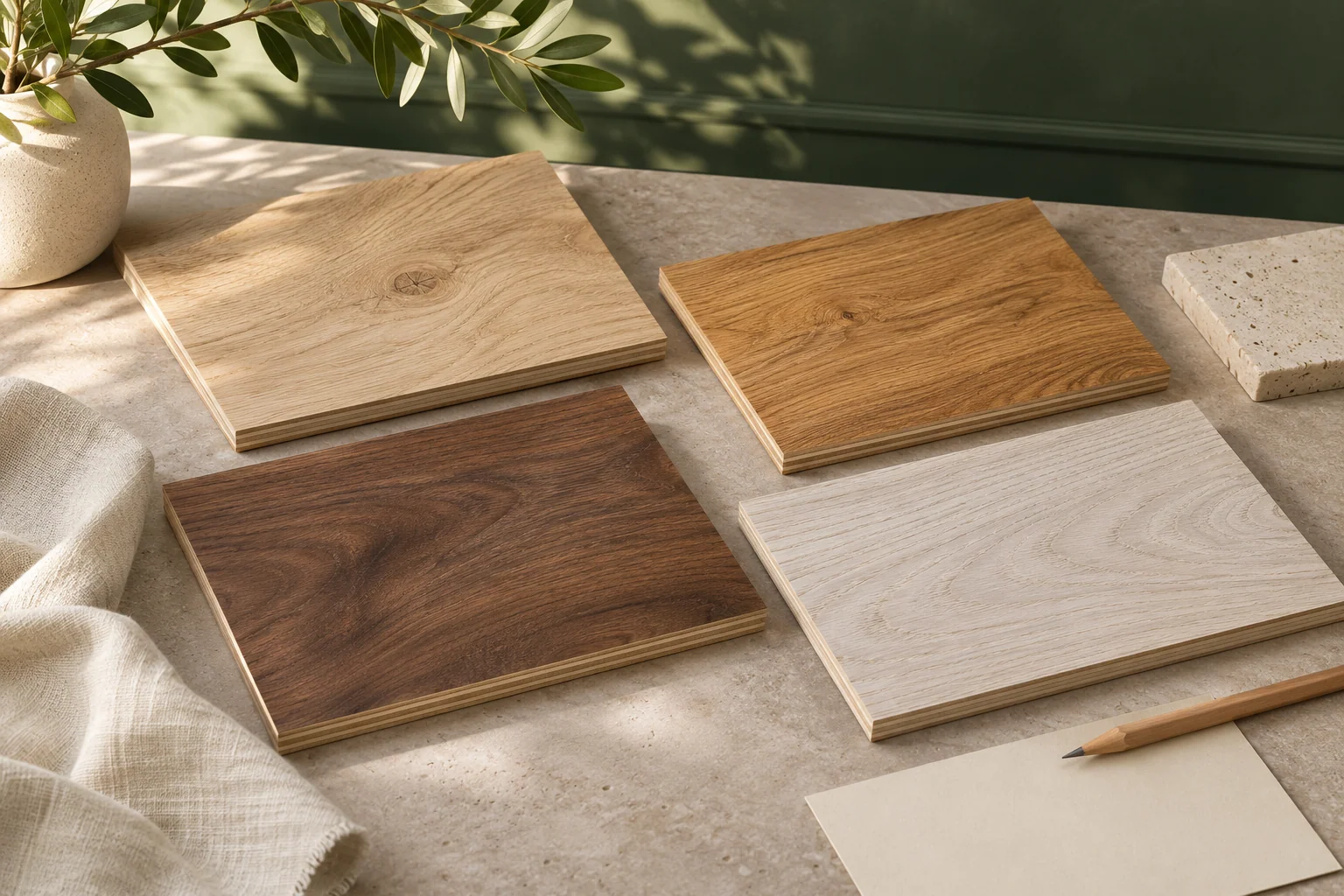
- Connect samples to documents. Identify the appearance sample and any construction sample, recording what each approves and what remains open.
- Approve the revision and commercial offer. Keep the dated specification, accepted samples and order confirmation together; compare prices on the agreed quantity, packing and trade basis.
GoLink’s ordering process describes the progression from brief and sample approval to specification and commercial confirmation. An enquiry alone does not establish an accepted production order.
What can GoLink's published face-layer options establish?
GoLink publishes hardwood face-layer options of 2, 3, 4, 5 and 6 mm, with multi-layer eucalyptus or birch plywood support. These are brochure-level choices for configuration review, not an availability matrix for every product.
A published face-layer option cannot automatically be assigned to any GL reference. GoLink’s engineered flooring construction guide provides context, while the actual face, support, total thickness, dimensions and joint require confirmation together.
Use the product reference to identify the starting point, then request the complete proposed build. The accepted sample and manufacturing specification define the supplied product; neither an appearance image nor a general thickness list replaces that record.
Frequently asked questions
These questions address common gaps when transferring quotation details into purchasing records.
Request a quotation against one complete board specification
A useful purchasing decision connects the hardwood face to the support, total thickness, dimensions, joint and finish. Resolve missing fields before treating quotations as equivalent, and preserve any alternative as a clearly identified configuration. This gives the price comparison a defined product basis.
FAQ
Is shorthand showing two thickness values sufficient for approval?
Only after the supplier defines both values. Request explicit labels for total board thickness and hardwood face thickness, units, measurement basis and tolerances. Keep the plywood and joint details alongside those values.
Can a cut sample replace a written construction specification?
A cut sample can help illustrate the build, but it does not record every requirement or tolerance. Identify the sample and connect it to a dated specification covering materials, dimensions, joint and finish.
Does matching total thickness establish heating compatibility?
No. Heating review requires the exact flooring construction, installation layers, substrate, system design, relevant thermal information and operating instructions. Matching board height alone does not establish suitability.
Should a different construction be rejected automatically?
No. It may be a useful alternative if the differences are disclosed and reviewed against the intended product. Keep it separately identified, obtain applicable evidence and approve it explicitly before comparing its commercial offer.
Discuss Your Engineered Flooring Requirements
Send GoLink Floor your species or product reference, format, estimated quantity per color and destination, together with the quoted construction and unresolved fields. Identify your sample, OEM or document requirement so the team can review a complete specification and quotation brief with you.