Oak Flooring Grade: Specify Knots, Sapwood and Filler
Build a supplier-specific oak appearance agreement by recording knot allowances, sapwood visibility, filler contrast and variation, then connecting those criteria to physical references and the order specification.
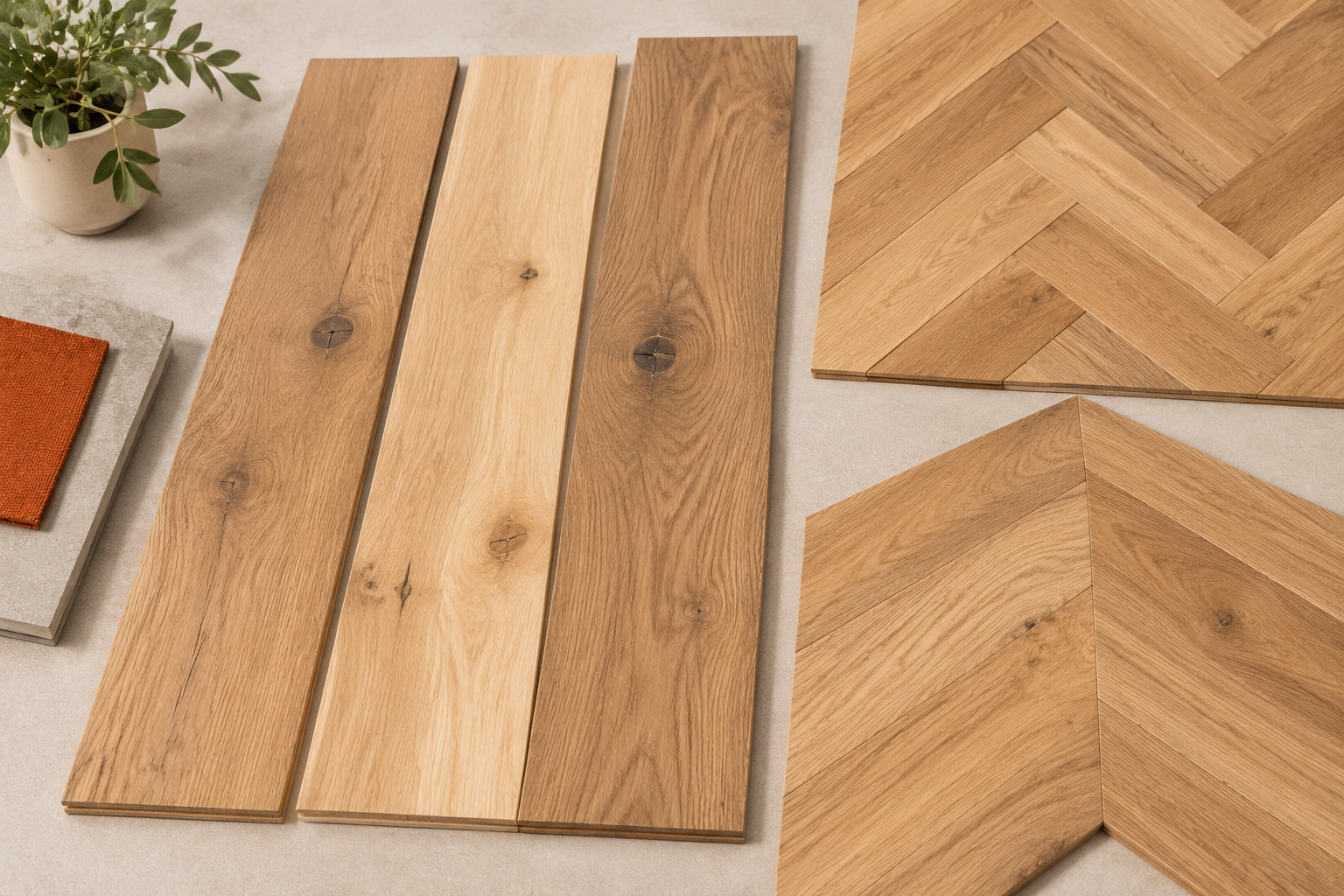
Table of Contents
- What should an oak flooring grade communicate?
- Which appearance features need separate agreement?
- Grade labels versus explicit acceptance criteria
- Turn an appearance brief into an order record
- Use GoLink oak references in a grading discussion
- Frequently asked questions
- Send an oak appearance brief for manufacturing review
An oak flooring grade should define the visible features a buyer agrees to accept: knots, sapwood, grain variation, filling and the overall appearance range. For flooring brands, showroom buyers and distributors, the useful purchasing reference is a supplier-specific written definition tied to identified physical samples, with appearance approval kept separate from construction, performance and commercial order confirmation.
What should an oak flooring grade communicate?
Definition: An oak appearance grade is a description of the visible timber features permitted within an agreed supply range. Its purchasing value depends on the definition attached to it.
The grade should explain both individual boards and the collection’s overall visual mix. A showroom may want restrained variation, pronounced timber character or something between those directions. Each needs a description that purchasing, manufacturing and sales teams can interpret consistently.
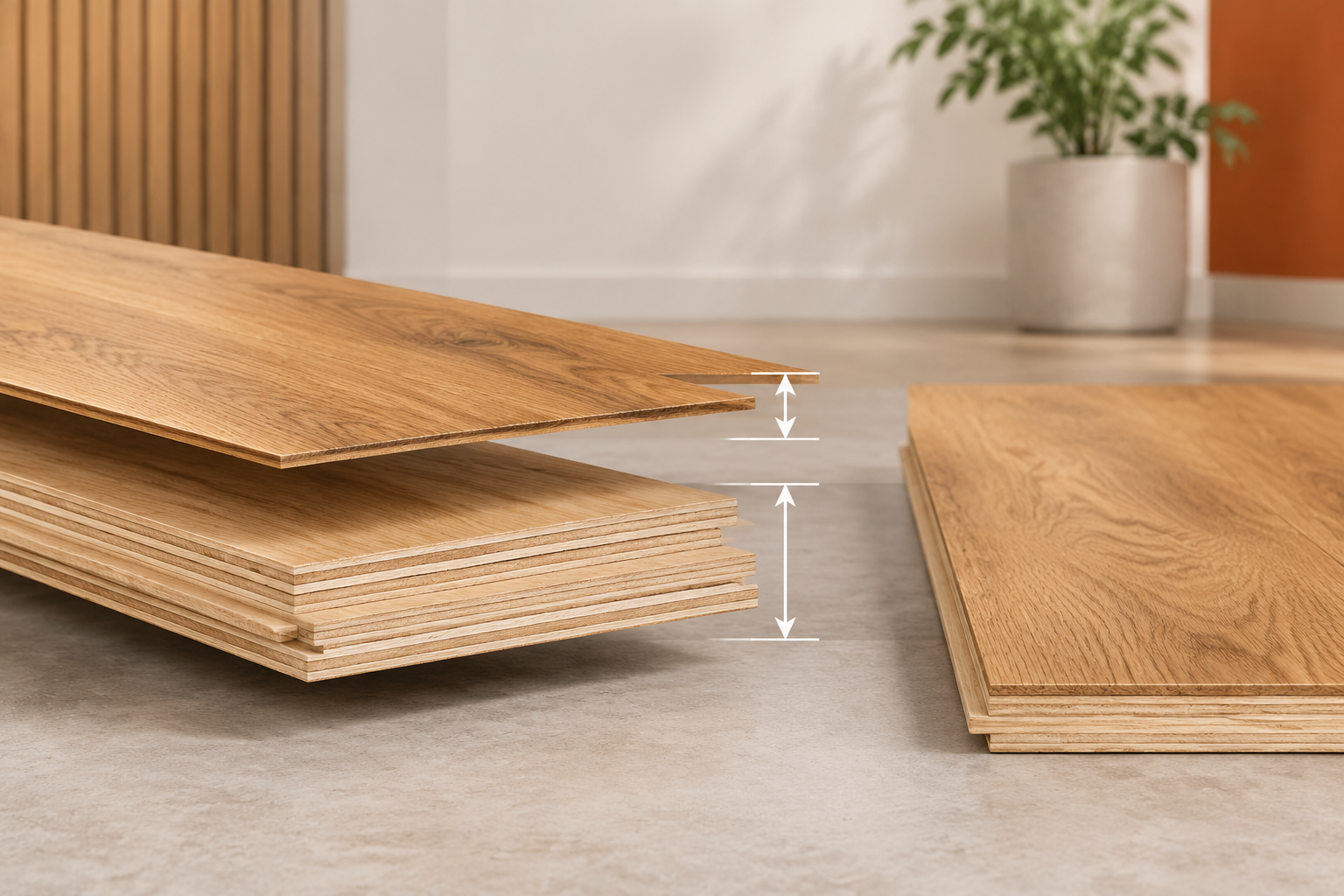
A rustic appearance grade does not establish structural performance. Hardwood face thickness, plywood support, bonding, joint design and relevant product evidence require separate review. The engineered flooring construction guide provides context for that separate specification.
Why should buyers confirm the supplier's own grade definition?
The same oak grade name does not reliably mean the same appearance across suppliers. Terms such as select, natural, character and rustic need the supplier’s written interpretation before they become useful purchasing criteria.
Ask which features are included, excluded or restricted, and which reference samples demonstrate those boundaries. If a named grading document is proposed, identify its version and any supplier-specific exceptions.
For international enquiries, record the destination country and the buyer’s local terminology. GoLink’s wood flooring appearance grading guide supports that discussion; the actual order still needs its own accepted definition.
Which appearance features need separate agreement?
Record knots, sapwood, grain, tone variation and repairs as separate acceptance criteria. Approval of one feature should not imply approval of another.
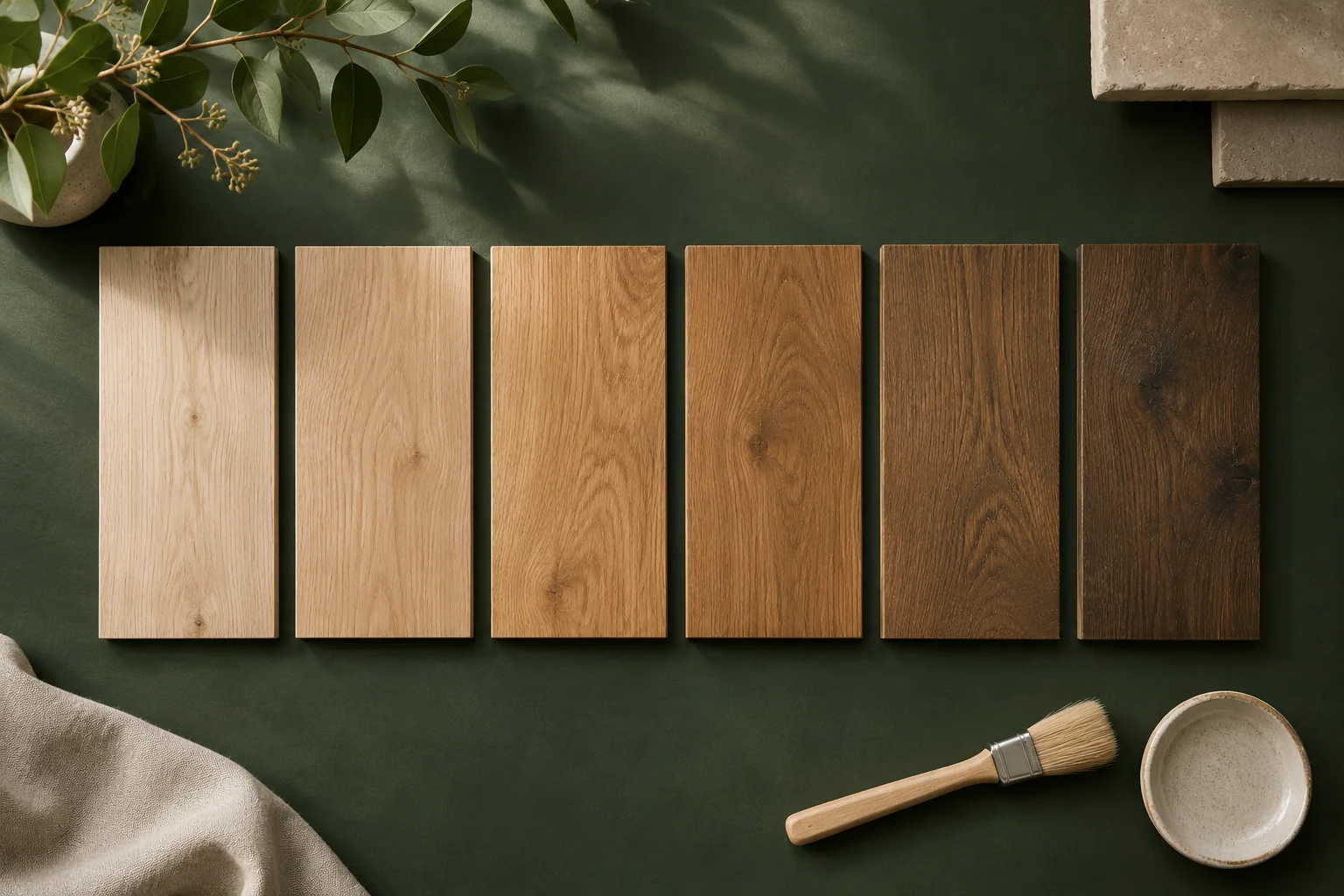
A buyer may accept prominent knots while excluding pale sapwood strips, or accept broad color variation while requesting subdued filler contrast. Describing everything as “character oak” leaves these choices unresolved. State what is permitted, what is excluded and what still needs manufacturing confirmation.
Knots, sapwood and grain variation
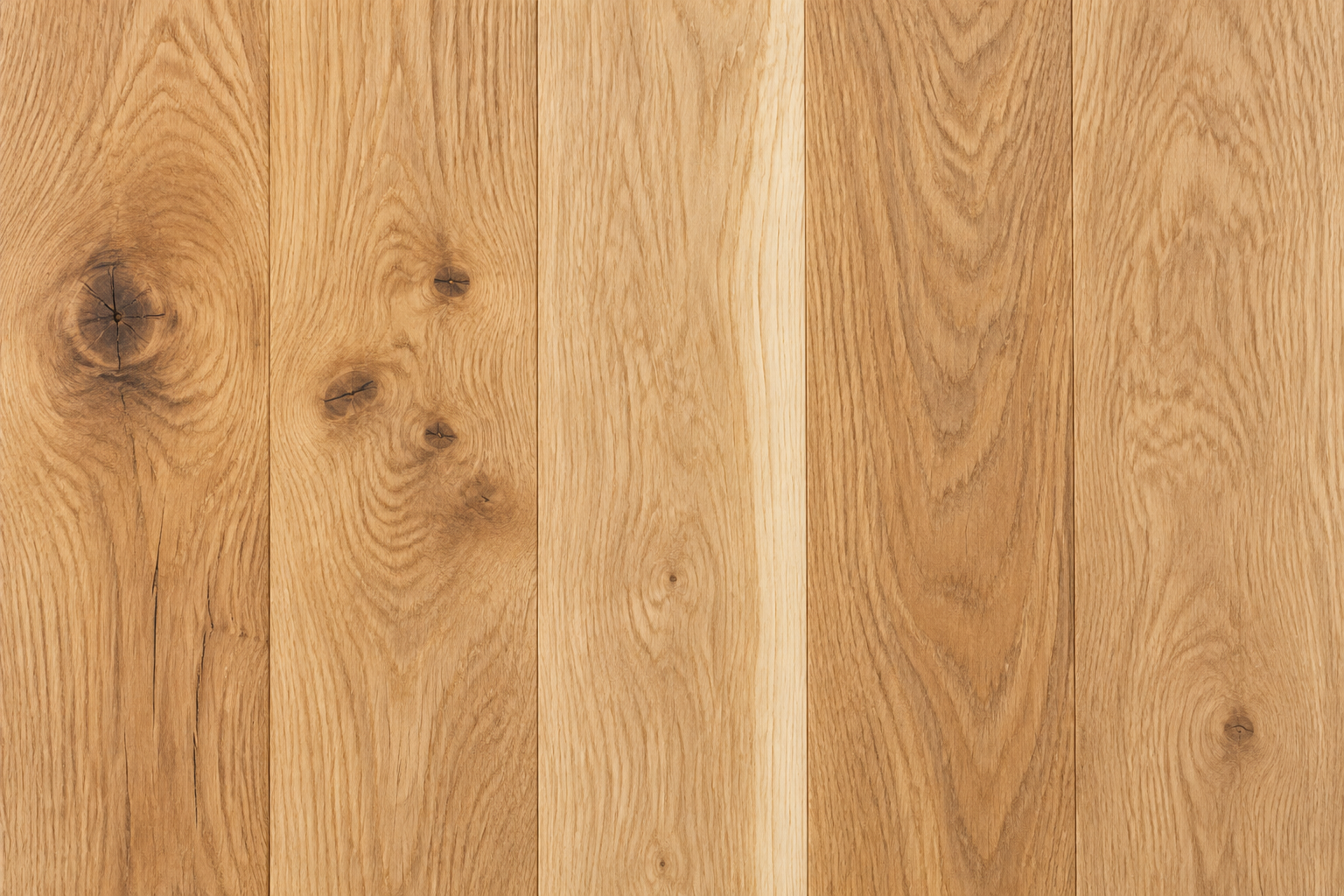
A knot is the timber feature associated with a branch. Distinguish intact knots from openings requiring repair, then describe acceptable visibility, clustering and position. A dark knot near an edge can read differently from a similarly visible feature in the board’s center.
A usable wood flooring knot allowance needs a measurement method whenever limits are proposed. Agree how irregular knots and clusters are assessed, the units used and whether the rule applies per board or across a defined inspection area. Request supplier proposals rather than importing unsupported numerical limits.
Oak sapwood is the generally lighter outer wood of the tree. Specify whether it is permitted and how its width, continuity and position are assessed. Identify accepted and excluded examples.
Grain figure and board-to-board tone also need boundaries. An attractive individual board does not establish the permitted mix across cartons or a displayed floor.
Filler color, contrast and visible repairs
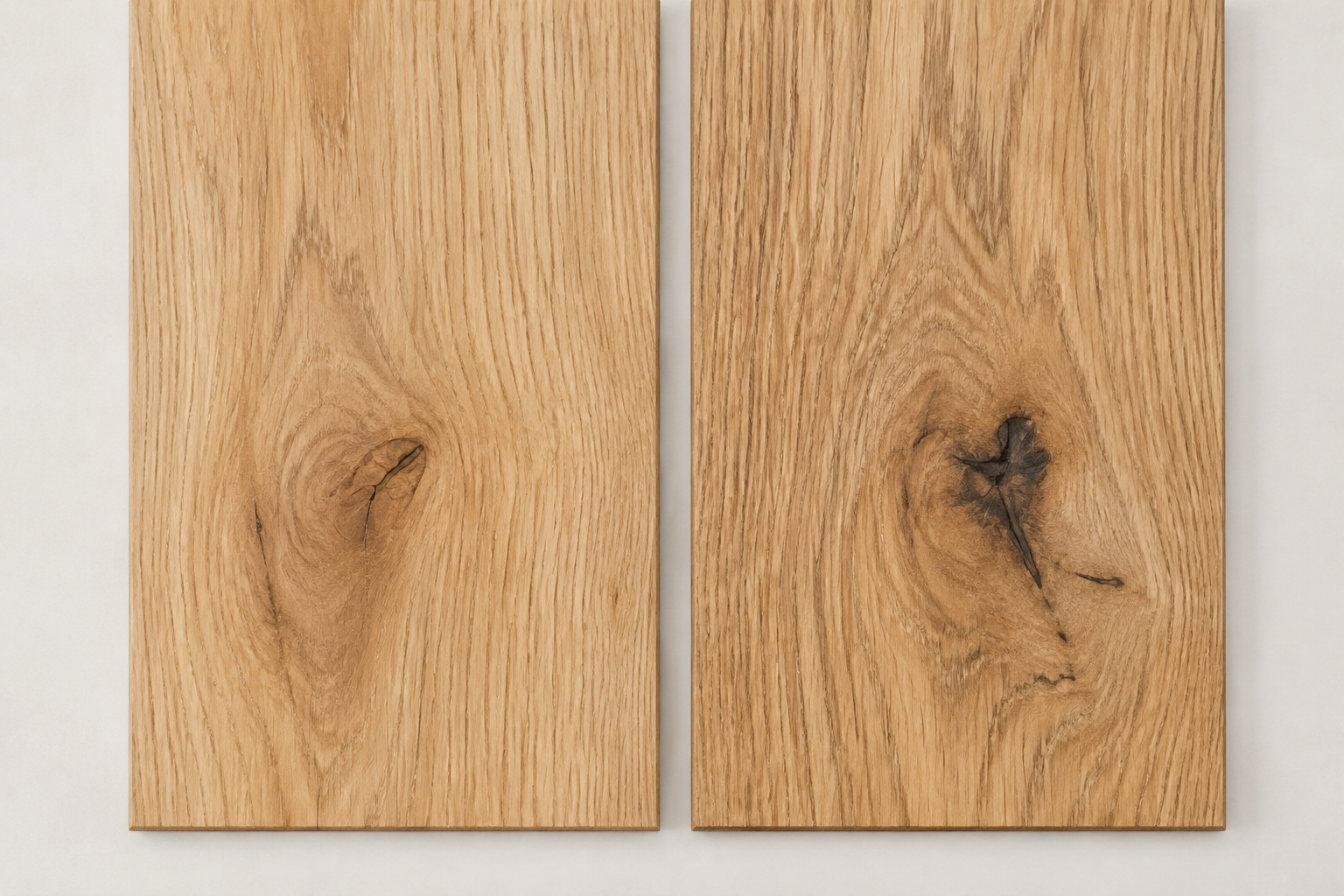
Agree knot filler color separately from stain color. Filler is the repair material used to close permitted openings; stain is a color treatment, while lacquer or oil describes the protective coating system.
Wood flooring filler color can blend with surrounding oak or create a deliberate dark accent. Specify the intended contrast on the finished sample, together with permitted repair shapes and locations. Approval of a filled knot should not automatically authorize filled splits or other repair types.
Confirm surface continuity as well as color: should the repair be flush, or is an identified textured treatment intended? Review it with the agreed brushing, coating and sheen. “Matching filler” needs a physical reference because surrounding timber itself varies.
Comparison table: grade labels versus explicit acceptance criteria
Use the grade label as shorthand after its supporting criteria are accepted. These examples show how to improve a brief; they are not formal grade definitions or confirmed manufacturing allowances.
| Feature | Label-only brief | Explicit acceptance record |
|---|---|---|
| Grade identity | “Natural grade” | Supplier definition, dated version and agreed exceptions. |
| Knots | “Some knots allowed” | Permitted knot types, proposed limits, measurement method, clustering and edge rules. |
| Sapwood | “Limited sapwood” | Permitted presence, width, continuity and position, supported by boundary samples. |
| Filling | “Standard filler” | Repair types, finished filler contrast, surface treatment and reference identity. |
| Variation | “As pictured” | Accepted grain and tone range, plus the agreed approach to the overall mix. |
| Approval | “Sample approved” | Identified physical references, approval date, written criteria and unresolved items. |
How can a buyer turn an appearance brief into an order record?
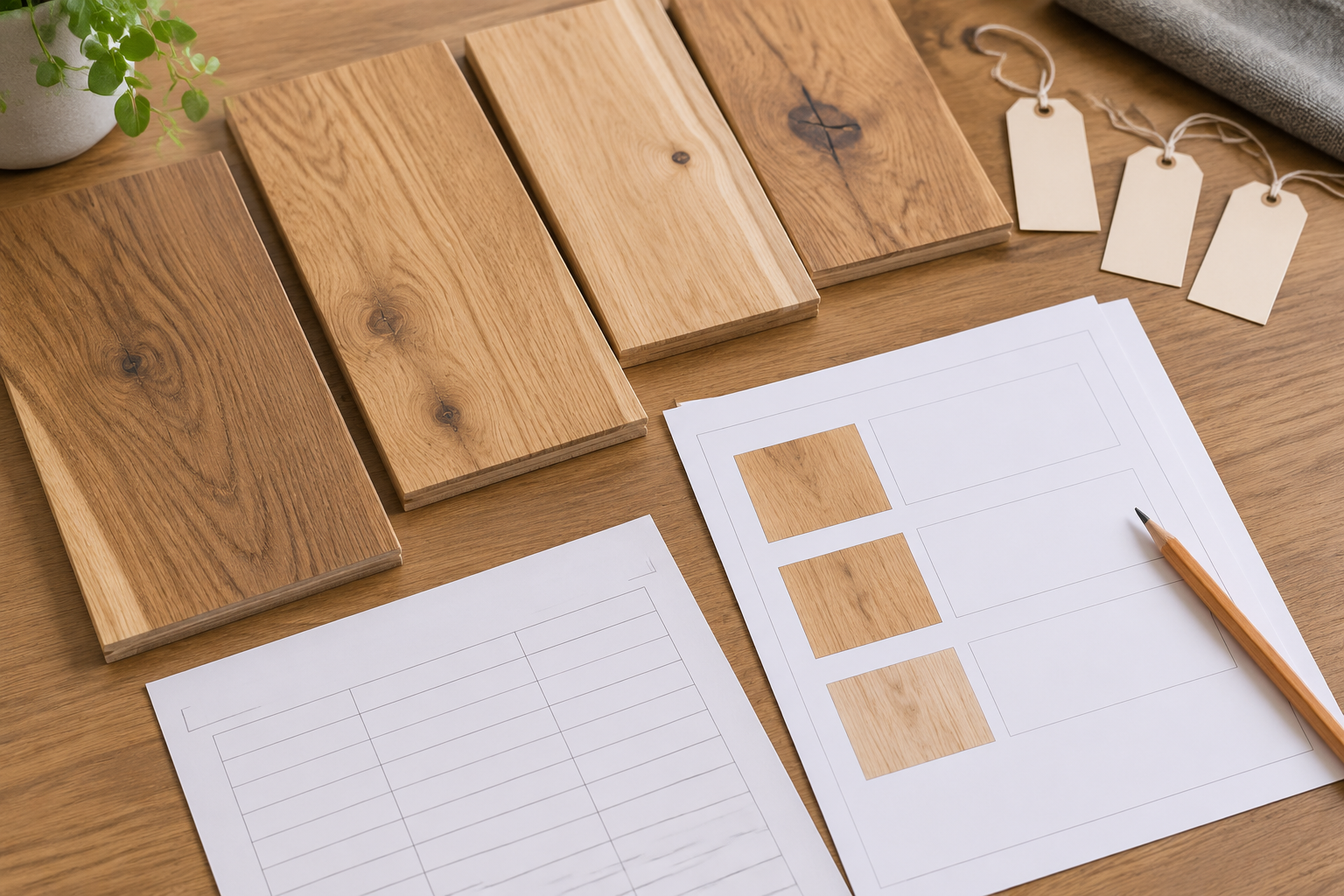
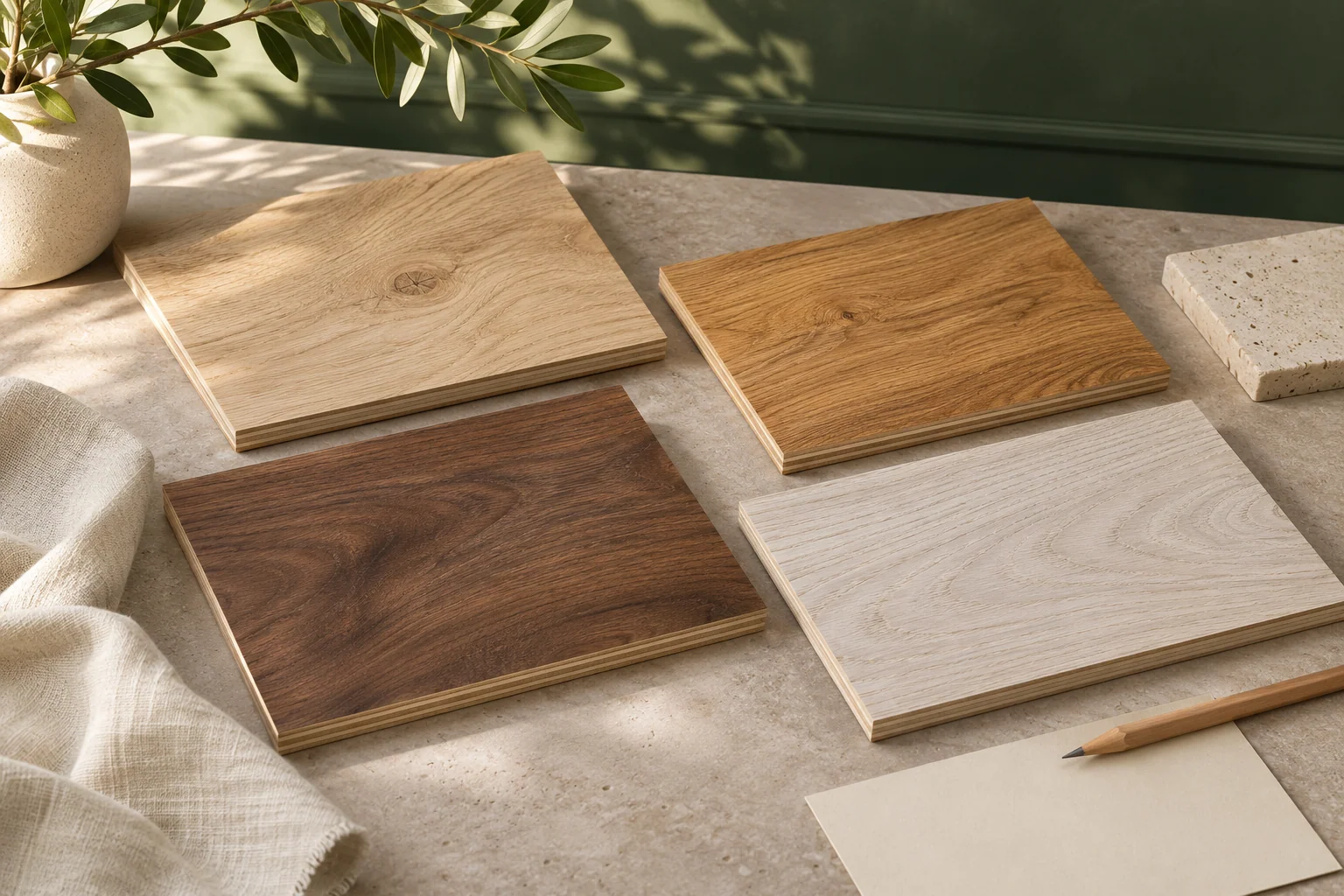
Create a dated appearance specification linked to the product identity and retained physical references. Make clear whether each sample shows the intended everyday appearance, an acceptable boundary or an excluded feature.
A boundary sample demonstrates a permitted extreme; it does not establish how frequently that extreme may occur. Agree the overall mix separately. Where limits remain unresolved, mark them as pending rather than allowing a provisional sample approval to imply complete acceptance.
A numbered process for recording agreed features and unresolved limits
- Identify the range. Record species, product reference, intended format, destination country and buyer terminology.
- Separate the features. List knots, sapwood, grain, tone, filler and other repairs, with a proposed acceptance statement for each.
- Resolve measurable rules. Ask the supplier to confirm feasible limits, measurement units and assessment methods. Leave unanswered fields visibly pending.
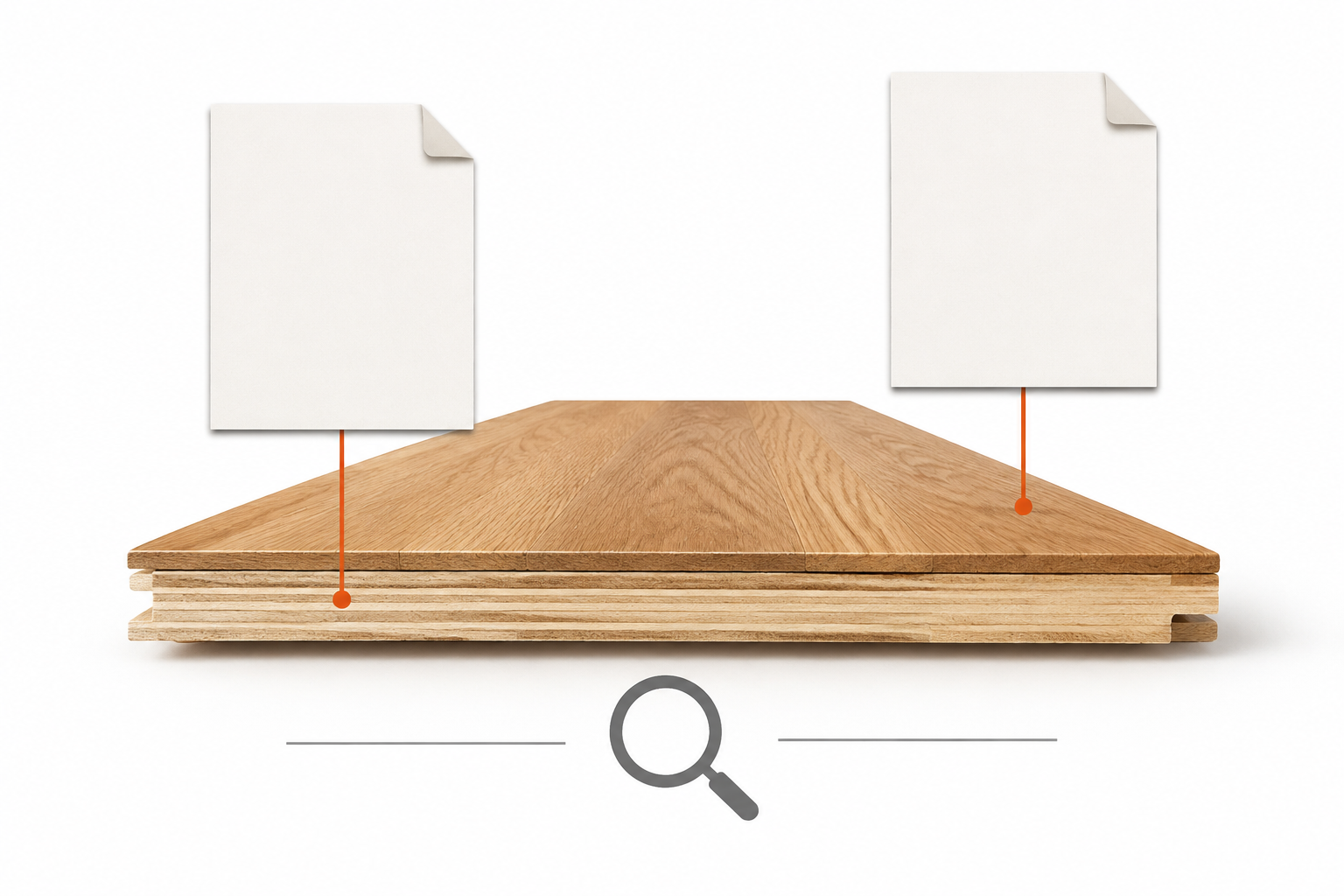
- Connect physical references. Assign sample identifiers, dates and roles. Use photographs to locate features while retaining the actual samples as agreed appearance references.
- Define the mix and review method. Agree how variation across the supplied range will be assessed, including inspection scope and how disputed features will be referred back to the record.
- Confirm the accepted version. Resolve conflicts between wording and samples before order acceptance. Link the appearance document to the complete manufacturing specification and commercial order.
Keep both parties’ retained reference sets aligned. When appearance requirements change, issue a revised record rather than silently replacing a sample.
How should GoLink oak references be used in a grading discussion?
GL-0209 Natural Grain Oak is a published engineered plank reference in a natural color direction, with custom specifications and OEM options available. It can identify a starting appearance direction for a manufacturing discussion.
Its name and digital image do not establish knot allowances, sapwood limits, filler color or the accepted appearance range. Those require explicit agreement. Equally, a product name containing “character” cannot replace an accepted grade specification.
For GoLink development, connect appearance approval to the actual board configuration, including hardwood face thickness separately from total thickness. Installation or heating-system review and commercial confirmation remain separate decisions.
Frequently asked questions
These questions address the remaining boundaries between a visual brief, physical references and supply acceptance.
Send an oak appearance brief for manufacturing review
The practical endpoint is an appearance record that describes the floor your team intends to sell. Before requesting final commercial confirmation, resolve feature allowances, filler contrast and the accepted mix, then connect those decisions to identified samples and a dated specification.
FAQ
Can the appearance specification require no visible sapwood?
You can state that requirement in the brief, but the supplier must confirm whether it is feasible for the proposed product. Record whether exclusion applies to the visible face and edges, and agree how it will be assessed before treating it as accepted.
Does accepting a boundary sample permit that appearance throughout the order?
Not automatically. A boundary sample identifies an acceptable extreme. Its permitted frequency or distribution across the supplied range needs separate agreement; otherwise, buyer and supplier may interpret the same sample differently.
Can photographs replace retained physical grade references?
Photographs help identify knots, repairs and sample locations, but lighting and screens can alter perceived tone and filler contrast. Keep identified physical references alongside the written criteria, and agree how differences between photographs, wording and samples will be resolved.
How should an appearance concern be documented on receipt?
Identify the order, product and relevant cartons, then photograph the whole board and the disputed feature. Compare it with the applicable written criterion and retained reference. Follow the agreed inspection and reporting procedure rather than relying on the grade name alone.
Discuss Your Engineered Flooring Requirements
Share your oak species or GoLink product reference, plank or pattern format, estimated quantity per color and destination country. Include your proposed knot, sapwood and filler requirements, plus any sample, private-label or document needs, for a focused appearance and manufacturing review.
You can also email [email protected]. A submitted brief begins the review; it is not an accepted production order.