Herringbone Flooring Handedness: Confirm the Order Mix
Learn when herringbone flooring needs handed boards, how joint details affect orientation, and how to approve quantities, spare boards and carton labels with the installer and supplier.
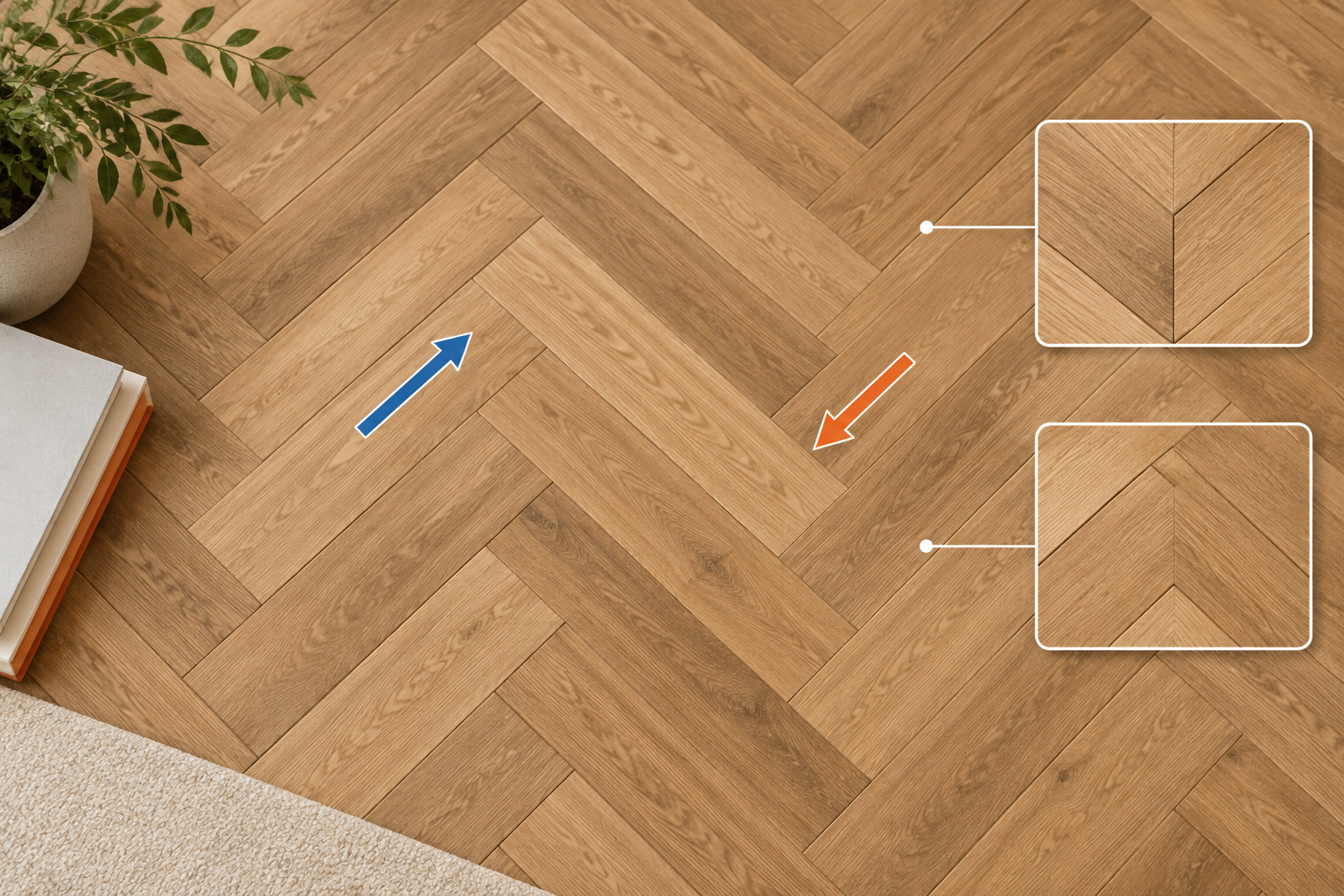
Table of Contents
- When does herringbone flooring handedness affect an order?
- Which joint details determine board orientation?
- Comparison table: handed-board and non-handed configurations
- How should left and right quantities be approved?
- What board and carton identification should the supplier confirm?
- How should buyers review a GoLink herringbone design reference?
- FAQs about herringbone order orientation
- Practical conclusion: approve the joint and quantity schedule together
Herringbone flooring handedness cannot be confirmed from the visual pattern alone. The required mix of left and right boards depends on the actual edge profile, end-joint design and installation system. Importers, specifiers and contractors should approve a joint drawing, orientation schedule and packing identification together before placing an order.
When does herringbone flooring handedness affect an order?
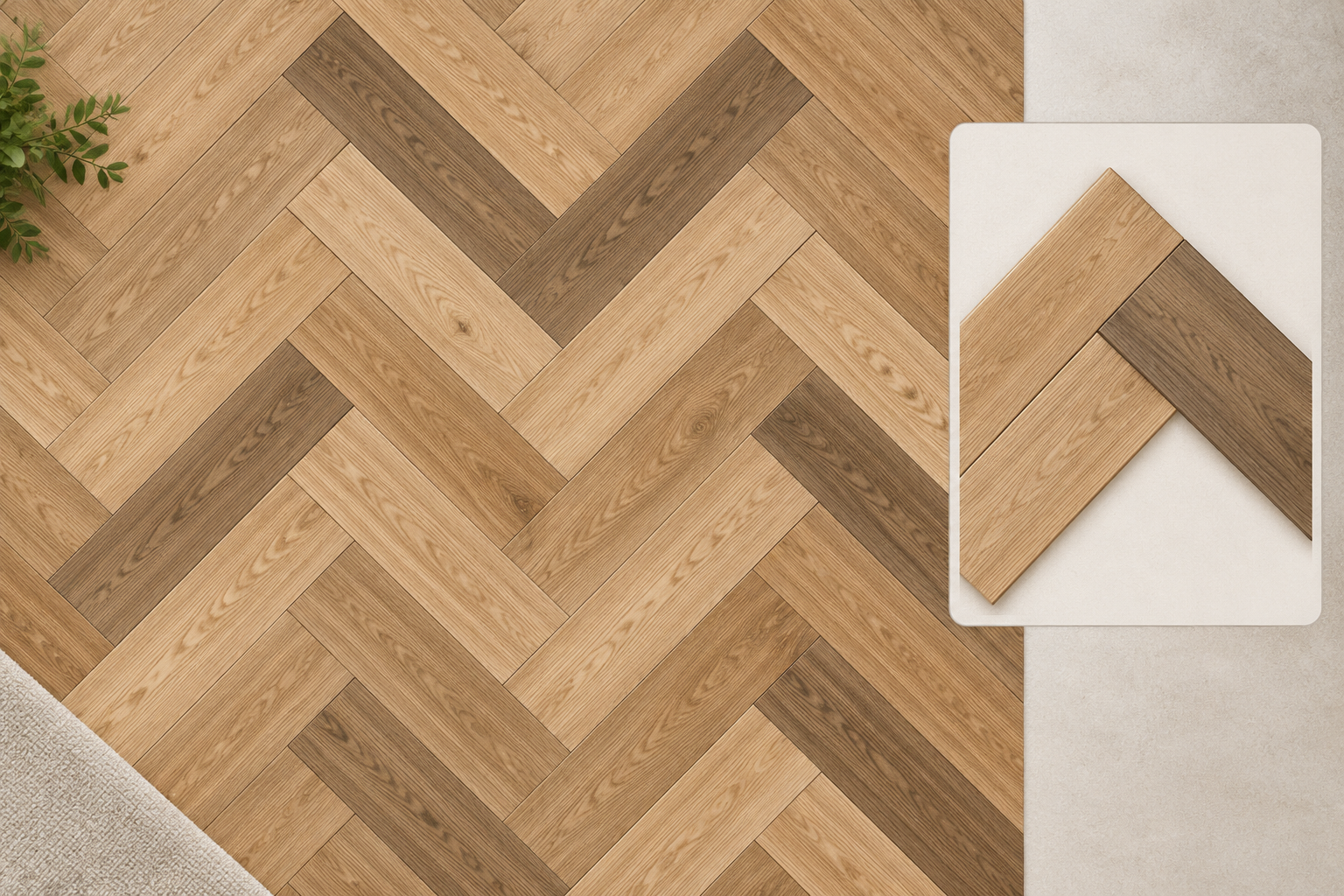
Handedness affects an order when the board profile or joint arrangement makes one orientation different from its mirror image. A handed board is manufactured or identified for a specific direction, such as left or right, rather than being freely interchangeable with a board turned end for end.
Herringbone appearance alone does not reveal this requirement. Square-ended rectangles arranged at right angles may be supplied as separate orientations, as reversible units, or through another joint arrangement. The installation drawing and accepted product specification must decide which applies.
Define handed boards without assuming every system needs them
For procurement purposes, “left” and “right” should describe the supplier’s agreed reference view, not an informal description made on site. The reference may relate to the tongue and groove position, end treatment, machining direction or the way a board sits in the layout drawing.
Do not assume that a left-hand board can be replaced by rotating a right-hand board. Rotation may reverse the joint relationship, place the wrong edge against the adjacent piece or change how the pattern locks. It may be possible for a particular reversible system, but that must be shown in the approved drawing or confirmed by the manufacturer.
This guidance is for international B2B buyers preparing a defined order. It is general coordination guidance; the orientation of any GoLink pattern must be confirmed against the actual sample, joint drawing and accepted manufacturing specification.
Which joint details determine board orientation?
Board orientation is determined by the complete joint configuration, not by nominal length and width alone. Buyers should review the board’s long edges, square ends, machining direction and the way adjacent pieces meet at the pattern’s turning points.
Review long-edge and end-joint drawings together
Ask the supplier for a drawing that shows both long edges and both ends in the same reference view. It should identify the orientation convention, the mating edges and the direction in which the pattern progresses. A top-view layout is useful, but it should be supported by an edge or section drawing where the profile is not visually obvious.
Check whether the square end is identical at both ends. Also check whether the long-edge profile continues around the end, stops before the end or uses a separate connection. These details can change whether a board is reversible and whether two apparent mirror images are actually compatible.
Confirm tongue-and-groove, spline or click options for the actual product
Engineered pattern flooring may use tongue-and-groove edges, grooved ends with separate splines, or a click system. GoLink’s construction information describes these as options requiring confirmation for the actual board and pattern; do not transfer a joint detail from a different product or brochure configuration.
Matching nominal board size does not establish compatibility between two suppliers. The profile location, working face, end machining, joint clearance and installation method may differ even when the stated length and width appear identical. For a mixed-source repair or extension, request a physical comparison and written compatibility decision rather than relying on dimensions.
Comparison table: handed-board and non-handed configurations
The following comparison is a procurement framework, not a classification of every herringbone product. The supplier’s accepted joint drawing remains the controlling document.
| Configuration | Orientation handling | Order risk | What to confirm |
|---|---|---|---|
| Handed boards | Left and right units are identified separately. | One orientation may be unusable for part of the layout if the mix is wrong. | Reference view, quantities by orientation, carton labels and spare allocation. |
| Reversible boards | The same board can serve both directions under the approved method. | Rotation may still be restricted by the joint or installation sequence. | Written confirmation that rotation is allowed and a drawing showing the permitted use. |
| Non-handed or separately joined system | Orientation is not treated as a separate SKU, or ends connect through a specified method. | Buyers may overlook end-joint or spline requirements. | End treatment, mating parts, installation method and packing description. |
| Unconfirmed configuration | Visual appearance suggests herringbone, but the joint record is incomplete. | High risk of incorrect ordering, site sorting or unusable stock. | Pause approval until the sample, drawing and packing schedule agree. |
How should left and right quantities be approved?
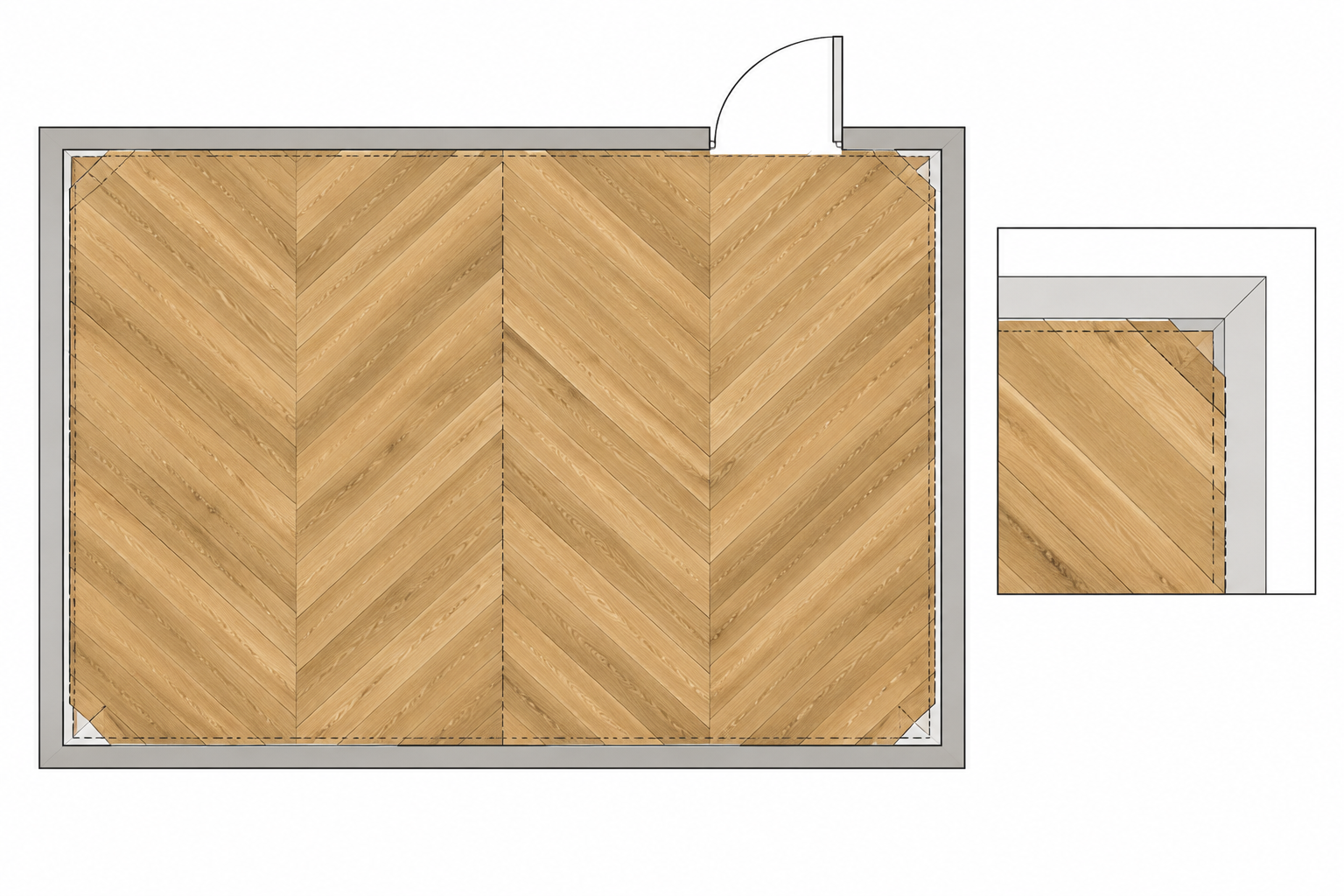
Approve orientation quantities from the installer’s layout, not from an assumed equal split. A symmetrical room may require a balanced mix, but borders, doorways, columns, direction changes and the starting point can alter the field requirement.
- Freeze the layout reference. Mark the room boundary, primary pattern direction, starting line, borders and transitions.
- Mark orientation use. On the drawing, identify where each left and right board is used. Use the same labels as the supplier’s joint drawing.
- Separate field boards from cuts. Record boards needed for the main repeat separately from perimeter cuts, returns, repairs and approved waste assumptions.
- Have the installer sign off. The person responsible for installation should confirm the orientation schedule, installation method and allowance before the purchase order is released.
- Issue one controlled schedule. Include the product reference, pattern, orientation, quantity unit, area, spare policy and revision date.
Separate the field layout from borders, cuts and installer allowances
Do not hide left and right boards inside one combined area figure. If the pattern is supplied in cartons containing a fixed orientation mix, the schedule should state that packing arrangement and how cartons will be allocated across rooms. If cartons contain only one orientation, list cartons and pieces by orientation according to the supplier’s confirmed packing unit.
Spare herringbone boards should be recorded by orientation whenever the system is handed. A spare without an orientation label may not solve a later repair need. The installer should also confirm whether spare pieces are intended for field replacement, colour selection, cutting or future maintenance.
What board and carton identification should the supplier confirm?
Identification should allow the warehouse and installer to distinguish the approved product from its orientation without opening every carton. Ask the supplier to confirm which identifiers appear on the board, inner pack, carton and shipping record.
- Product or design reference and the agreed colour or appearance reference.
- Pattern format and orientation code, such as an agreed left or right designation.
- Quantity unit, including pieces or area per carton where applicable.
- Batch, production or order reference used for traceability.
- Revision or date of the accepted packing artwork.
- Room, phase or pallet allocation if the project requires controlled distribution.
Do not confuse a four-digit website GL product code with a separate brochure colour code. The accepted order record should state which identifier controls the appearance and which identifies the product reference. For OEM or private-label programmes, approve carton artwork and orientation wording before packing begins.
A packing photograph or sample label can help, but it does not replace the written packing specification. Confirm whether mixed-orientation cartons are permitted, how the mix is counted and whether spare pieces are packed separately.
How should buyers review a GoLink herringbone design reference?
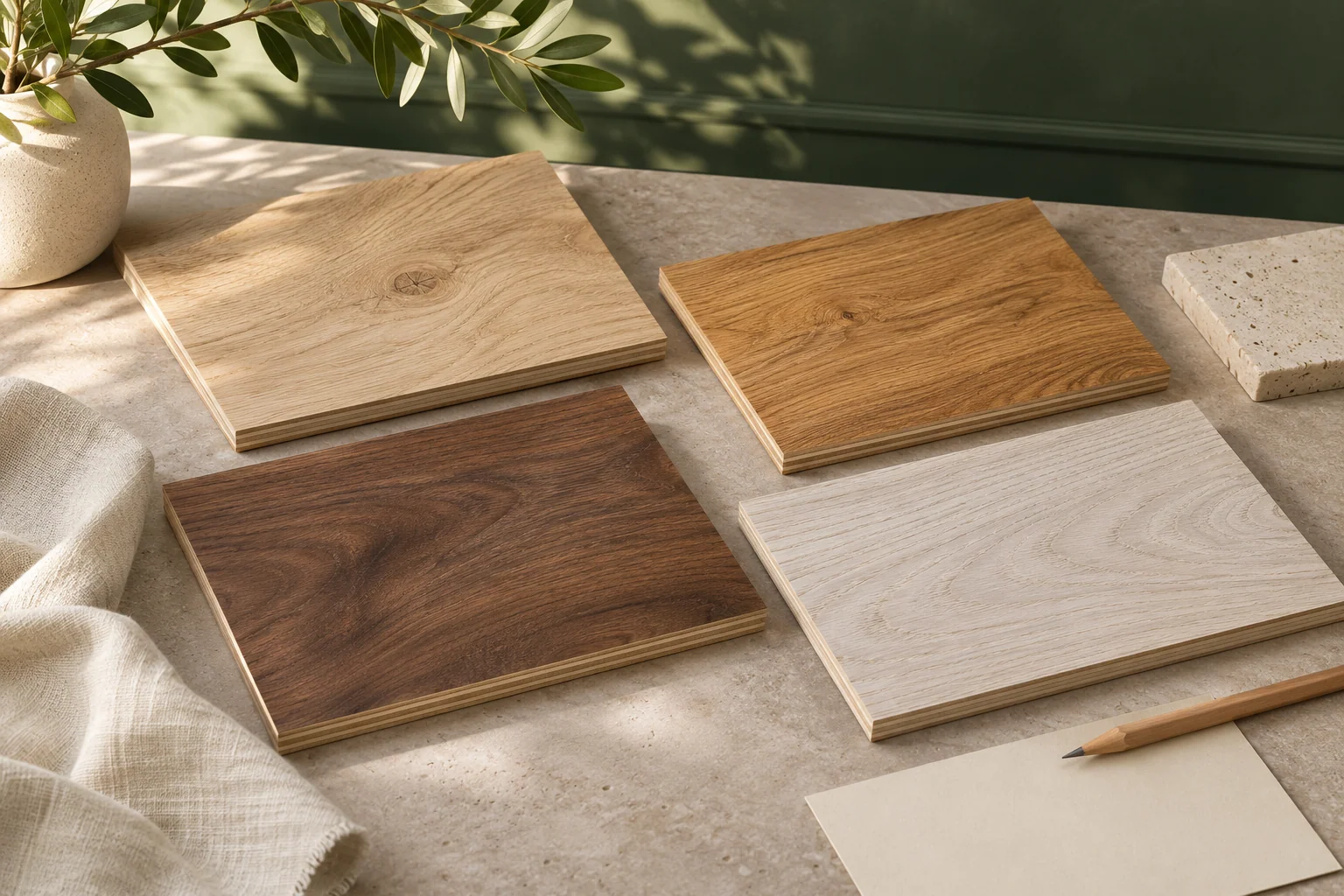
A GoLink design reference such as Herringbone Honey Oak should be treated as a starting point for a product discussion, not as proof of a complete handed-board or packing specification. The product page does not by itself establish the dimensions, orientation mix, joint profile or click compatibility for an order.
Ask GoLink to connect the reference with an approved physical sample and a written manufacturing specification covering species, appearance grade, board dimensions, total thickness, hardwood face thickness, plywood support, surface treatment, coating, joint and pattern configuration. Keep the appearance decision separate from the joint decision: a colour or grain reference does not settle how the board is machined.
For a project enquiry, send the layout drawing, destination, estimated quantity by room or phase, installer’s orientation schedule and any private-label or document requirements. GoLink’s public construction guide describes herringbone and joint options at a general level, but the actual accepted specification must define the supplied product.
FAQs about herringbone order orientation
These answers address common procurement questions, but the accepted product drawing and installer approval remain decisive.
Can herringbone appearance alone reveal whether boards are handed?
No. The visual pattern shows the layout, not necessarily the machining or joint arrangement. Confirm the profile and orientation convention from the supplier’s drawing.
Can a left-hand board be replaced by rotating a right-hand board?
Not automatically. Rotation may reverse the mating edges or change the installation sequence. Use a right-hand board as a substitute only when the approved system expressly permits it.
Should spare herringbone boards be recorded by orientation?
Yes, when the system uses handed boards. Record the product reference, orientation, quantity and storage location so a future repair does not depend on visually guessing the board direction.
Does matching nominal board size establish compatibility between two suppliers’ joints?
No. Length and width do not confirm profile location, end machining, working-face alignment or joint clearance. Request a physical comparison and written compatibility review before mixing sources.
Practical conclusion: approve the joint and quantity schedule together
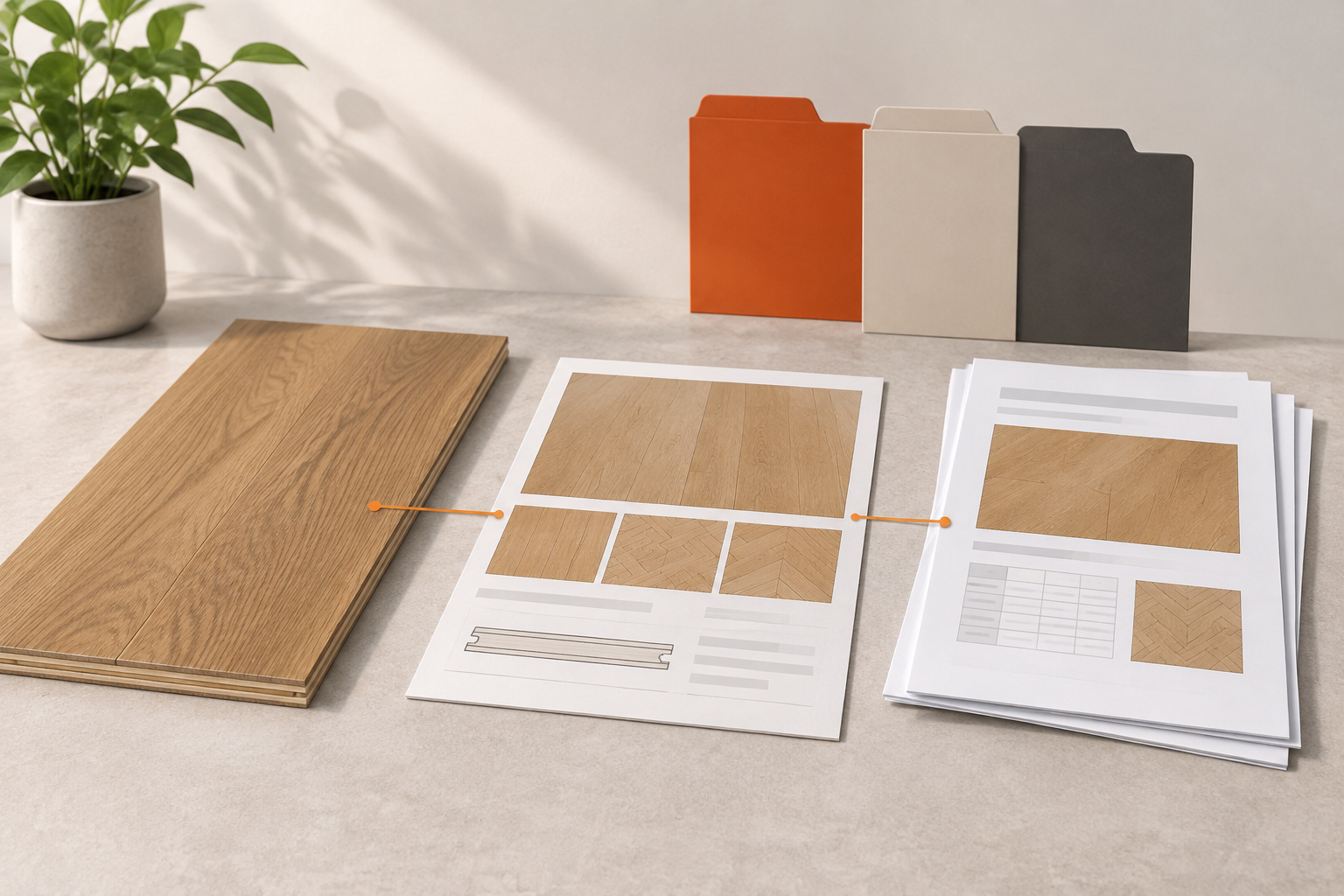
The safest order record links five items: the approved appearance sample, the complete board specification, the joint and orientation drawing, the installer-approved quantity schedule, and the carton identification plan. If any one of these is still assumed rather than confirmed, the order mix is not ready for release.
For handed herringbone boards, list left and right quantities separately, identify spares by orientation and state whether cartons are mixed or single-orientation. For a reversible or non-handed system, obtain written confirmation of the permitted installation method instead of inferring flexibility from the visual layout. This small coordination step can prevent avoidable sorting, substitutions and site delays.
FAQ
Can herringbone appearance alone reveal whether boards are handed?
No. The appearance shows the pattern, not the board machining. Review the actual joint drawing and orientation convention.
Can a left-hand board be replaced by rotating a right-hand board?
Only if the approved system confirms that rotation is permitted. Otherwise, turning the board may reverse the mating edges or installation sequence.
Should spare herringbone boards be recorded by orientation?
Yes, when the system uses handed boards. Record the orientation, product reference, quantity and storage location.
Does matching nominal board size establish compatibility between two suppliers’ joints?
No. Matching length and width does not confirm the edge profile, end machining or joint clearance. Request a physical and written compatibility review.