Flooring Test Reports: Match Evidence to Project Specs
A practical scope review for fire, slip and emissions records: match the specimen and tested build-up to the flooring specification, then document any unresolved requirements before approval.
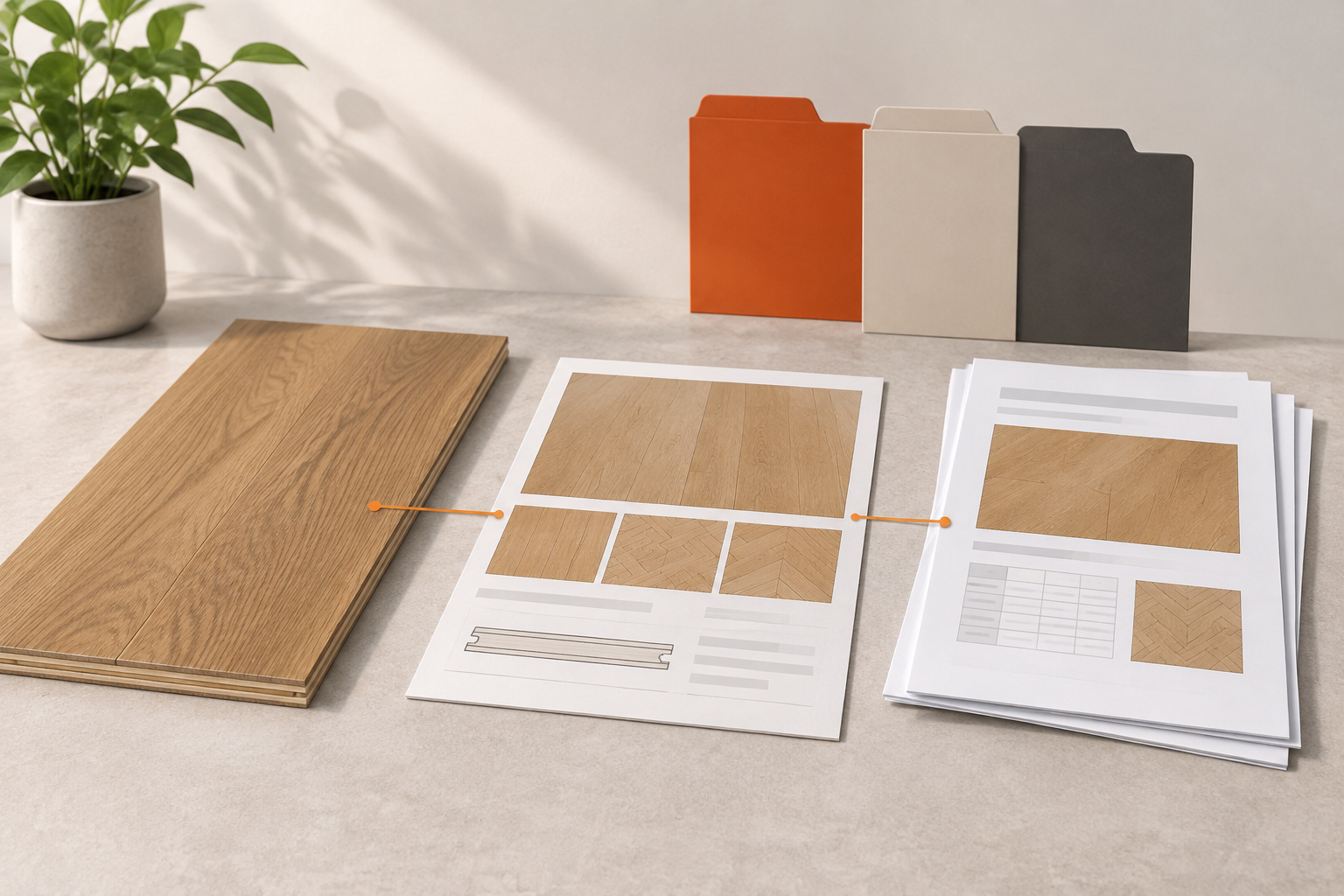
Table of Contents
- When do flooring test reports apply to the proposed product?
- Identify the report holder, specimen, method and relevant dates
- Match the tested configuration to the accepted flooring specification
- What different questions do fire, slip and emissions records answer?
- Comparison table: evidence type, scope checks and unresolved questions
- Why is plywood emissions information not automatically finished-floor evidence?
- Which product or installation changes require a scope query?
- Review coating, construction and installation details without assuming transferability
- How should a project team request and review the evidence package?
- A numbered process from project requirement to documented review outcome
- How should GoLink's published brochure references be interpreted?
- Frequently asked questions
- Next step: send the product configuration and project evidence requirements
Flooring test reports are useful only when the identified product, test method, tested configuration and permitted scope match the project requirement. For procurement teams, specifiers and contractors, that means checking the finished floor and its intended installation—not just a report title or brochure reference. Final compliance decisions belong to the responsible project professionals and destination authorities.
When do flooring test reports apply to the proposed product?
A flooring test report applies to a proposed floor only to the extent that its tested specimen and stated scope match the product and project requirement. A report is not a general approval for every product that looks similar, shares a material, or carries the same manufacturer name.
For this review, a tested configuration means the product and relevant conditions represented by the specimen: its construction, surface, coating and, where applicable, installation layers or substrate. Start by comparing that configuration with the dated project specification and the destination’s stated requirements. A report can inform the review, but it does not itself decide whether the project complies.
Identify the report holder, specimen, method and relevant dates
Check the report itself, not only a summary, logo or sales statement. Record who issued it and who is named as the report holder; the product or material tested; the test method and edition stated; the specimen description; the test date and report date; and any validity period, conditions or limitations shown.
Look for enough identification to connect the document to a real sample. A product code may help, but it is not sufficient if the report does not explain which construction or finish that code represents. If the report names another reference, ask for the report holder to explain the relationship in writing and provide traceable product specifications or other evidence supporting the proposed scope. Do not assume that a renamed product, similar appearance or shared raw material makes the report transferable.
Destination matters too. One report should not be presumed valid for every country: required methods, classifications, documentation and acceptance can differ by destination and application. Confirm the project requirement with the responsible specifier, contractor or compliance professional and the relevant destination authority.
Match the tested configuration to the accepted flooring specification
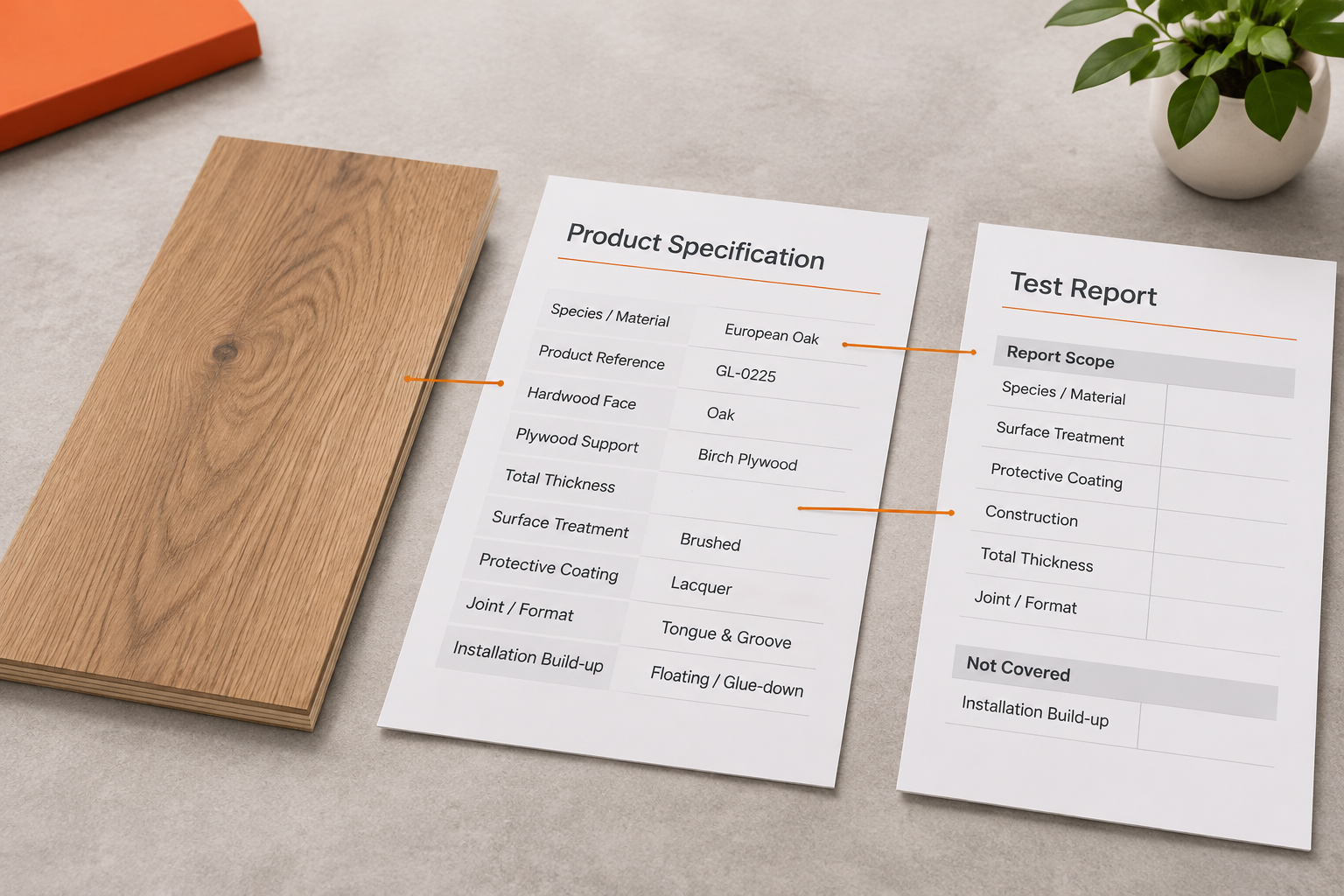
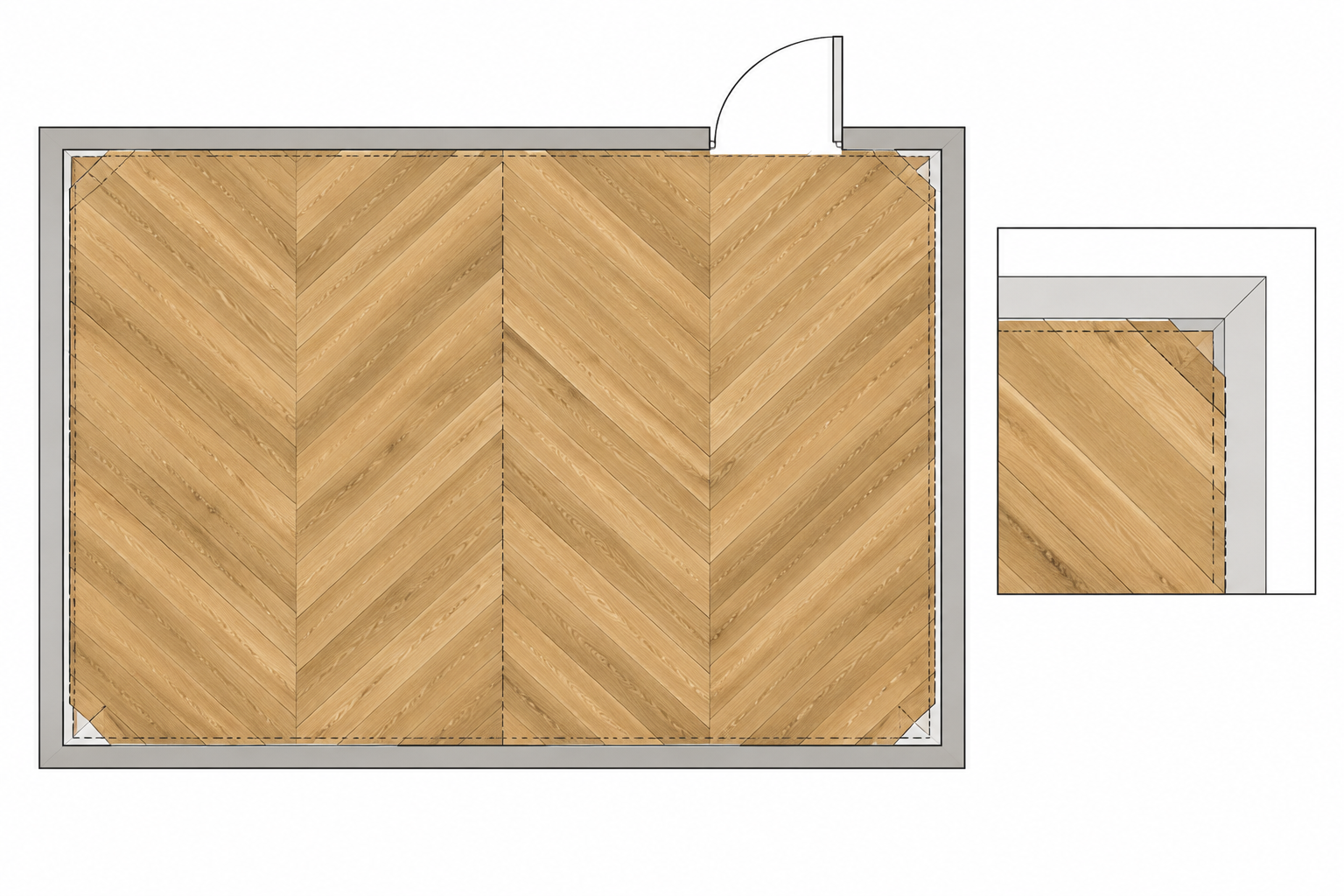
Compare the report specimen with the floor being considered field by field. Relevant identifiers may include species or material, product reference, hardwood face, plywood support, total board thickness, surface treatment, protective coating, joint or format and any specified installation build-up. The report may not address every field; note what it does and does not cover.
Keep material and finished-product evidence distinct. A plywood test does not automatically describe a finished engineered board. Likewise, a report for one coating, plank construction or installation arrangement does not establish the performance of another. The engineered flooring construction guide describes the general hardwood-face and plywood-support approach, but the actual product specification must identify the proposed board.
If a mismatch remains, request the missing report, an applicable scope statement from the report holder, or a technical review from the party responsible for the project decision. Do not resolve a scope gap by changing a product description in a submittal.
What different questions do fire, slip and emissions records answer?
Fire, slip and emissions evidence address different properties and should be reviewed separately. Fire evidence concerns reaction-to-fire performance under a specified method and scope. Slip evidence concerns friction or slip performance under its stated test conditions. Emissions evidence concerns the substances or emissions assessed by a particular method for the specimen tested.
These records are not interchangeable, and a result from one category cannot fill a requirement in another. The project brief should identify the required property, test or classification, application and destination. The review team then checks whether the available evidence covers those exact items.
Comparison table: evidence type, scope checks and unresolved questions
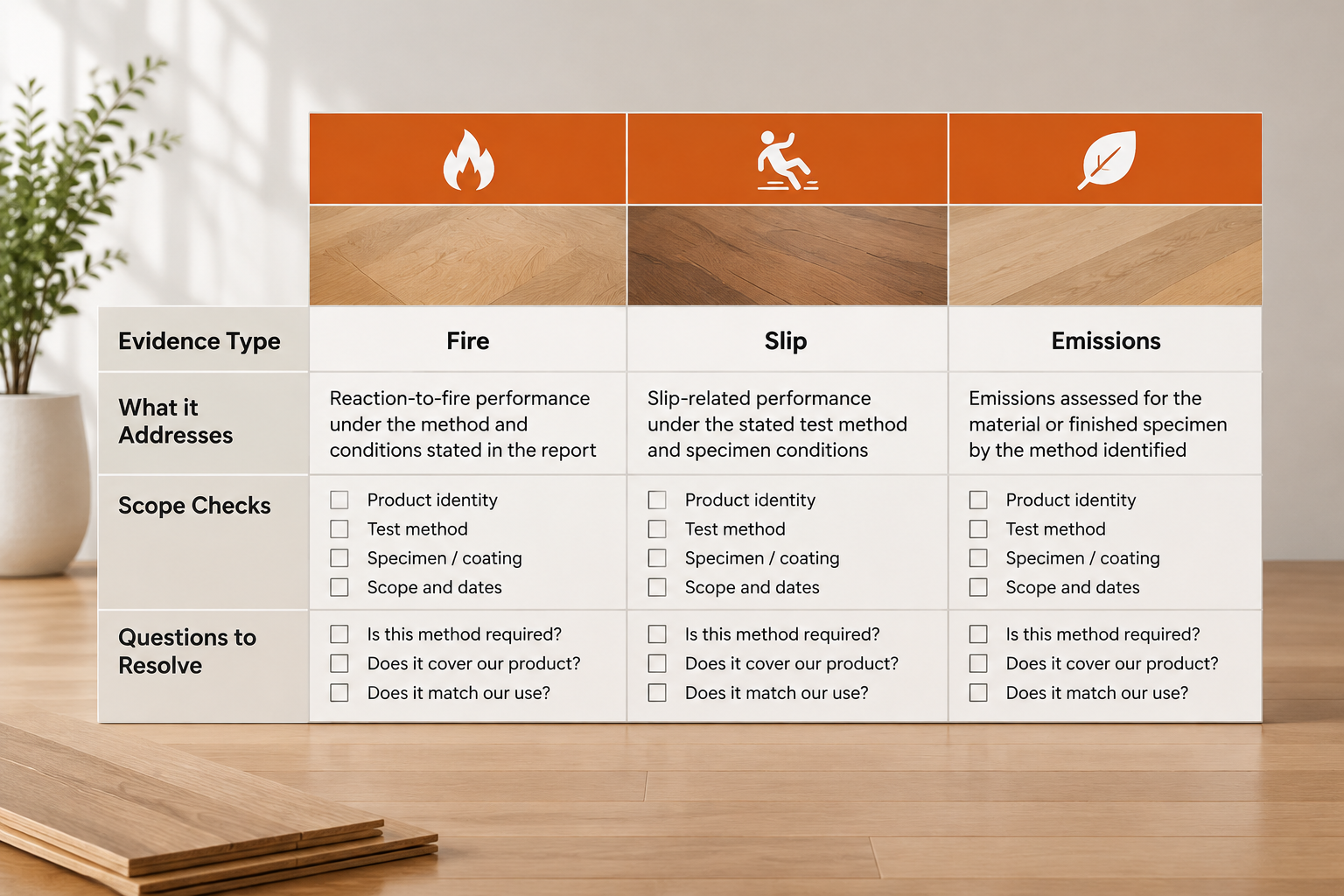
| Evidence type | What it addresses | Scope checks | Questions to resolve |
|---|---|---|---|
| Fire | Reaction-to-fire performance under the method and conditions stated in the report. | Tested floor identity; specimen build-up; any backing, substrate or installation conditions; method and classification scope. | Does the project specify this method or classification? Does the report cover the proposed floor and installation? |
| Slip | Slip-related performance under the stated test method and specimen conditions. | Surface and coating; specimen condition; method; whether the report covers the proposed product rather than a selected collection or finish. | Does the required use or location align with the test conditions and project requirement? |
| Emissions | Emissions assessed for the material or finished specimen by the method identified. | Whether the specimen is plywood, another component or the completed floor; coating; method; scope and dates. | Does the project require component evidence or evidence for the finished flooring as supplied? |
The table is a review framework, not a statement that any particular product meets a requirement. Record each answer as covered, not covered or requiring clarification; avoid replacing an unknown with an assumed pass.
Why is plywood emissions information not automatically finished-floor evidence?
Plywood emissions information describes the tested plywood specimen within the report’s stated scope. Finished flooring adds a hardwood face, adhesive layers and a surface system; those components and the completed assembly may not be represented by a test of plywood alone. The result therefore cannot be treated as finished flooring emissions evidence without documentation establishing that scope.
Ask what was tested, whether the specimen was a component or a completed board, which method was used, and which product or material the report identifies. If the project requires evidence for the supplied floor as a whole, request records that explicitly cover that finished configuration or obtain clarification from the responsible technical reviewer about acceptable evidence.
Similarly, a brochure reference to plywood performance should not be expanded into a claim about all finished products or all orders. Keep the report, product specification and project requirement together so the reviewer can see exactly what each document supports.
Which product or installation changes require a scope query?
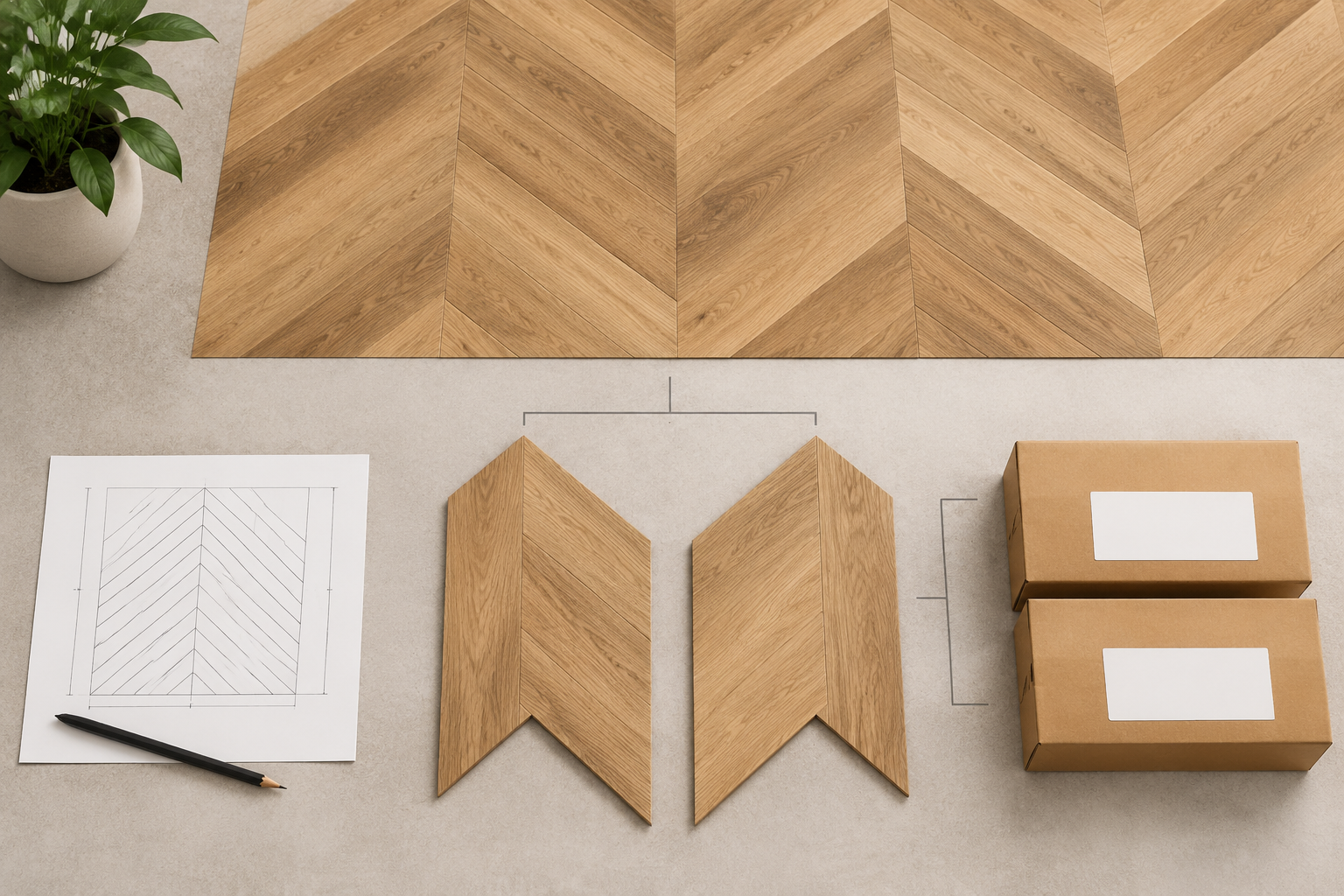
Ask for scope confirmation whenever a proposed change could alter the tested specimen or the conditions represented by the report. Common triggers include a different product reference, hardwood face or plywood support; a change in total board construction; a different coating or surface treatment; a plank-to-pattern change; or a different adhesive, underlay, substrate or installation build-up where these are part of the test scope.
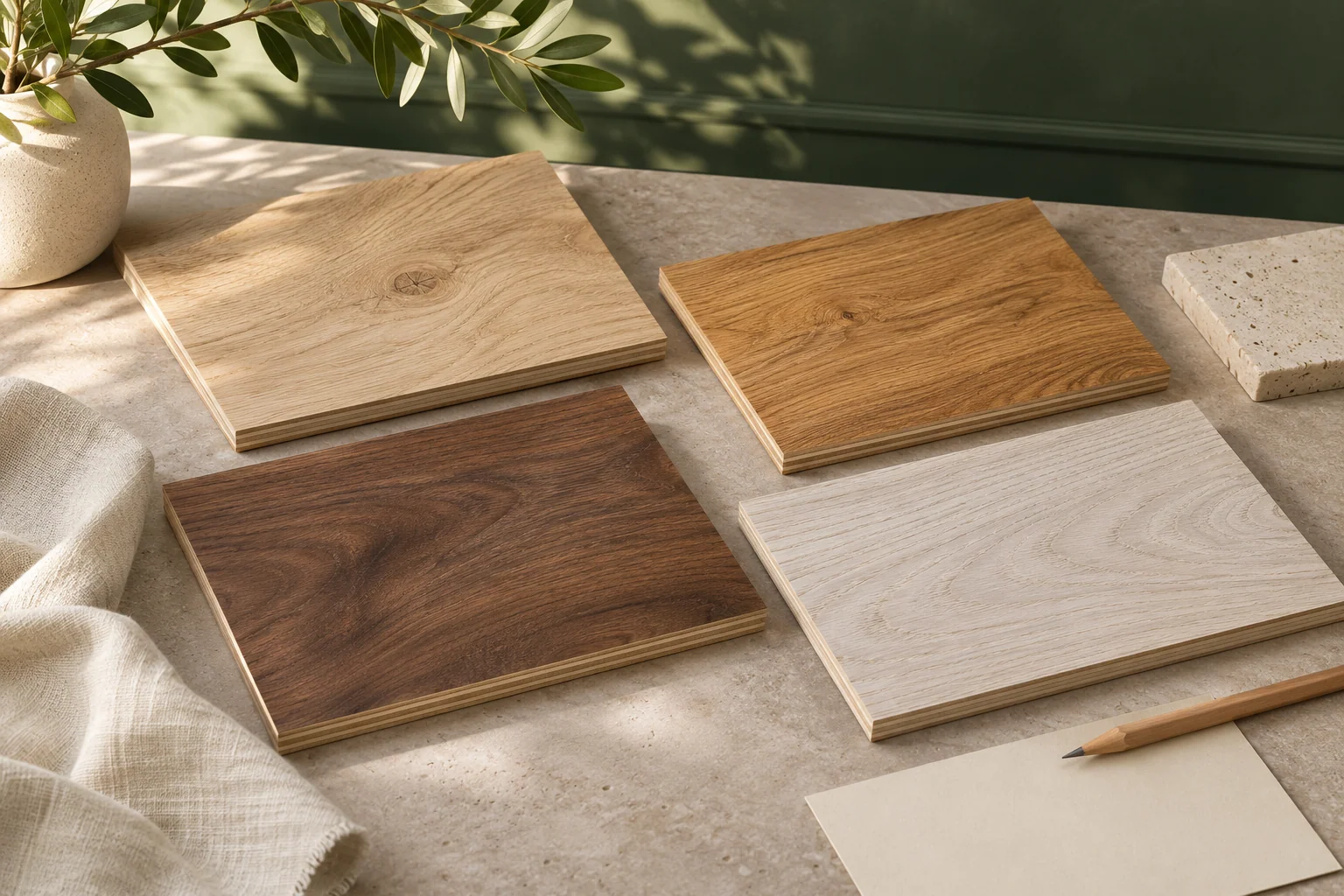
This is a query trigger, not a declaration that every change invalidates a report. The report holder and responsible project reviewer should explain whether the change remains within the documented scope. Keep appearance selection separate from construction approval: colour similarity does not establish identical materials or test coverage.
Review coating, construction and installation details without assuming transferability
Use a controlled specification to compare the proposed and tested floors. Identify the product code and approved sample; list the hardwood face and plywood support; state the surface treatment separately from the protective coating; and record total board thickness, format and joint where specified. For installation-related evidence, identify the layers or conditions named in the report and compare them with the proposed system.
For example, GoLink publishes GL-0226 Soft Sand Oak as an engineered plank with brushed texture and UV lacquer. Those details help identify the design reference; they do not establish fire, slip or emissions performance. A report would still need to identify an applicable specimen and scope. Ask whether a coating or construction change is covered rather than inferring equivalence from the product name.
Installation review remains distinct from product appearance approval. Where the method, substrate or system affects the project requirement, compare the actual plans and documents with the report conditions. GoLink’s installation guidance can support configuration questions, but it is not project-specific compliance approval.
How should a project team request and review the evidence package?
Request evidence against a defined product and project brief, rather than asking for a generic certificate bundle. The brief should identify the destination country, application, intended flooring reference, required property or classification, and any specified installation conditions. This gives the supplier a clear question and gives the project reviewer a basis for checking applicability.
Keep four decisions distinct: appearance selection, complete product construction, installation or system review, and commercial order confirmation. A sample can help approve appearance; it does not approve a test scope. A report can document a tested specimen; it does not approve an installation that differs from its stated conditions. Procurement should not treat an enquiry or an unreviewed document as acceptance of an order or of project compliance.
For a coordinated project discussion, GoLink’s project support page describes the relevant product and supply coordination context. The project team still determines who is authorized to review and accept evidence.
A numbered process from project requirement to documented review outcome

- Write the requirement. Record destination, application, required evidence type, method or classification if specified, and any installation conditions.
- Freeze the product identity for review. State the product reference, species, format, construction, surface treatment and coating. Mark fields that remain unconfirmed.
- Request the underlying record. Ask for the report or certificate document and any scope statement needed to identify the holder, specimen, method, dates and limitations.
- Compare scope field by field. Note what matches, what differs and what is absent. Keep fire, slip and emissions questions separate.
- Route open questions to the right reviewer. Ask the report holder to clarify document scope; ask the responsible specifier, project compliance professional or destination authority to decide whether that evidence meets the project requirement.
- Record the outcome and revision. Document accepted evidence, outstanding items, reviewer and date, plus the exact product and installation version assessed. Reopen the review if the relevant configuration changes.
A concise status such as “scope matched,” “clarification required” or “not demonstrated by supplied evidence” is more useful than an unsupported pass/fail label.
How should GoLink's published brochure references be interpreted?
GoLink’s public certifications and reports page presents brochure references relating to fire, slip and plywood emissions, including references to Cfl-s1 under EN 13501-1, P3 slip testing on selected collections, and E0 or F4 plywood information. These are statements about published reference material, not evidence that every product, finish, installation or order has been tested or certified to those descriptions.
For a project submittal, request the genuine current record relevant to the proposed product or material. Check the named holder, report or certificate identity, validity or dates, specimen, method, scope and any conditions. In particular, confirm whether a slip reference applies to the selected collection and surface, and whether emissions information covers plywood alone or the finished floor. Do not treat a brochure certification logo as a replacement for underlying applicable records.
Then send unresolved scope questions to the report holder and the project professional authorized to make the compliance decision. Manufacturers can help identify product details and available documents; the responsible project team and destination authorities determine whether the evidence is acceptable for the application.
Frequently asked questions
Can one flooring report be used for every destination country?
No. Requirements and acceptance can vary by destination, application and project specification. Confirm the required method and documentation with the responsible project professional and relevant destination authority.
What should a buyer request when the report names a different product reference?
Request the underlying report, an explanation from the report holder linking the named specimen to the proposed reference, and supporting product specifications. Ask the project reviewer to assess whether the documented scope covers the actual configuration.
Does a brochure certification logo replace the underlying applicable records?
No. Request the genuine record and check its holder, dates or validity, specimen, method, scope and conditions. A logo or brochure summary alone does not establish that the proposed floor is covered.
Who should resolve a mismatch between project requirements and the supplied report scope?
The report holder should clarify what the document covers. The responsible project specifier or compliance professional, with destination-authority input where required, decides whether that evidence meets the project requirement.
Next step: send the product configuration and project evidence requirements
The practical conclusion is to submit a defined floor configuration against a defined project requirement. Include the product reference or specification, destination country, application, intended installation build-up and the fire, slip or emissions documents requested. This gives the report holder and project reviewer a clear basis to identify matches and open questions.
Keep the sample, accepted specification, evidence records and review outcome connected to the same product version. A product enquiry can support a document discussion, but approval remains with the responsible project parties.
FAQ
Can one flooring report be used for every destination country?
No. Requirements and acceptance can vary by destination, application and project specification. Confirm the required method and documentation with the responsible project professional and relevant destination authority.
What should a buyer request when the report names a different product reference?
Request the underlying report, an explanation from the report holder linking the named specimen to the proposed reference, and supporting product specifications. Ask the project reviewer to assess whether the documented scope covers the actual configuration.
Does a brochure certification logo replace the underlying applicable records?
No. Request the genuine record and check its holder, dates or validity, specimen, method, scope and conditions. A logo or brochure summary alone does not establish that the proposed floor is covered.
Who should resolve a mismatch between project requirements and the supplied report scope?
The report holder should clarify what the document covers. The responsible project specifier or compliance professional, with destination-authority input where required, decides whether that evidence meets the project requirement.
Discuss Your Engineered Flooring Requirements
Share the product or reference, plank or pattern format, estimated quantity per colour, destination country, intended application and installation context. Identify the fire, slip or emissions records required so GoLink Floor can discuss the relevant product configuration and available documents. An enquiry is not project approval or an accepted production order.