Private-Label Flooring Changes: Control Order Revisions
A post-approval revision guide for flooring brands: identify affected records, separate product and artwork approvals, and preserve a clear history when original and revised stock coexist.
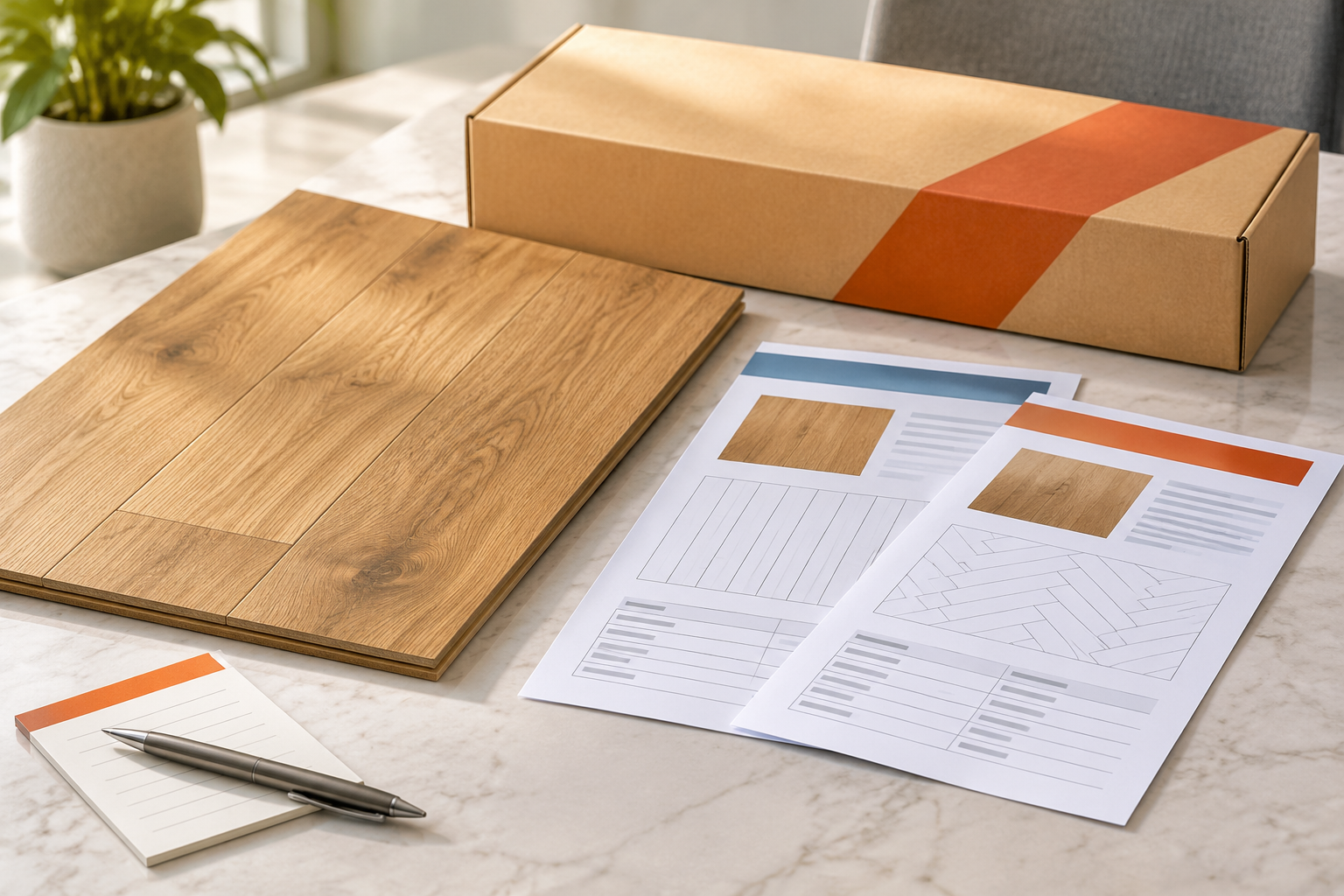
Table of Contents
- Control changes after approval
- Identify affected product and packaging records
- Change-impact table
- Keep the revised order reviewable
- Distinguish original and revised stock
- Connect specifications and branded presentation
- Frequently asked questions
- Submit the current reference and requested change
Control private-label flooring changes by recording the approved starting point, describing the requested difference, and reviewing every affected sample, specification, artwork file and order reference before accepting the revision. For flooring brands, importers and distributors, a revised carton proof is not approval of a changed board, and a familiar product code is not enough to define a revised construction.
How should buyers control private-label flooring changes after approval?
Start with the approved product, not a fresh development brief. If an established range needs a different coating, revised board dimension or new carton language, identify exactly what changes and what remains unchanged.
Product change control means recording a proposed difference, assessing its consequences and obtaining the relevant confirmations before using the revised configuration for an order. OEM means original equipment manufacturer; in this context, it describes manufacturing flooring for another brand.
The process below is general procurement guidance, not a statement of a universal GoLink change policy. Assign responsibility for product, artwork and commercial approval so that approval of one does not silently authorize the others.
Define the approved baseline and identify the requested revision
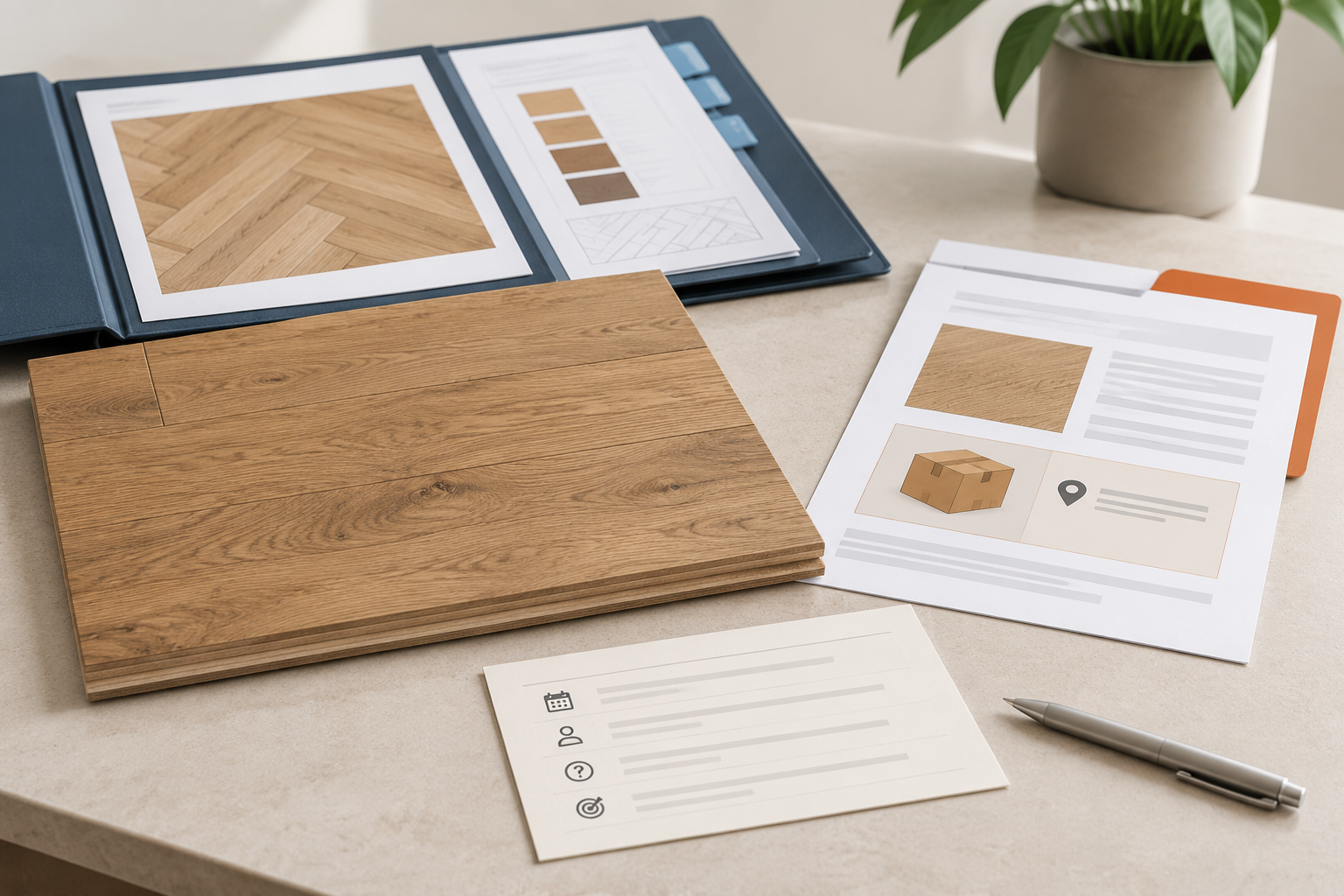
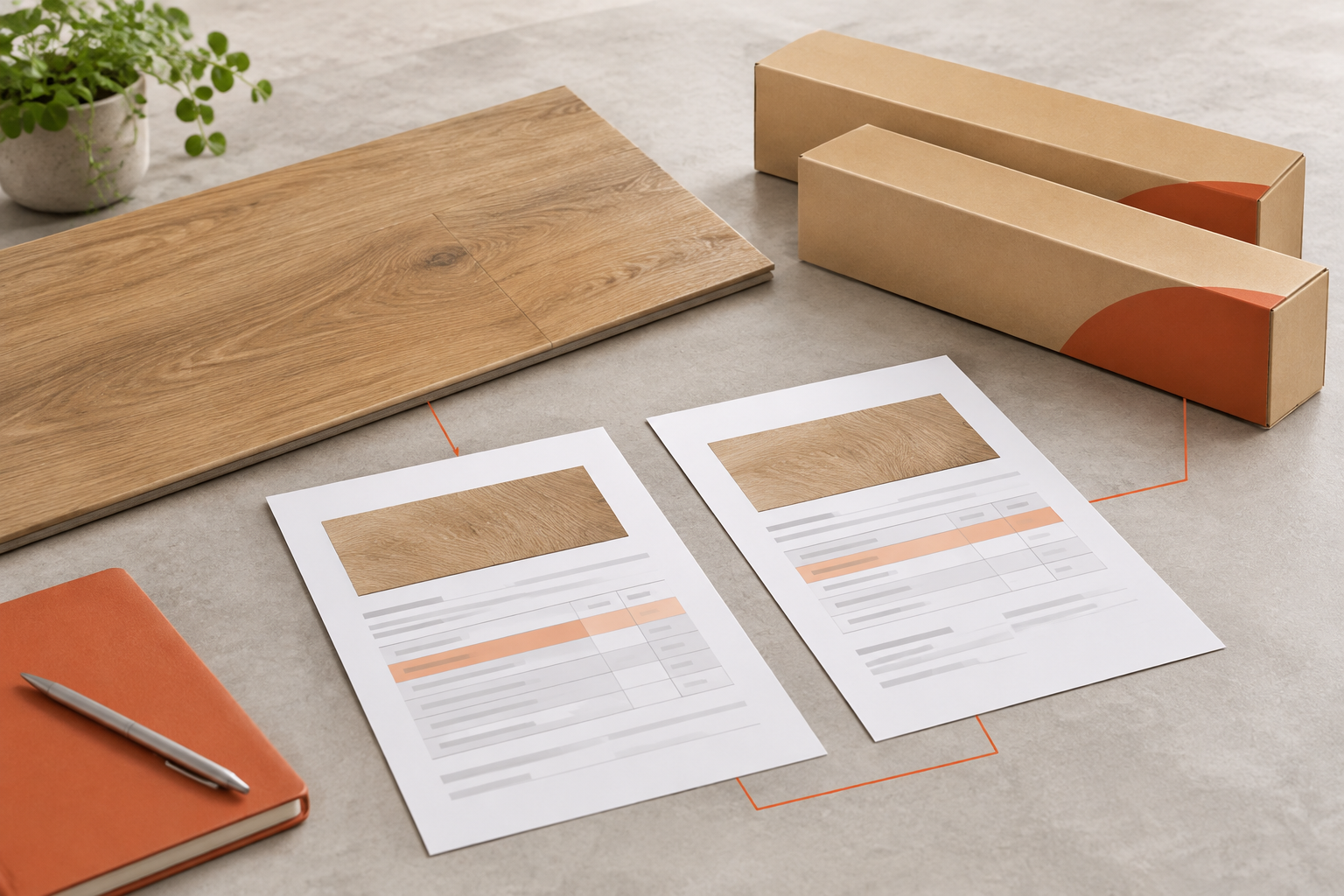
The baseline is the identifiable set of records defining the last accepted configuration. Collect the sample reference, dated manufacturing specification, carton and label artwork versions, applicable supporting documents and accepted order reference.
Write the requested difference as an old-to-new comparison. “Replace the carton contact address; retain the approved board specification” is clearer than “update packaging.” An OEM flooring specification revision should similarly name each changed field rather than say “same floor, improved construction.”
Record the request date, requester, reason and intended first affected order. Keep the earlier files; do not overwrite the evidence of what was previously accepted.
Which changes affect the product, packaging or supporting evidence?
Separate the request into product, packaging, evidence and commercial effects. One revision may touch all four: a width change can affect the sample, specification, carton coverage, pallet plan and quotation.
A packaging-only change does not necessarily require a new flooring sample when the board remains unchanged. It still needs an identified artwork proof, confirmation that product details remain accurate, and any necessary review of packing fit or protection.
Review construction, coating and joint changes against the actual configuration
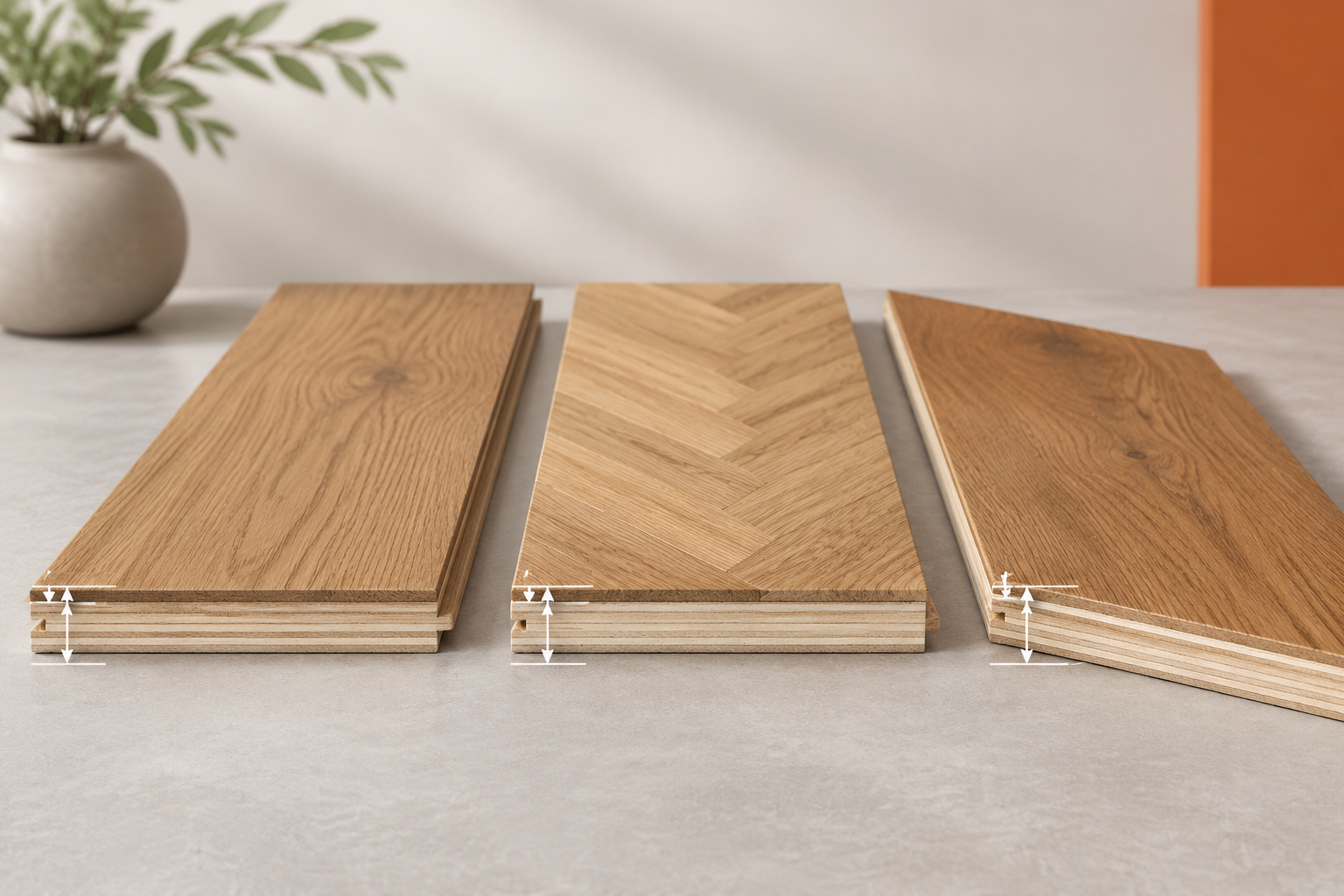
Check hardwood face thickness separately from total board thickness, with dimensions recorded in millimeters (mm). Record the plywood support, species, grade and joint rather than assuming an unchanged surface appearance means an unchanged build.
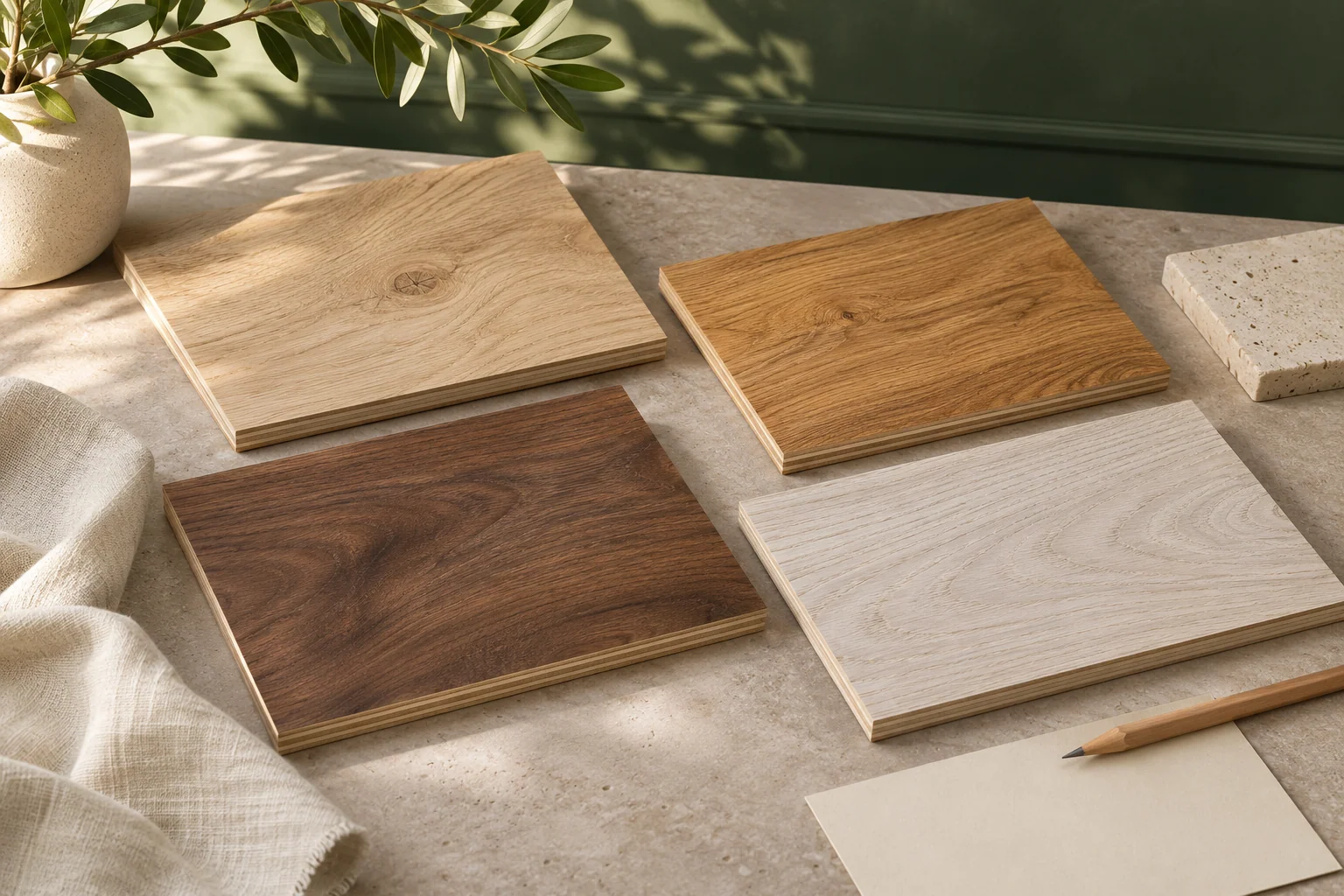
Separate color treatment from protective coating. Smoking or staining describes color development; lacquer and oil describe coating systems. A coating change may require revised appearance samples, care instructions and a review of relevant technical evidence.
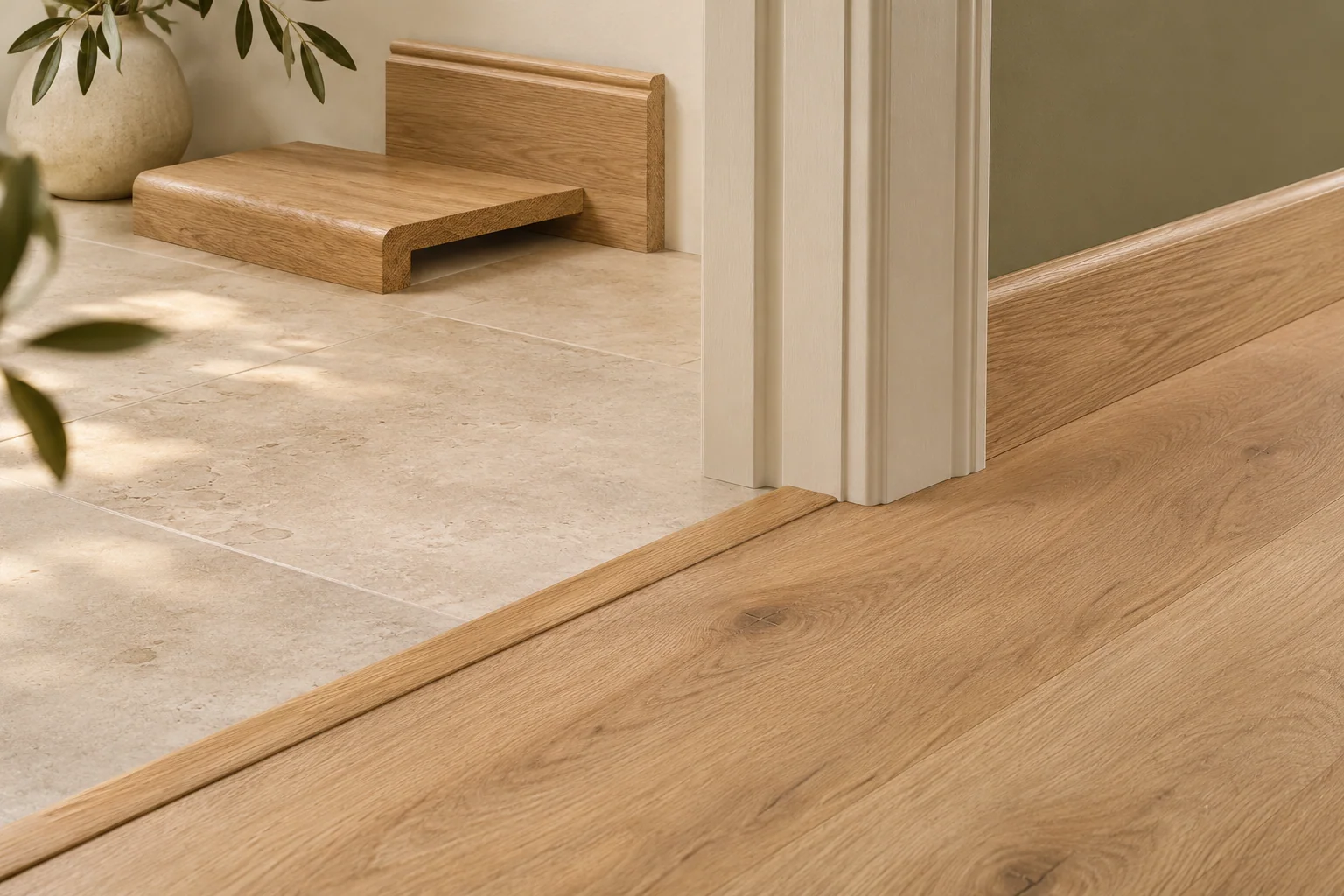
Earlier technical reports should not automatically carry over to a changed board. Ask whether the documented specimen and scope cover the revised materials and finished configuration. Where relevant, reopen installation, trim-interface or heating-system review; sample approval alone does not establish system suitability.
Check whether carton text and product identity still match
An unchanged product code cannot identify a revised construction by itself. If the brand retains its selling code, link it to an explicit specification revision and order or batch identifier. Keep website GL product codes separate from brochure color references.
For flooring carton artwork approval, compare dimensions, pieces and area per carton, species, coating description, barcode, care wording and any claims against the accepted product. Confirm the destination country and applicable labeling requirements per order with the responsible parties.
Review packing and shipping requirements when carton size, protection, pallet arrangement or dispatch labels change. A logo-only edit and a different carton size need different checks.
Change-impact table: what must be reviewed for each revision?

Use this table to identify review needs, not as automatic permission to proceed. The actual change determines which new samples or documents are necessary.
| Requested revision | Product or sample review | Connected records to check |
|---|---|---|
| Logo, address or language only | Confirm board unchanged; review revised proof | Artwork version, destination wording, barcode and order reference |
| Carton dimensions or pack quantity | Check board fit and protection; assess packing trial need | Pieces and area per carton, pallet plan, labels and freight assumptions |
| Color, texture or appearance grade | Review representative revised range samples | Appearance reference, specification, displays and product imagery |
| Coating system | Review revised finished samples and applicable evidence | Coating description, care guidance, claims and order specification |
| Face thickness, plywood or total thickness | Review complete construction and evidence scope | Specification, relevant reports, interfaces, carton text and quotation |
| Dimensions, joint or pattern | Review geometry, fit and installation requirements | Drawings, samples, packing calculations, accessories and order terms |
What sequence keeps the revised order reviewable?
Use a documented review sequence before authorizing the affected manufacturing or printing activity. First establish whether the request can still be accommodated: materials, cartons or production may already be committed.
Keep technical acceptance separate from commercial confirmation. Revised costs, quantities and milestones need agreement through the actual order preparation and confirmation process, not an assumption that the earlier quotation remains valid.
Use a numbered process from change request to accepted revision
- Register the request. State the current reference, requested difference, reason and intended affected order.
- Check current status. Ask what has already been purchased, printed, manufactured or packed and what remains changeable.
- Assess the impact. Identify affected samples, specifications, artwork, evidence, installation information and commercial terms.
- Prepare revised records. Issue dated versions and mark changed fields. Confirm which earlier references remain valid.
- Obtain scoped approvals. Record who accepts appearance, construction, artwork and applicable documents; identify any unresolved conditions.
- Confirm the revised order. Agree the configuration, quantities, packing, price and milestones. Define the first affected order or batch and treatment of existing materials.
- Archive and distribute. Preserve superseded records, withdraw obsolete working files and send the accepted versions to the relevant teams.
A useful revision record states both what changed and where it starts applying. A filename saying “final” supplies neither reliably.
How should buyers distinguish original and revised stock?
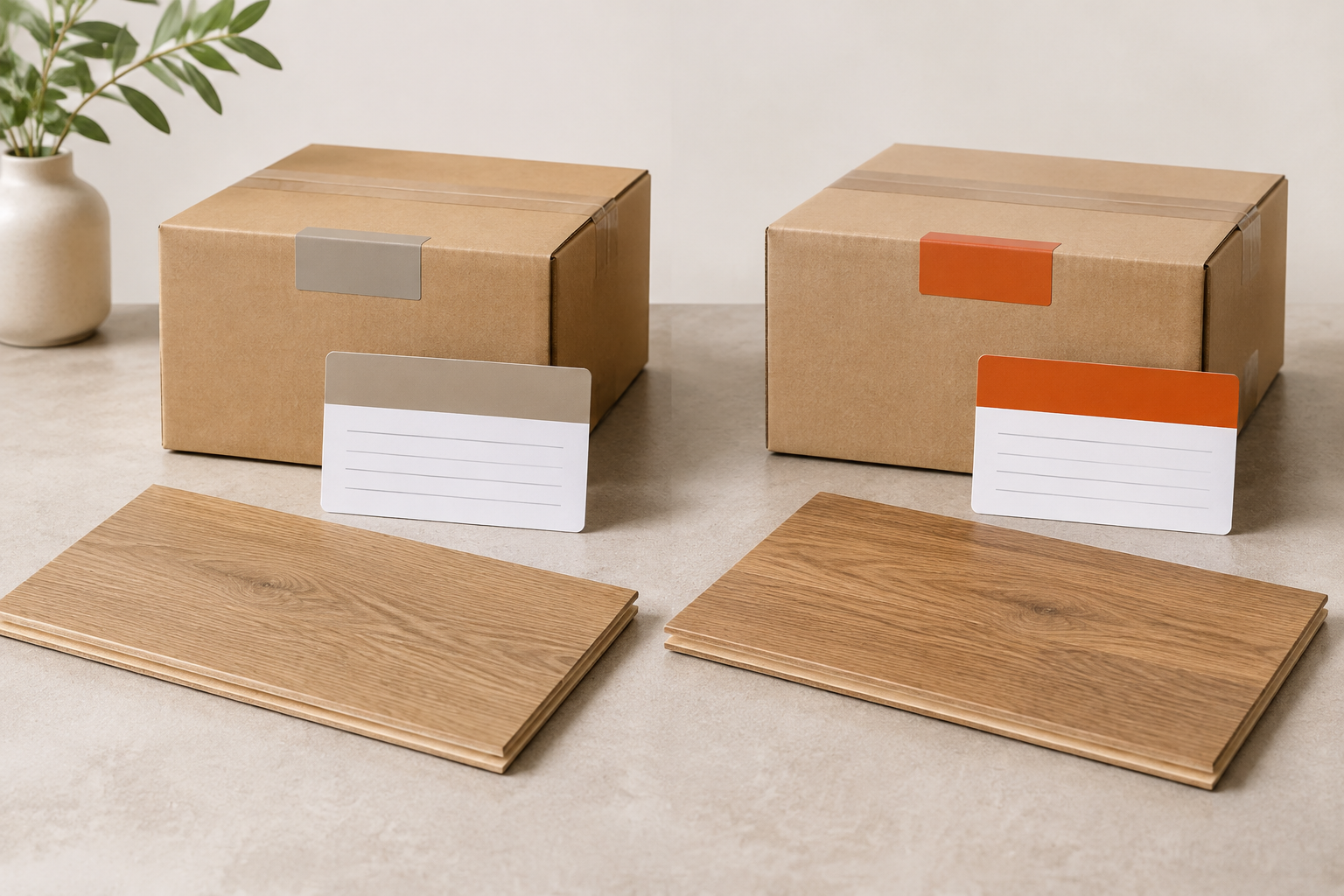
When earlier and revised cartons will coexist, agree an identification and allocation plan before dispatch. Link carton and pallet identifiers to the specification and artwork revisions, and preserve that distinction in warehouse and dealer records.
A packaging-only revision may leave the flooring interchangeable, but confirm that fact. Construction, joint, coating or appearance changes may prevent the versions from being supplied together without further review.
Record whether existing cartons will be used, relabeled or held, subject to agreed requirements. Update showroom references where necessary. Flooring reorder records should identify the intended configuration—not simply request “the latest version”—especially for additions to an earlier installation.
How can GoLink connect revised specifications and branded presentation?
GoLink Floor manufactures engineered wood flooring and provides OEM and private-label manufacturing support connecting product development, sample references, specifications and branded packing.
The Signature Oak Private Label design reference is an illustrative development starting point, not a fixed supplied specification. For an existing range, review begins with the buyer’s accepted configuration and requested modification. Final samples and the accepted manufacturing specification define the supplied product.
Any revision needs its own feasibility, evidence and commercial review. A published design direction does not establish that a particular substitution is available or suitable.
Frequently asked questions about private-label revisions
These practical questions address approval boundaries and exceptions once a revision request is under review.
Next step: submit the current reference and requested change
A reviewable revision connects the earlier approval, the requested difference and the first affected order. Keep those links intact so purchasing, production, packing and distribution work from the same accepted configuration.
FAQ
Can a revised carton proof authorize a coating change?
No. Artwork approval addresses the identified packaging file. A coating change needs explicit product review and acceptance, with the specification, samples, care information and relevant evidence checked separately.
What if the approved sample and written specification disagree?
Do not resolve the conflict by assuming either record overrides the other. Identify the disputed feature, obtain written clarification and issue aligned references before authorizing the affected work.
Who should check translated carton wording?
Agree responsibility between the brand, importer and manufacturer. The buyer should arrange destination-appropriate language and labeling review; the manufacturer should confirm that product descriptions match the agreed configuration.
What if production has already started when the change is requested?
Ask for the status of materials, manufacturing and printed packaging. Review whether the change can apply to the current order or only a later one, and agree any resulting costs, quantities and milestones before proceeding.
Discuss Your Engineered Flooring Requirements
Send your current species or product reference, plank or pattern format, requested modification, estimated quantity per color and destination country. Attach the existing specification and affected artwork, and identify any revised sample or document needs so GoLink Floor can review a specification and quotation brief. You can also email [email protected]. An enquiry is not an accepted production order.